
Raschelle Grandison was steps from her front door on a chilly March morning in 2019 when she froze. A cloud that looked disturbingly like a nuclear mushroom was rolling toward the Houston home she shared with her mother. The two women had no idea what was burning, how toxic it was, or how far the plume would travel. They were, in the most literal sense, left in the dark.
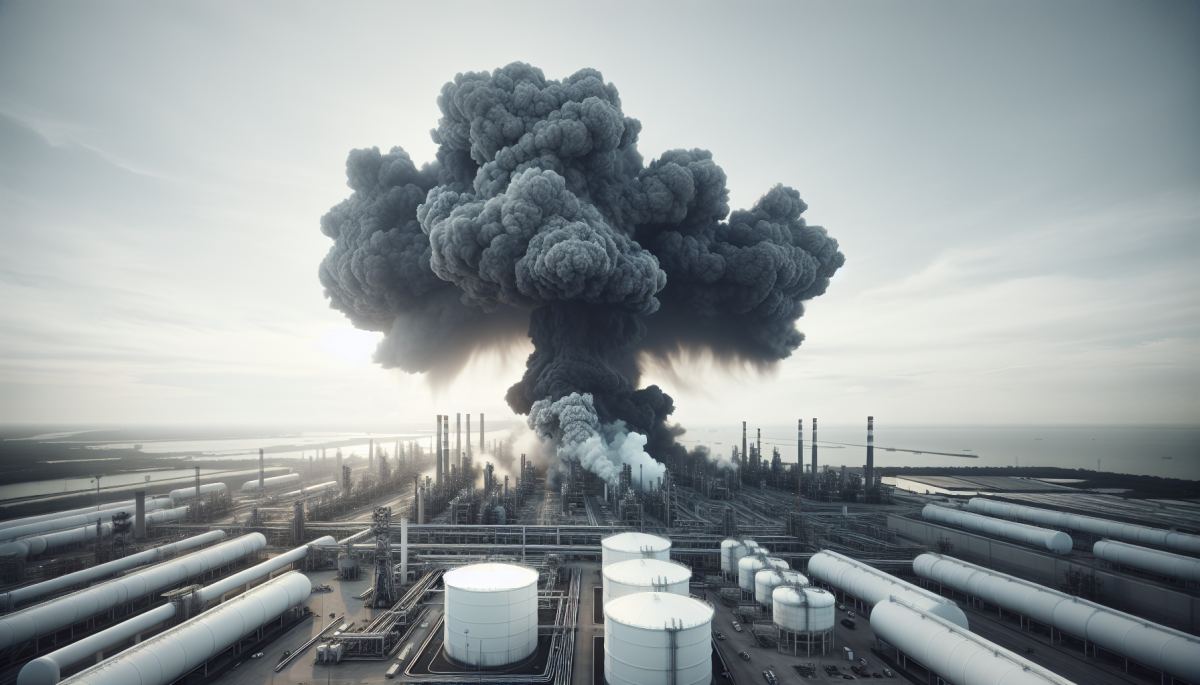
That incident, tied to a massive fire at the Intercontinental Terminals Company facility in Deer Park, Texas, became one of the most vivid illustrations of what happens when communities lack real-time access to information about industrial chemical hazards near their homes. Now, under the Trump administration, the Environmental Protection Agency is moving to roll back the very disclosure rules that were designed to prevent exactly that kind of ignorance from becoming a public health catastrophe.
The rules in question trace back to the Emergency Planning and Community Right-to-Know Act, passed by Congress in 1986 in the wake of the Bhopal disaster, which killed thousands in India after a Union Carbide pesticide plant released methyl isocyanate gas. The law was a direct response to a simple, damning question: why don't people who live next to dangerous facilities know what those facilities are storing? For nearly four decades, the answer has been a patchwork of reporting requirements, public databases, and local emergency planning committees meant to close that gap.
The EPA under the current administration has signaled its intent to weaken or delay updates to the Risk Management Program, a set of regulations that require facilities handling hazardous chemicals to assess their risks, plan for accidents, and share that information with surrounding communities. The agency has also shown little urgency in updating the Toxics Release Inventory, the public database that tracks what chemicals companies are releasing into air, water, and land. Environmental advocates and public health researchers argue these rollbacks are not bureaucratic housekeeping. They are a systematic dismantling of the informational infrastructure that allows communities, first responders, and local governments to make life-or-death decisions.
The incentive structure here is not hard to read. Chemical industry lobbying groups have long pushed back against disclosure requirements, arguing they create competitive vulnerabilities and impose compliance costs. When a regulatory agency is led by political appointees sympathetic to those arguments, the result is predictable: the public interest in transparency loses ground to the industry interest in opacity.
The geography of chemical risk in the United States is not random. Facilities that store and process hazardous materials are disproportionately located near lower-income communities and communities of color, a pattern documented extensively by researchers studying environmental justice. Houston's petrochemical corridor, where Grandison and her mother lived, is a textbook example. The people most likely to be downwind of the next industrial accident are also the people least likely to have the political capital to demand accountability.
This is where the systems-level consequence becomes particularly sharp. When disclosure requirements weaken, the feedback loop that connects industrial behavior to public accountability breaks down. Facilities that know their chemical inventories and accident histories are less visible to regulators and neighbors have less external pressure to invest in safety upgrades, improve emergency response coordination, or reduce the volume of hazardous materials they store on site. The result is not just an information problem. It is a safety problem that compounds over time, quietly, until another cloud appears over another neighborhood and another family stands in a driveway with no idea what they are breathing.
First responders are caught in the same trap. Local fire departments and emergency planners rely on facility disclosures to prepare for worst-case scenarios. When that data is incomplete, delayed, or simply unavailable, the people racing toward a chemical emergency are doing so with less knowledge than they should have. That is not a theoretical risk. It is the operational reality in hundreds of communities across the country.
The deeper irony is that transparency, in this domain, is not just a democratic value. It is a market corrective. When communities can see what is near them, they can organize, litigate, relocate, or vote. When that visibility is removed, the market for accountability disappears along with it. What follows, almost inevitably, is that the next Raschelle Grandison will not just be frightened on her doorstep. She will be uninformed in ways that could cost her far more than a frightening morning.




Discussion (0)
Be the first to comment.
Leave a comment