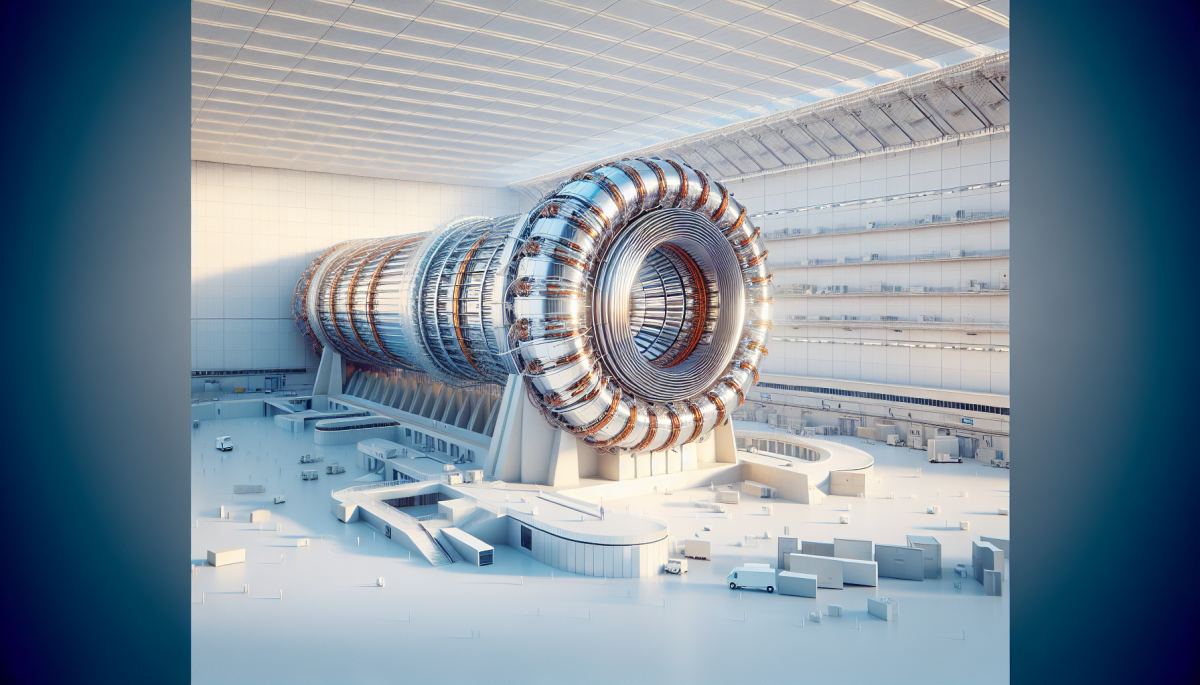
When the National Ignition Facility at Lawrence Livermore National Laboratory achieved fusion ignition in December 2022, it was the kind of milestone that scientists had been chasing for more than half a century. For the first time in a controlled laboratory setting, a fusion reaction produced more energy than the laser energy delivered to the target. The physics worked. What remained was the harder, messier, more uncertain question: could anyone actually build a business around it?
Inertia, a fusion startup, appears to be betting heavily that the answer is yes. The company has signed three agreements with Lawrence Livermore National Laboratory, clearing a formal pathway to commercialize the inertial confinement fusion technology that underpins the NIF's record-breaking experiments. The deals represent one of the most direct attempts yet to translate a government-funded scientific achievement into a private-sector energy product, and they place Inertia at the front of a very short line of companies attempting to commercialize laser-driven fusion specifically.
The NIF is not a modest facility. It is the world's largest and most energetic laser system, spanning the size of a sports stadium and housing 192 laser beams that converge simultaneously on a target roughly the size of a peppercorn. Decades of Department of Energy investment, much of it originally justified by nuclear weapons stewardship rather than energy production, created an infrastructure and knowledge base that no private company could have assembled independently. That is precisely what makes the Inertia agreements significant: the company is not starting from scratch. It is licensing access to one of the most elaborate and expensive scientific platforms ever constructed.
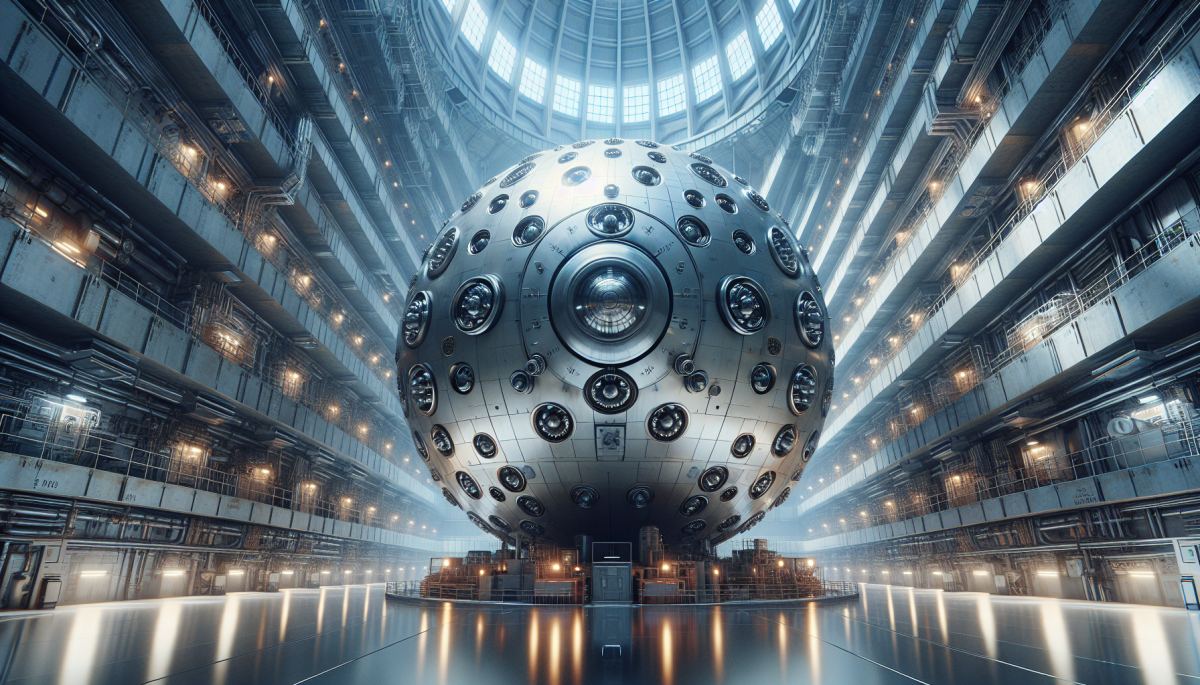
But the gap between ignition and a functioning power plant is enormous, and the fusion industry has a long history of optimism outrunning engineering reality. The NIF's ignition shot delivered more energy out than laser energy in, but the overall energy balance, accounting for the electricity required to power those 192 lasers, remains deeply unfavorable. The wall-plug efficiency of NIF's laser system sits somewhere around one percent, meaning the facility consumes roughly 100 times more grid electricity than the lasers actually deliver to the target. Closing that gap is not a minor engineering challenge. It is arguably the central unsolved problem of inertial confinement fusion as an energy source.
Inertia's path forward almost certainly involves developing far more efficient laser drivers, likely based on diode-pumped solid-state laser technology, which researchers have identified as a plausible route to the efficiency levels a commercial plant would require. The company will also need to solve the target fabrication problem at scale: NIF's precision fuel capsules are extraordinarily expensive to manufacture, and a commercial reactor would need to fire them at rates of several per second, continuously, for decades.
The second-order effects of this commercialization push are worth watching carefully. If Inertia succeeds even partially, it will almost certainly accelerate the broader fusion investment landscape, pulling more private capital toward inertial confinement approaches that have historically been overshadowed by magnetic confinement companies like Commonwealth Fusion Systems and TAE Technologies. That competitive pressure could, paradoxically, benefit the entire field by forcing faster iteration across multiple technical pathways.
There is also a geopolitical dimension that rarely surfaces in the business coverage. Lawrence Livermore's fusion program exists within a national security infrastructure, and the intellectual property embedded in NIF's decades of classified and unclassified research carries sensitivities that typical technology licensing does not. How Inertia navigates export controls, foreign investment restrictions, and the inherent dual-use nature of high-energy laser and fusion technology will shape not just its own trajectory but the regulatory frameworks that govern the entire commercial fusion sector going forward.
For the energy system more broadly, the timing matters enormously. Electricity demand in the United States is rising faster than at any point in recent memory, driven by data centers, electric vehicles, and industrial electrification. Utilities and grid planners are making 20 and 30-year infrastructure commitments right now, largely without fusion in the picture. If inertial confinement fusion remains a 2040s or 2050s technology, those commitments will lock in alternative generation for generations. The window in which fusion could meaningfully shape the grid's architecture, rather than simply join it as a late addition, is narrower than the enthusiasm around ignition milestones might suggest.
The agreements with Livermore are a beginning, not a guarantee. But they mark the moment when one of science's grandest experiments stopped being purely a public endeavor and started accumulating the pressures, incentives, and accountability structures of the market. Whether those pressures accelerate the physics or simply accelerate the fundraising is the question the next decade will answer.




Discussion (0)
Be the first to comment.
Leave a comment