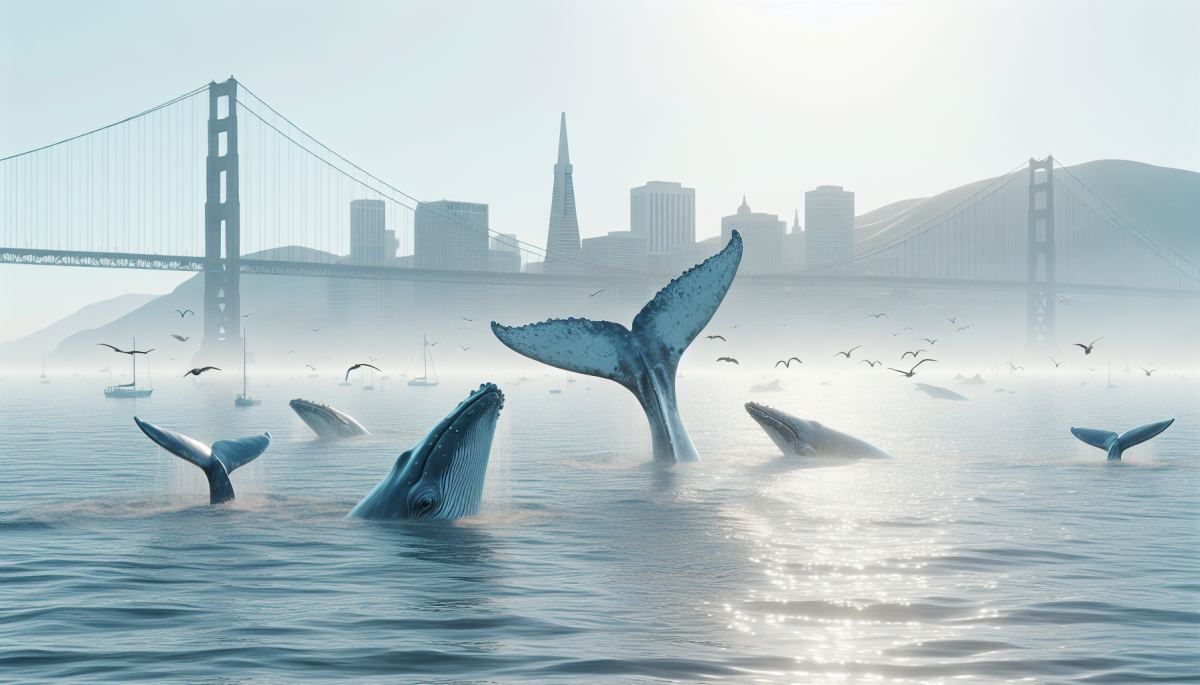
Something has shifted in the ancient rhythms of the Pacific. Gray whales, creatures whose migration routes have been so reliable for so long that coastal communities once used their passage as a seasonal clock, are no longer following the script. Increasingly, they are turning into San Francisco Bay, a body of water that was never part of their evolutionary memory, and the consequences are grim.
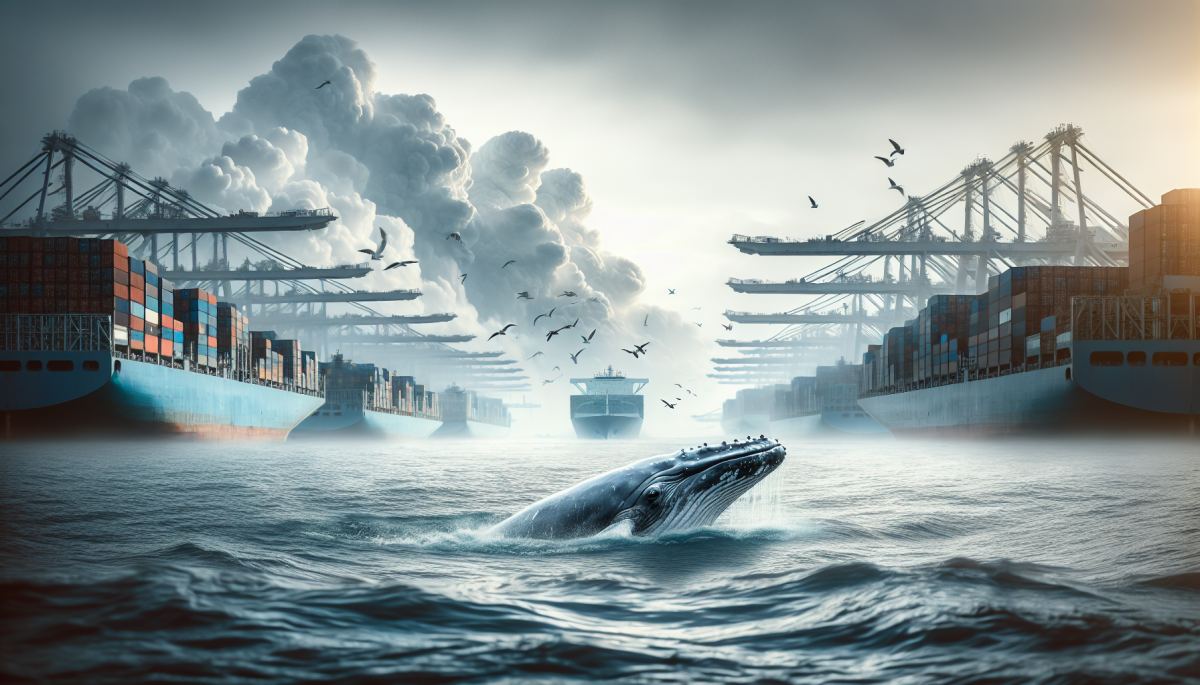
Nearly one in five gray whales that enter San Francisco Bay does not make it out alive. The culprit, more often than not, is a ship. The Bay is one of the busiest commercial ports on the West Coast, a churning corridor of container vessels, tankers, and ferries moving through water that is frequently fogged over and acoustically chaotic. For a whale already disoriented by hunger and navigating unfamiliar geography, it is an extraordinarily dangerous place to be.
The reason they are showing up at all traces back to the Arctic, specifically to the collapse of the prey-rich seafloor communities that gray whales depend on during their summer feeding season. Gray whales are bottom feeders, using their baleen to sieve amphipods and other small crustaceans from shallow Arctic sediment. As sea ice retreats and water temperatures rise, those benthic communities are being disrupted, leaving whales that complete their 10,000-mile round trip migration without adequate caloric reserves to sustain the journey. Researchers have documented what they call a "skinny whale" phenomenon across the eastern Pacific population, with body condition scores declining measurably over the past decade.
When animals are nutritionally stressed, they take risks they otherwise wouldn't. The Bay, with its nutrient-rich tidal flats and seasonal blooms of small invertebrates, may be registering as a feeding opportunity to whales whose instincts are being overridden by hunger. This is not exploration in any romantic sense. It is desperation navigating by biology.
The eastern North Pacific gray whale population, which recovered impressively after commercial whaling nearly wiped it out in the 20th century, has been showing signs of stress since at least 2019, when an Unusual Mortality Event was declared by NOAA after hundreds of whales stranded along the Pacific Coast. The population, estimated at around 14,500 animals, has declined noticeably from its post-recovery peak. Scientists are still debating how much of that decline is driven by prey availability versus other stressors, but the directional signal is not encouraging.
What makes the San Francisco Bay situation particularly instructive as a systems problem is that it sits at the intersection of multiple crises that were never designed to interact. Port shipping traffic has increased steadily over decades, driven by global trade demand. Vessel speed regulations exist in some whale habitats but enforcement is inconsistent and coverage is incomplete. The Bay itself was never designated as critical habitat requiring the kind of vessel management protocols that exist in, say, the waters around the San Juan Islands for orca protection. Nobody planned for gray whales to start using it.
There is a second-order consequence worth sitting with here. If gray whales begin treating San Francisco Bay as a semi-regular foraging detour, even seasonally, the pressure to retrofit maritime traffic management in the Bay will grow. That means potential conflicts with port economics, shipping schedules, and the commercial interests of one of the most economically significant port complexes on the West Coast. The Port of Oakland alone handles billions of dollars in cargo annually. Asking vessels to slow down or reroute for whales is not a trivial ask, and the political economy of that negotiation will be messy.
There is also the question of what this behavioral shift signals at a population level. Animal behavior is information. When a species that has successfully run the same migration corridor for thousands of years starts improvising, it is telling us something about the stability of the system that shaped it. Gray whales are not making a choice so much as they are being pushed, by warming water, by shrinking food, by an Arctic that no longer delivers what it once promised.
The whales entering San Francisco Bay are, in a sense, early indicators of a much larger reorganization underway in the North Pacific. Whether the maritime and conservation systems humans have built are flexible enough to respond before the losses compound is a question that will likely define the next chapter of this species' story.
References
- NOAA Fisheries (2023) — Gray Whale Eastern North Pacific Stock Assessment
- Gulland et al. (2005) — Eastern North Pacific Gray Whale Unusual Mortality Event
- Szesciorka et al. (2020) — Timing is everything: Drivers of interannual variability in blue whale migration
- Becker et al. (2019) — Prey availability and body condition in gray whales
- National Oceanic and Atmospheric Administration (2024) — Vessel Strike Avoidance Measures for Marine Mammals




Discussion (0)
Be the first to comment.
Leave a comment