
Viktor Orbán, the man who spent fifteen years reshaping Hungary in his own image, has conceded defeat after the opposition Tisza party led by Péter Magyar secured a projected two-thirds majority in parliamentary elections. For the European Union's longest-serving premier, a politician who survived financial crises, refugee waves, a pandemic, and sustained pressure from Brussels, the end came not from an external shock but from within, driven by a domestic electorate that had finally had enough.
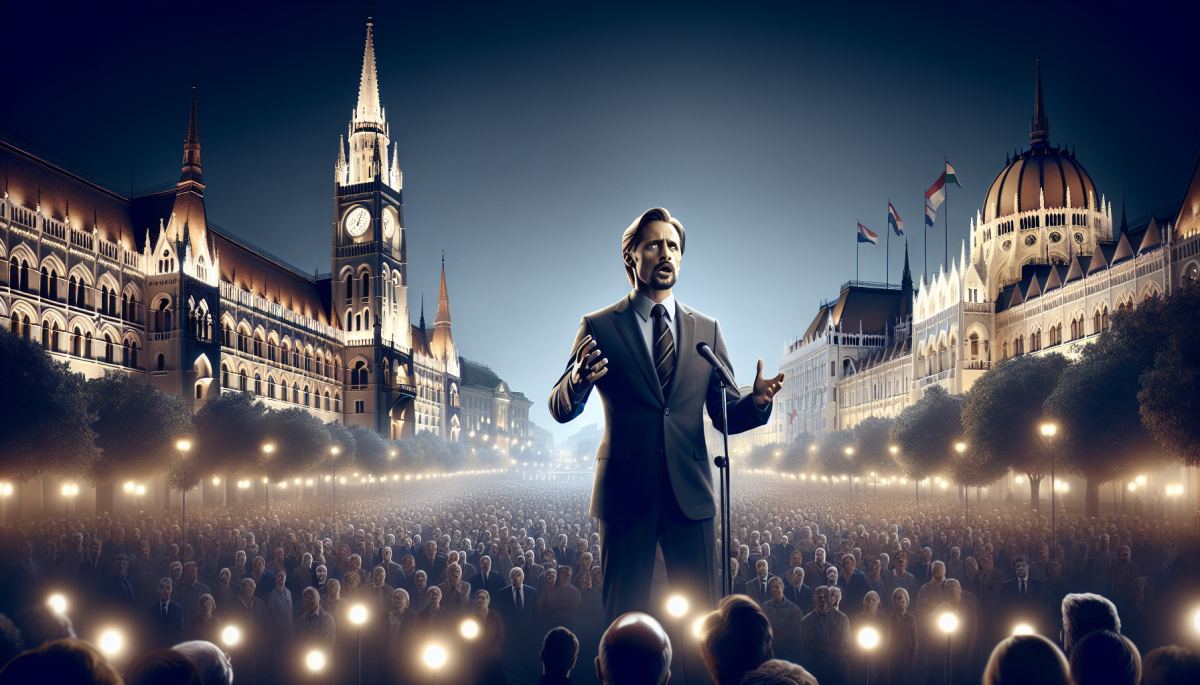
The scale of the loss is difficult to overstate. A two-thirds supermajority is the same threshold Orbán's Fidesz party once used to rewrite Hungary's constitution, redraw electoral districts, and pack the judiciary with loyalists. Magyar and Tisza now hold that same instrument, and what they choose to do with it will define not just Hungary's next chapter but the broader story of democratic backsliding and recovery across Central Europe.
Orbán's political architecture was, by design, self-reinforcing. Electoral laws redrawn after 2010 favored the incumbent. Public media became a state mouthpiece. Oligarchs close to Fidesz absorbed EU funds and controlled vast swaths of the advertising market, starving independent outlets of revenue. For years, analysts described this arrangement as a textbook case of competitive authoritarianism, a system that maintains the formal trappings of democracy while systematically tilting the playing field.
What systems thinkers sometimes call "brittleness" was always lurking beneath that surface strength. Highly optimized systems, whether ecological, financial, or political, tend to lose resilience precisely because they eliminate redundancy and suppress feedback. Hungary's opposition had been fragmented, underfunded, and outmaneuvered for over a decade. But fragmentation eventually gave way to consolidation around Magyar, a former insider whose personal credibility and outsider positioning gave him traction that older opposition figures never managed.
Péter Magyar is not a lifelong dissident. He is a former son-in-law of a senior Fidesz official, which gave him both intimate knowledge of the system's inner workings and a compelling personal narrative of disillusionment. That combination proved potent. Voters who had grown exhausted by Orbán's culture-war framing of every election as a civilizational battle between Hungary and Brussels found in Magyar someone who could speak the language of the establishment while credibly promising to dismantle it.
The consequences of this result extend well beyond Budapest. Orbán has spent years positioning himself as the EU's most disruptive internal actor, blocking aid packages to Ukraine, cultivating ties with Vladimir Putin, and hosting summits with figures like Donald Trump and Elon Musk that were designed to signal the rise of a new illiberal international. Hungary's rotating EU Council presidency in 2024 became a stage for that performance.
A Tisza-led government with a supermajority could move quickly to restore judicial independence, reopen frozen EU cohesion funds, and shift Hungary's posture on Ukraine. The European Commission has withheld billions in structural funds over rule-of-law concerns, money that Hungary's economy badly needs. Normalization with Brussels would likely unlock that pipeline rapidly, giving Magyar's government an early economic dividend that could consolidate its political position.
But the second-order effect worth watching is the signal this sends to other illiberal governments in the region. Poland's democratic restoration under Donald Tusk after the 2023 elections already suggested that Orbán-style systems were not permanent. A Hungarian reversal would reinforce that pattern and potentially embolden opposition movements in Serbia, Slovakia, and Georgia, where similar dynamics of media capture, electoral manipulation, and EU-skeptic nationalism have taken hold. Democratic backsliding, it turns out, can be a reversible process, though reversal is neither automatic nor painless.
The harder question is institutional. Laws can be rewritten, judges replaced, media ownership restructured. But the cultural and social polarization that Orbán spent fifteen years deepening does not dissolve with an election result. Magyar will govern a country where a substantial minority still sees the Fidesz worldview as legitimate, and where the administrative state is staffed, at every level, by people appointed under a system designed to reward loyalty over competence. Rebuilding institutional trust in that environment is a generational project, not a legislative session.
Orbán himself, for all the finality of this concession, is 61 years old and politically experienced enough to know that opposition can be rebuilt. The more consequential question may not be what Magyar does with his supermajority, but whether he can use it wisely enough to make the next reversal structurally harder to achieve.
Discussion (0)
Be the first to comment.
Leave a comment