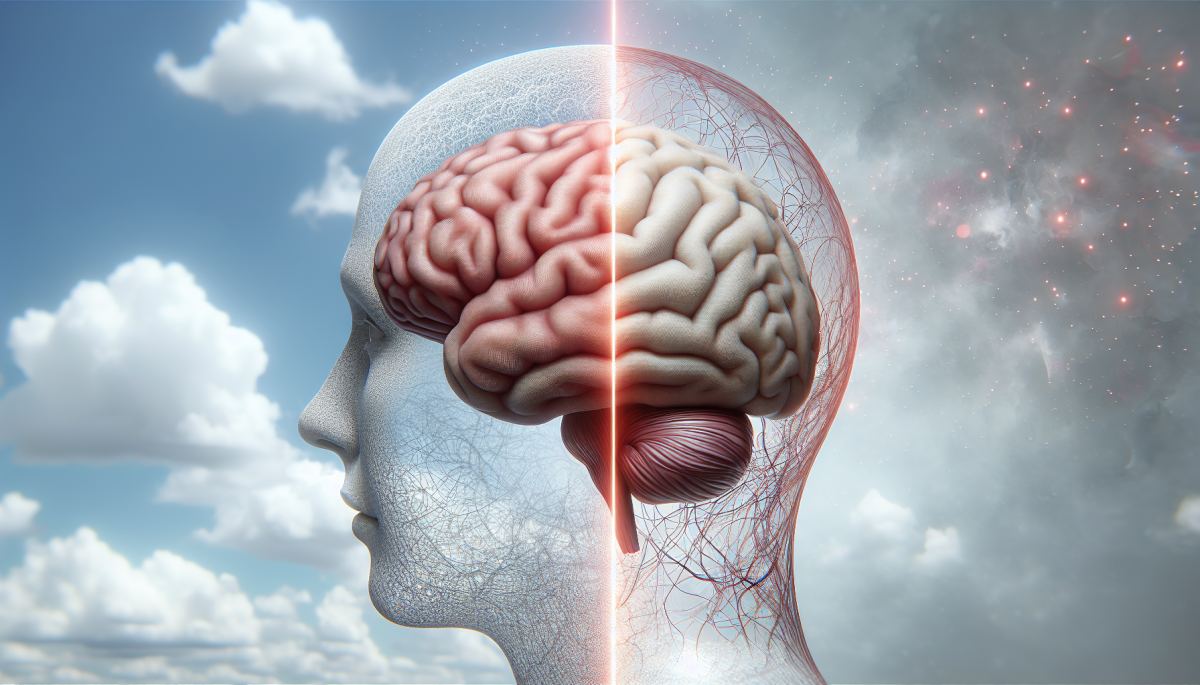
The numbers from Stanford's annual AI Index land like a Rorschach test for the modern moment. Depending on where you sit, geographically, economically, or professionally, artificial intelligence reads either as the most consequential tool humanity has ever built or as an accelerating threat to livelihoods, privacy, and democratic stability. What the Index makes clear is that both readings are happening simultaneously, and the gap between them is widening rather than closing.
Published each year by Stanford's Human-Centered Artificial Intelligence institute, the AI Index is one of the most comprehensive attempts to take stock of where the technology actually stands. It pulls together data on research output, investment flows, government policy, and crucially, public sentiment. That last category has become increasingly difficult to summarize in a single sentence, because the honest answer is that there is no single public. There are many publics, and they are diverging.
One of the more striking patterns in the Index is how differently people in various parts of the world perceive AI's net effect on their lives. Respondents in countries like China and Saudi Arabia tend to express significantly higher optimism about AI's benefits, while those in the United States and much of Western Europe register far more ambivalence or outright concern. This is not simply a matter of familiarity or exposure. People in high-income, highly digitized economies have arguably seen more AI than anyone, and yet that exposure has not translated into comfort.
Part of the explanation lies in what AI is being used for in different contexts. In economies where AI is arriving as a leapfrog technology, helping to extend healthcare access, improve agricultural yields, or streamline government services in places where those services were previously unreliable, the experience of the technology is additive. In economies where AI is arriving as a substitution technology, replacing call center workers, paralegals, junior coders, and radiologists, the experience is more zero-sum. The same algorithm that feels like progress in one context feels like displacement in another.
This creates a feedback loop that is easy to miss if you are only looking at aggregate sentiment numbers. As AI adoption accelerates in wealthy economies, the workers most exposed to substitution risk become more vocal critics, which shapes media coverage, which in turn influences public perception among people who have not yet had direct contact with the technology. The result is that opinion hardens before experience is even formed.
The polarization of AI opinion is not merely a sociological curiosity. It has real consequences for how governments regulate, how companies deploy, and how researchers prioritize. When public trust is fragmented along national and class lines, the political will to establish coherent international governance frameworks becomes nearly impossible to sustain. Every proposed standard becomes a proxy battle for deeper anxieties about economic competition, surveillance, and sovereignty.
The Stanford Index also tracks the sharp rise in AI-related legislation globally, with the number of laws referencing artificial intelligence growing dramatically over the past several years. But legislation and genuine governance are not the same thing. Laws passed in an atmosphere of public distrust tend to be reactive and brittle, focused on banning specific applications rather than building the institutional capacity to evaluate new ones as they emerge. The European Union's AI Act, for all its ambition, is already being stress-tested by the pace of model development, which moves faster than any parliamentary calendar.
Meanwhile, the investment figures in the Index tell a parallel story. Private AI investment remains overwhelmingly concentrated in the United States, with China a distant second. This concentration means that the societies most skeptical of AI are also the ones producing and exporting the most of it, a structural tension that no amount of public communication is likely to resolve on its own.
The more durable question raised by this year's Index is whether divided opinion is actually a problem to be solved or a signal to be read. Healthy skepticism in democratic societies has historically been one of the mechanisms that forces powerful technologies to adapt to human needs rather than the other way around. The risk is not that people disagree about AI. The risk is that the disagreement becomes so entrenched that it forecloses the kind of deliberate, evidence-based policy that the moment genuinely requires. If the gulf between the optimists and the skeptics keeps widening, the decisions about how AI develops will increasingly be made not through democratic deliberation but by default, by whoever is moving fastest.



Discussion (0)
Be the first to comment.
Leave a comment