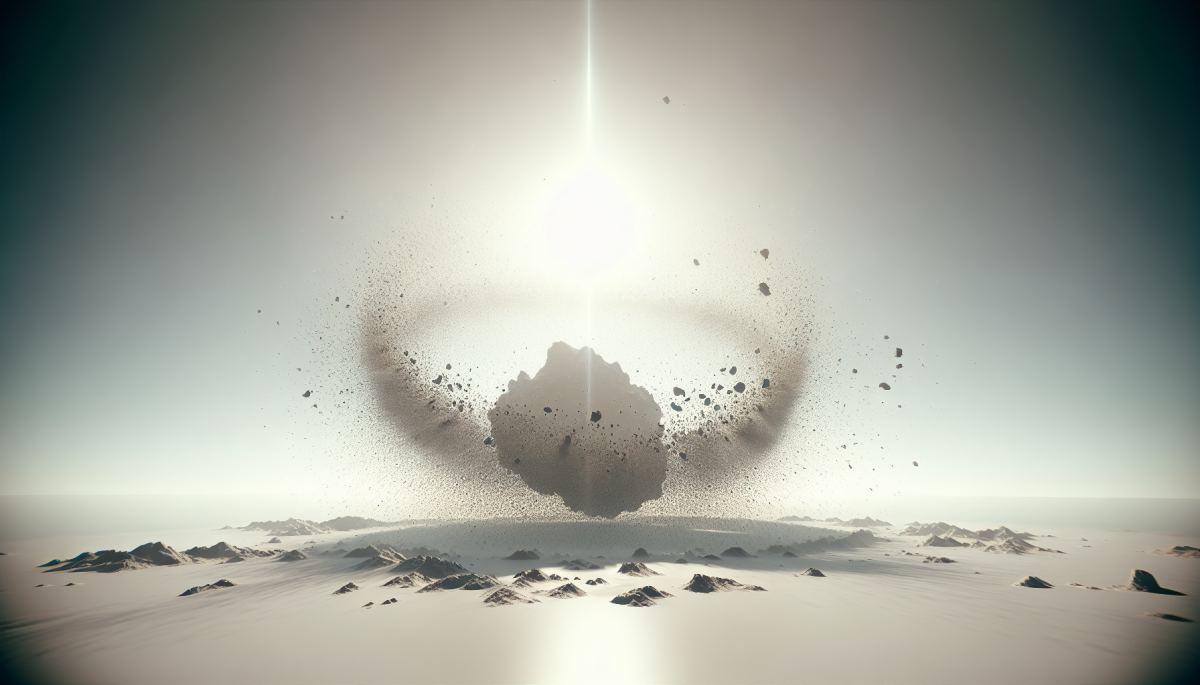
The Chicxulub impact, roughly 66 million years ago, was among the most violent events in Earth's history. A rock estimated at six miles wide slammed into what is now Mexico's Yucatan Peninsula, triggering firestorms, a global dust cloud, and a collapse of photosynthesis that cascaded through nearly every food web on the planet. The non-avian dinosaurs are the famous casualties, but the ocean's microscopic plankton were hit just as hard. What happened next, however, is rewriting assumptions about the resilience of life itself.
New research published in the journal Science reveals that planktonic foraminifera, tiny single-celled organisms that form the base of marine food webs, began diversifying into new species within just a few thousand years of the impact, and possibly within fewer than 2,000 years. That timeline is geologically instantaneous. Previous estimates had placed the recovery window at tens of thousands to hundreds of thousands of years, so the revision is not a minor adjustment. It fundamentally changes the picture of what post-apocalyptic biology looks like.
The key to unlocking this timeline was a clever use of isotope geochemistry. The research team used measurements of helium-3, a rare isotope delivered to Earth at a steady, predictable rate by interplanetary dust particles, as a kind of cosmic clock embedded in ancient seafloor sediments. Because helium-3 accumulates at a known rate, scientists could calculate how much time had passed between sediment layers with far greater precision than traditional methods allowed. The result was a finer-grained view of the earliest post-impact period, one that had previously been blurred by the limitations of radiometric dating at such compressed timescales.
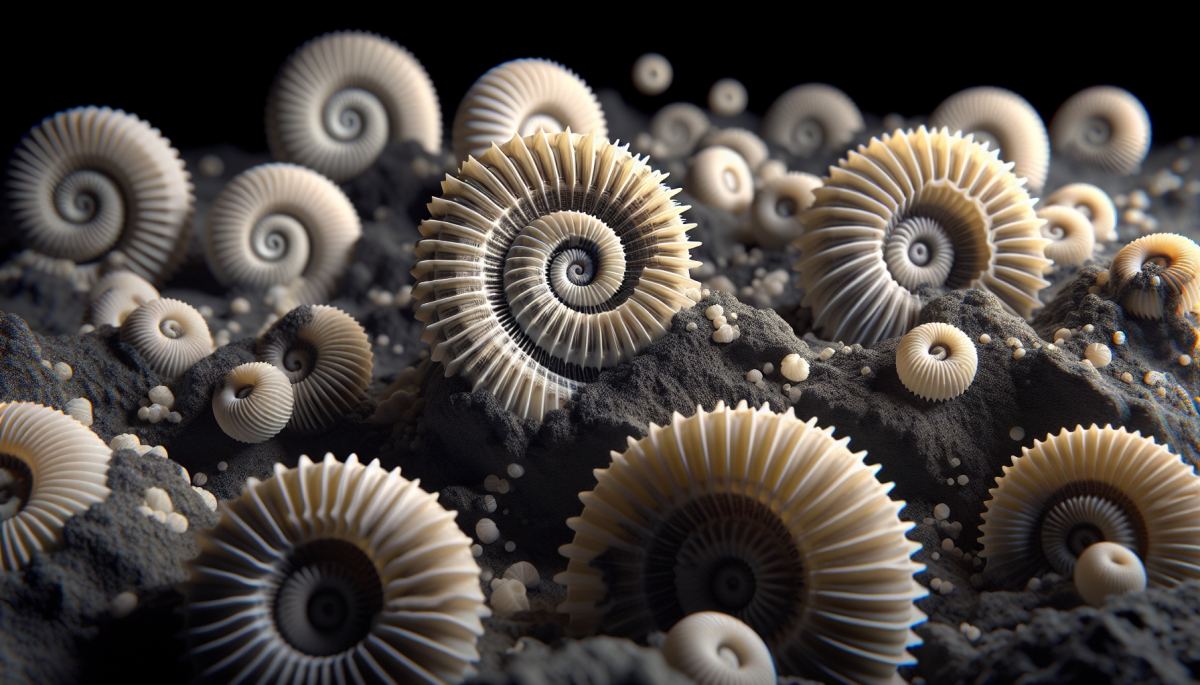
The speed of this recovery is not just a curiosity for paleontologists. It carries real implications for how scientists model the relationship between catastrophe and biological innovation. The conventional view of mass extinctions has long emphasized the emptiness they leave behind, the millions of years of ecological silence before complexity reasserts itself. But if foraminifera were already experimenting with new body plans within two millennia of the impact, then the post-extinction environment was not a void. It was a pressure cooker.
With competitors and predators wiped out, and with ocean chemistry in flux, the surviving microbial lineages faced an environment of radical openness. Evolutionary theory predicts that ecological opportunity accelerates speciation, a phenomenon sometimes called adaptive radiation. What this new research suggests is that the trigger for radiation can be pulled almost immediately after a catastrophe, not after the dust has settled over geological time. The survivors did not wait for stability. They evolved into it.
This has a second-order consequence worth sitting with. If rapid recovery is a feature of life's response to mass extinction rather than an exception, then the fossil record's apparent gaps may reflect the limits of our measurement tools more than the actual pace of biological change. Researchers may need to revisit other extinction boundaries, including the end-Permian event 252 million years ago, which killed roughly 90 percent of marine species, with similarly refined isotopic methods. The Chicxulub finding could be the first data point in a broader pattern.
There is an uncomfortable temptation to read this research as reassuring in the context of the current biodiversity crisis. If life recovered from an asteroid impact in under 2,000 years, perhaps ecosystems are more robust than we fear. That reading would be a mistake. The foraminifera that rebounded so quickly were microscopic, reproduced rapidly, and existed in enormous population sizes spread across global oceans. Their evolutionary agility is not a proxy for the fate of large, slow-reproducing species like mammals, coral reef systems, or old-growth forests, all of which are under pressure today.
What the research does offer is a more honest accounting of how recovery actually works. It is not orderly or gradual. It is opportunistic, uneven, and driven by whichever lineages happen to survive with the right traits at the right moment. The organisms that inherited the post-Chicxulub ocean were not the most complex or the most successful of their era. They were simply the ones still present when the pressure lifted.
As Earth's current extinction rate accelerates, driven by habitat loss, climate change, and pollution, the question of which lineages will be left to fill tomorrow's ecological vacancies is not abstract. The foraminifera of 66 million years ago had no say in the matter. The species disappearing today largely do not either. But the humans driving those losses are in a different position entirely, and that asymmetry is where the real story of resilience, or its absence, will be written.
References
- Lowery et al. (2018) — Rapid recovery of life at ground zero of the end-Cretaceous mass extinction
- Alvarez et al. (1980) — Extraterrestrial cause for the Cretaceous-Tertiary extinction
- Schulte et al. (2010) — The Chicxulub Asteroid Impact and Mass Extinction at the Cretaceous-Paleogene Boundary
- Erwin, D.H. (2001) — Lessons from the past: Biotic recoveries from mass extinctions




Discussion (0)
Be the first to comment.
Leave a comment