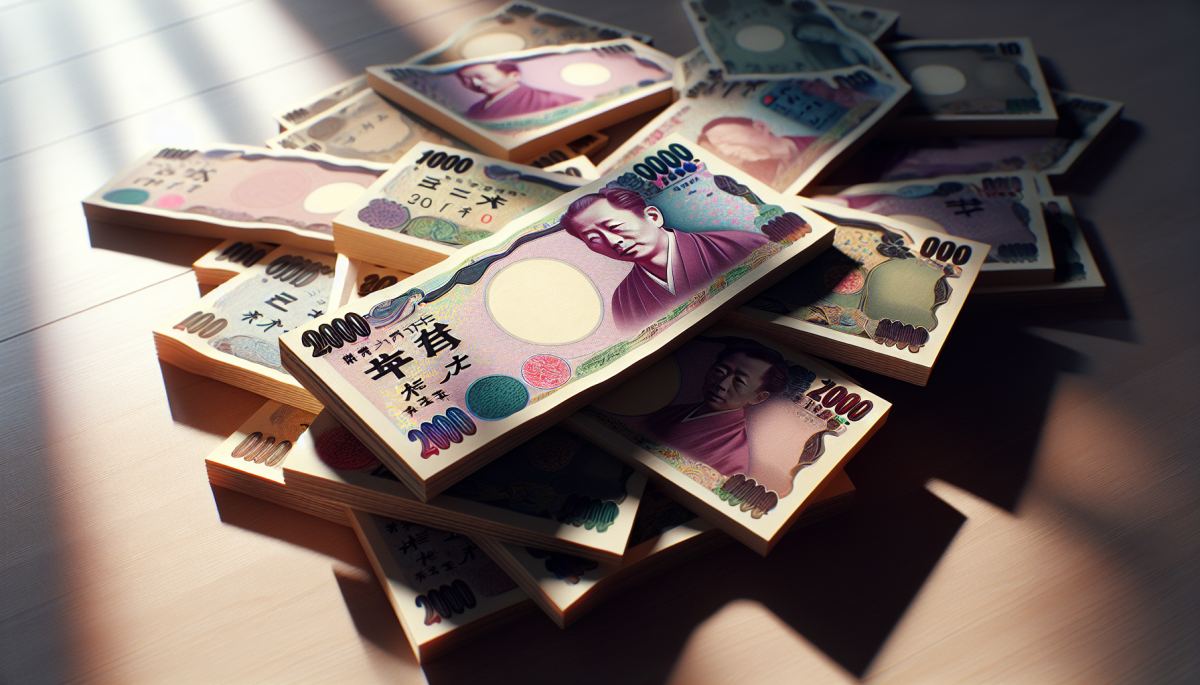
The Bank of Japan spent decades as the world's most committed holdout against rising interest rates. When it finally began loosening its grip on yield curve control in 2024 and allowed Japanese government bond yields to climb toward levels not seen in over a decade, the conventional logic was straightforward: higher yields attract foreign capital, foreign capital buys yen, and the currency strengthens. That logic has not played out. The yen remains stubbornly weak, and understanding why reveals something important about how modern currency markets actually work, and how deeply Japan's financial architecture has been reshaped by years of ultra-loose policy.
At its core, the yen's weakness is not simply a story about interest rate differentials, though those differentials remain enormous. Even as Japanese 10-year bond yields have crept upward, the gap between what investors can earn in Japan versus the United States remains wide enough to make the carry trade, borrowing cheaply in yen to invest in higher-yielding assets abroad, persistently attractive. The Federal Reserve's own rate-cutting cycle has been slower and shallower than many anticipated, which means the arithmetic of the carry trade has not changed nearly enough to reverse the flows that have been draining yen demand for years.
But there is a structural layer beneath the interest rate story that gets less attention. Japanese institutional investors, including life insurers and pension funds managing trillions of dollars in assets, have spent years building enormous foreign asset portfolios precisely because domestic yields offered so little. Those portfolios are not unwound overnight. Even when domestic yields improve, the hedging costs associated with bringing that money home, and the inertia of institutions that have reorganized themselves around global investment strategies, create a powerful brake on yen repatriation. The currency is, in a sense, paying the price for a decade of financial repression.
The carry trade is one of finance's most reliable feedback loops. When it works, it reinforces itself: a weak yen makes yen-denominated borrowing cheaper in real terms, which encourages more borrowing, which funds more outflows, which weakens the yen further. The brief but violent unwind in August 2024, when a surprise Bank of Japan rate hike triggered a global market convulsion as carry traders rushed to close positions, illustrated just how much speculative weight had accumulated on one side of this trade. Yet even after that episode, the yen failed to sustain meaningful gains. The carry trade reconstituted itself with remarkable speed, suggesting that the underlying incentive structure had not fundamentally changed.

There is also a geopolitical and trade dimension that complicates the picture. Japan runs a goods trade deficit partly because of energy import costs, which are priced in dollars. A weaker yen makes those imports more expensive, which in turn pressures household incomes and corporate margins in ways that can dampen the domestic growth needed to justify more aggressive rate hikes. The Bank of Japan finds itself in a feedback trap: the conditions that would justify tightening enough to support the yen are partly undermined by the weakness of the yen itself.
The most underappreciated consequence of sustained yen weakness may be its effect on Japan's political economy. A cheap yen is a subsidy for exporters like Toyota and Sony, whose overseas earnings translate back into more yen. But it is a tax on everyone else, particularly older, fixed-income households who make up a large share of Japan's population and who are watching their purchasing power erode. That political tension is already visible in public polling and has begun to constrain the government's room to simply celebrate export competitiveness as a national good.
If the Bank of Japan is eventually forced to raise rates more aggressively than markets currently expect, perhaps because inflation proves stickier than anticipated or because political pressure from households intensifies, the unwind of the carry trade could be far more disorderly than the August 2024 episode. Global equity markets, which absorbed significant turbulence from a relatively modest position unwind, would face a much larger shock if institutional repatriation flows joined speculative unwinding simultaneously.
The yen's weakness, in other words, is not just a Japanese problem. It is a slow-building pressure valve in the global financial system, and the longer it stays compressed, the more consequential the eventual release is likely to be.
Discussion (0)
Be the first to comment.
Leave a comment