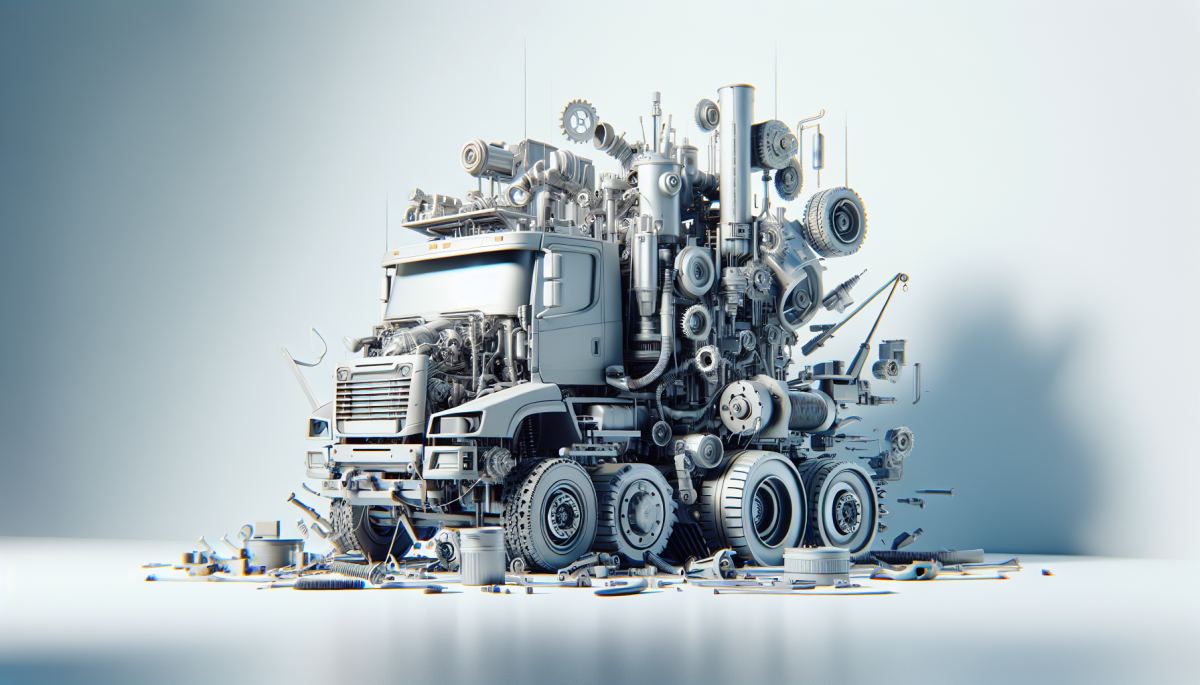
Stewart Brand has spent decades thinking about time. He cofounded the Whole Earth Catalog, helped shape the early internet's philosophical backbone, and wrote Clock of the Long Now, a meditation on thinking across millennia. So when Brand turns his attention to maintenance, the subject arrives with unusual intellectual gravity. His new book, Maintenance: Of Everything, Part One, frames the act of fixing, preserving, and sustaining things not as a mundane chore but as one of the foundational obligations of civilization.
Brand's argument lands at a peculiar cultural moment. The dominant ethos of the tech industry he helped shape prizes disruption, novelty, and creative destruction. Venture capital flows toward things that are new. Prestige accrues to builders, not maintainers. Yet the physical and institutional world around us is quietly decaying for want of exactly the kind of unglamorous, persistent attention Brand is championing. America's infrastructure report card from the American Society of Civil Engineers has hovered around a C or D grade for years. Deferred maintenance on federal buildings alone runs into the tens of billions of dollars. The gap between what gets celebrated and what actually keeps civilization running has rarely been wider.
One of the most persistent blind spots in how societies account for value is the near-total invisibility of maintenance work. Economists measure GDP by what is produced and consumed, not by what is preserved. A bridge that stands for another fifty years because a crew spent three weeks repainting its steel generates no headline number. The same bridge collapsing generates enormous economic activity: emergency response, litigation, reconstruction contracts, news coverage. There is a dark irony embedded in how modern accounting treats neglect as neutral and catastrophe as productive.
Brand, drawing on his long history of systems thinking, is well positioned to name this distortion. His earlier work with the Long Now Foundation was explicitly about extending human time horizons, pushing back against what he called the "faster and faster" acceleration of contemporary culture. Maintenance is, in a sense, the practical expression of that same philosophy. To maintain something is to make a bet on the future, to assert that what exists now is worth carrying forward. It is an act of temporal commitment that short-term incentive structures actively punish.
The labor economists and sociologists who study care work have made adjacent arguments for years. Researchers like Adia Harvey Wingfield have documented how maintenance and care labor, disproportionately performed by women and workers of color, is systematically undervalued in both wages and cultural recognition. Brand's framing, coming from a figure embedded in the predominantly white and male tech counterculture, may reach audiences that academic labor scholarship never does. That crossover potential is itself worth noting.
The systems-level consequences of chronic undermaintenance are not linear. They compound. A water pipe that goes unrepaired doesn't just leak; it raises the probability of a rupture that contaminates a supply system serving hundreds of thousands of people. A school building with a failing HVAC system doesn't just make students uncomfortable; it degrades air quality in ways that measurably reduce cognitive performance and long-term educational outcomes. The 2021 winter storm that knocked out Texas's power grid was, at its core, a maintenance failure: equipment that had not been weatherized despite decades of warnings about exactly this vulnerability.
What Brand's book potentially offers, beyond its immediate argument, is a vocabulary and a frame that could shift how policymakers, investors, and the public think about these compounding risks. Framing matters enormously in political economy. When maintenance gets recast as a civilizational imperative rather than a budget line item to be deferred, the political calculus around infrastructure spending, institutional upkeep, and even ecological stewardship begins to shift.
There is also a feedback loop worth watching. If Brand's series succeeds in elevating maintenance as an intellectual and cultural priority, it could attract the kind of talent and capital that currently chases novelty. Startups focused on predictive maintenance, materials science, and institutional resilience already exist at the margins of the tech economy. A cultural shift toward valuing what endures over what disrupts could accelerate their growth and, more importantly, change what kinds of problems ambitious people decide are worth solving.
Brand has always been most effective not as a technologist but as a curator of ideas whose time has come. The question his book implicitly raises is whether civilization can develop a genuine maintenance culture before the cost of its absence becomes impossible to ignore.
References
- American Society of Civil Engineers (2021) — 2021 Report Card for America's Infrastructure
- Brand, S. (1999) — The Clock of the Long Now
- Wingfield, A.H. (2019) — Flatlining: Race, Work, and Health Care in the New Economy
- Federal Facilities Council (2001) — Deferred Maintenance Reporting for Federal Facilities
Discussion (0)
Be the first to comment.
Leave a comment