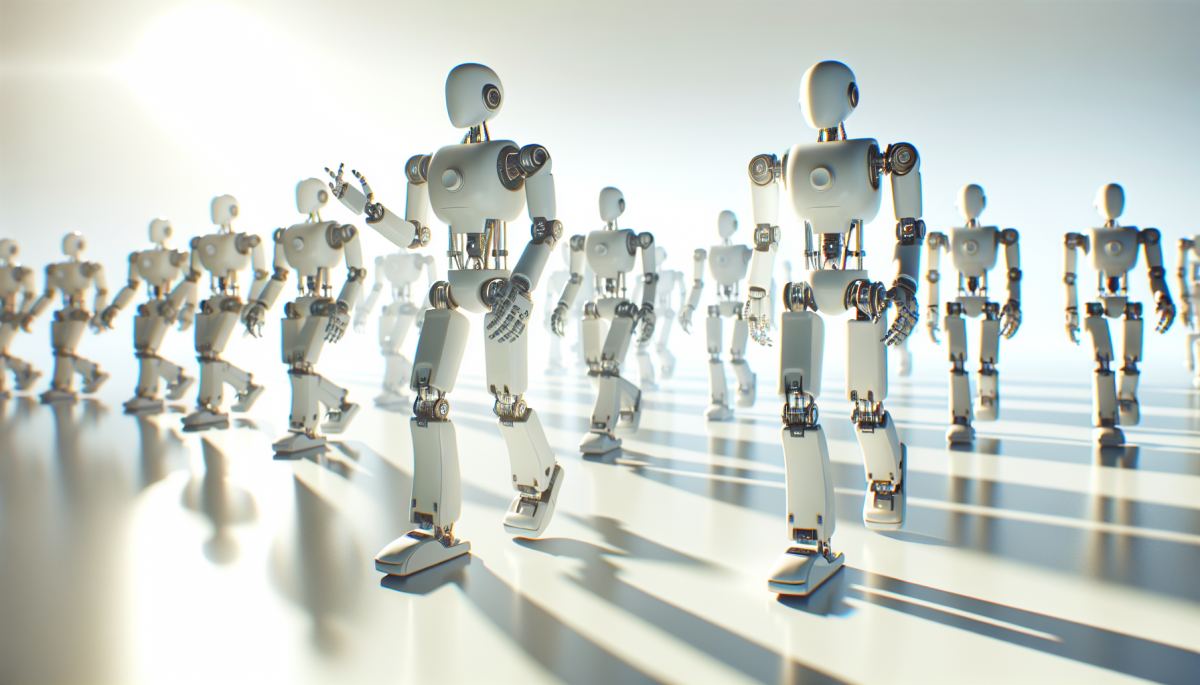
Roboticists used to dream big but build small. The ambition was always C-3PO, the reality was usually a Roomba. For decades, the gap between what researchers imagined and what they could actually construct was so wide it became something of a running joke inside the field. You aimed for a machine that could navigate the world with human-like grace and ended up with something that got stuck under the couch.
That gap, however, has been closing faster than most people outside robotics labs have noticed. The shift isn't just technical. It reflects a deeper change in how researchers think about what learning even means for a machine, and the story of how we got here is worth understanding carefully, because the consequences of getting it right, or wrong, will ripple far beyond the lab.
For most of the 20th century, robotics advanced through explicit programming. Engineers told machines exactly what to do, step by step, in environments carefully controlled to minimize surprise. This worked beautifully on automobile assembly lines, where the same weld needed to happen in the same place ten thousand times a day. The robot didn't need to understand anything. It just needed to repeat.
The problem was that the real world doesn't repeat. Stairs have different heights. Faces have different expressions. A glass of water placed slightly to the left of where the robot expected it might as well be on the moon. Every variation that a human child handles instinctively required a roboticist to write new code. The field hit a long plateau, and the science-fiction dream quietly receded into the background.
What broke the plateau wasn't a single invention. It was a convergence. Cheaper sensors, faster processors, and above all the rise of machine learning, particularly deep learning, gave robots something they had never really had before: the ability to generalize from experience rather than simply execute instructions. Instead of being told what a chair looks like, a robot could now be shown ten million images of chairs and learn to recognize one it had never seen. That shift, from rule-following to pattern-recognition, changed the underlying logic of the entire field.
The most significant recent development isn't just that robots can learn. It's how they learn. Reinforcement learning, where a machine tries something, fails, adjusts, and tries again, has allowed robots to develop motor skills that no human programmer could have written explicitly. Boston Dynamics' Atlas and similar platforms have demonstrated movements that look almost improvisational, the kind of fluid adaptation to unexpected terrain that used to be the exclusive property of biological creatures.
But reinforcement learning has its own ceiling. It requires enormous amounts of trial and error, which is expensive in the physical world where robots break and time costs money. The newer frontier is imitation learning, sometimes called learning from demonstration, where robots watch humans perform tasks and extract the underlying logic of what's happening. Combined with large language models and vision systems, some robots can now receive instructions in plain English, observe a task once or twice, and attempt it themselves. The ambition is no longer just automation. It's comprehension.
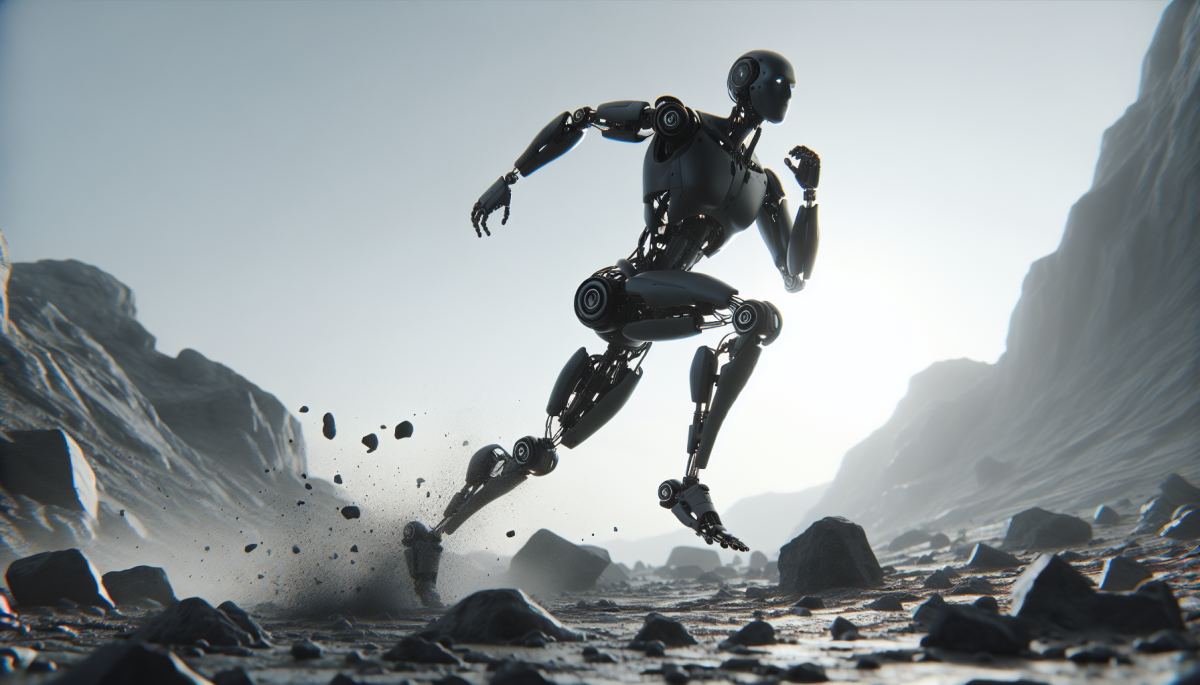
This is where the second-order consequences start to get genuinely interesting, and genuinely unsettling. A robot that can generalize, that can take a skill learned in one context and apply it in another, is a fundamentally different kind of tool than anything industry has deployed before. It doesn't just replace a specific human motion. It begins to replace human adaptability, which was always the last refuge of labor that couldn't be automated.
The economic pressure to deploy these systems is enormous. Labor costs are rising across manufacturing, logistics, and elder care simultaneously. The populations of wealthy countries are aging. The math is pushing hard in one direction. But the social infrastructure for absorbing rapid displacement of adaptive human labor simply doesn't exist yet, and history suggests it rarely gets built in time.
What's easy to miss in the excitement over robot dexterity and language comprehension is that the learning curve runs in both directions. As robots get better at learning from humans, they also get better at revealing which human skills were never as unique as we assumed. That realization, more than any particular technical milestone, may be the most consequential thing the new generation of robot learning has to teach us.
References
- Mnih et al. (2015) — Human-level control through deep reinforcement learning
- Argall et al. (2009) — A survey of robot learning from demonstration
- Brohan et al. (2023) — RT-2: Vision-Language-Action Models Transfer Web Knowledge to Robotic Control
- Acemoglu & Restrepo (2020) — Robots and Employment: Evidence from US Labor Markets
Discussion (0)
Be the first to comment.
Leave a comment