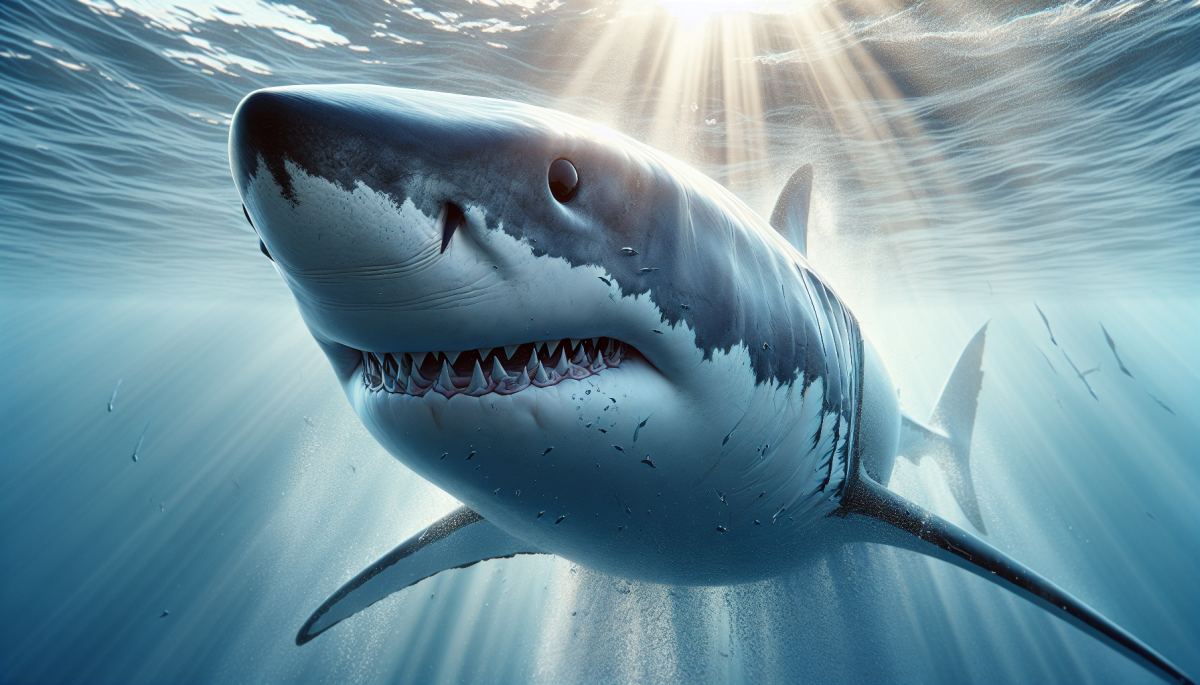
Great white sharks have long occupied a peculiar biological niche: they are partially warm-blooded in a cold ocean, which gives them speed and cognitive sharpness that most fish cannot match. But that same physiology, once an evolutionary advantage, is now becoming a liability. As ocean temperatures climb with accelerating urgency, new research suggests that great whites may be among the most thermally vulnerable large predators in the sea.
Unlike fully ectothermic fish that simply adjust their metabolism to match surrounding water, great whites use a process called regional endothermy, retaining metabolic heat through a specialized circulatory system known as the rete mirabile. This allows them to keep their muscles, eyes, and brains warmer than the surrounding water, giving them a predatory edge in cold, deep zones. The problem is that this system was built for a specific thermal envelope. When the ocean itself gets warmer, the sharks cannot easily dump excess heat. They are, in a very real sense, overheating.
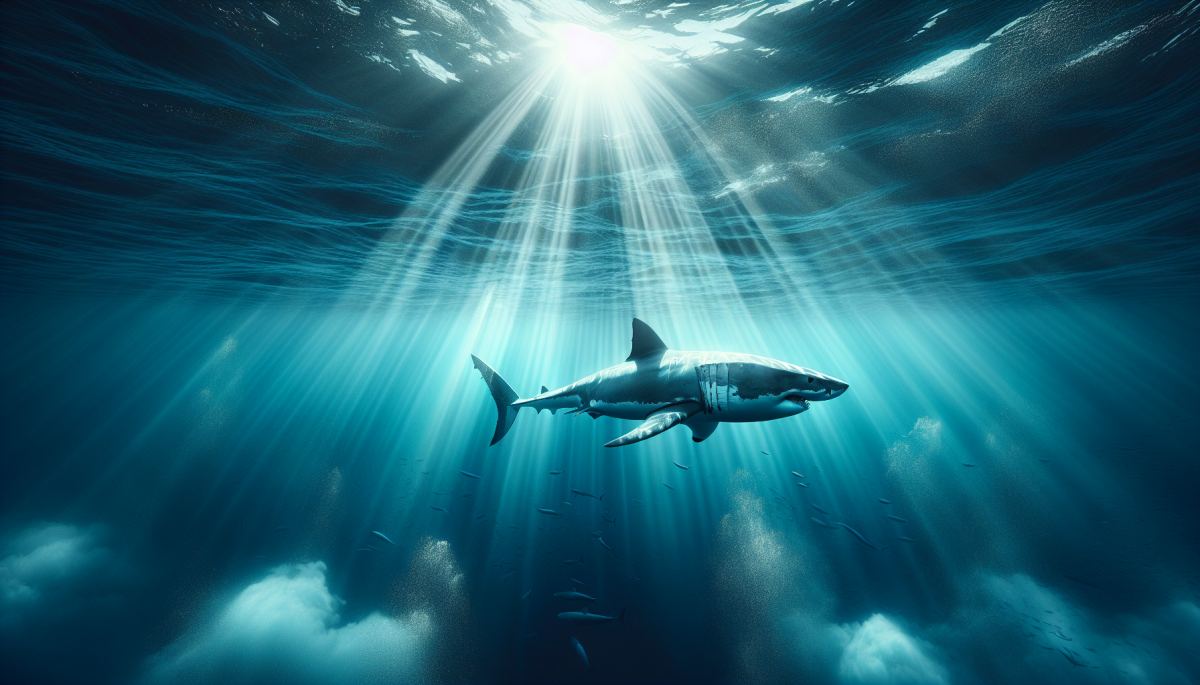
The oceans have absorbed more than 90 percent of the excess heat generated by human greenhouse gas emissions, according to data from the National Oceanic and Atmospheric Administration. Sea surface temperatures hit record highs in 2023 and have remained anomalously warm since. For a species that depends on relatively cool, oxygen-rich waters to regulate its internal temperature, this is not a background inconvenience. It is a direct physiological threat.
Great whites are already range-restricted in ways that other apex predators are not. They tend to concentrate in specific upwelling zones and coastal corridors where cold, nutrient-rich water supports the dense prey populations they depend on. Places like the waters off central California, South Africa's Western Cape, and southern Australia have historically served as critical habitat. But warming is reshuffling those zones. Prey species are migrating poleward, and the thermal corridors that once made certain coastlines ideal hunting grounds are narrowing or shifting entirely.
What makes this particularly consequential from a systems perspective is the role great whites play in structuring marine ecosystems. As apex predators, they regulate the behavior and population dynamics of species far below them on the food chain, a phenomenon ecologists call the "landscape of fear." When sharks are present, prey species like seals and sea lions alter their foraging patterns, which in turn affects fish populations, kelp forests, and coastal nutrient cycles. Remove or displace the shark, and those effects ripple outward in ways that are difficult to predict and even harder to reverse.
There is also a feedback loop worth watching. As great whites are pushed into cooler, deeper, or more poleward waters, they increasingly overlap with fishing activity in those regions, raising the probability of bycatch and human conflict. Simultaneously, their displacement from traditional coastal zones may reduce the ecological pressure on mid-level predators, allowing those populations to expand in ways that could destabilize local fisheries. The shark's absence, in other words, is not ecologically neutral.
One of the more troubling dimensions of this story is how little continuous physiological data exists on wild great white sharks. Tagging programs have improved dramatically over the past two decades, with organizations like OCEARCH providing real-time tracking of individual animals across ocean basins. But metabolic and thermal stress data collected from free-swimming great whites remains sparse. Researchers are largely inferring vulnerability from laboratory analogs and population-level distribution shifts rather than direct measurement.
This monitoring gap matters because great whites reproduce slowly. Females do not reach sexual maturity until their mid-teens, and they likely give birth to small litters every two to three years. A species with that kind of reproductive timeline cannot adapt quickly to rapid environmental change. If thermal stress is already affecting survival or reproductive success, the signal in population data could lag by a decade or more before it becomes statistically obvious, and by then, recovery becomes exponentially harder.
The great white shark has survived five mass extinction events. It has outlasted the dinosaurs and navigated ice ages and warm periods that would be unrecognizable to modern ecologists. But those transitions unfolded over thousands or millions of years. What is happening now is measured in decades, and the question is not whether great whites can adapt, but whether the ocean will give them enough time to try.
References
- NOAA (2024) — Ocean Heat Content
- Bernal et al. (2012) — Energetics of Locomotion in the Shortfin Mako Shark
- Ferretti et al. (2010) — Patterns and Ecosystem Consequences of Shark Declines in the Ocean
- Pecl et al. (2017) — Biodiversity Redistribution Under Climate Change
- OCEARCH — Global Shark Tracker
Discussion (0)
Be the first to comment.
Leave a comment