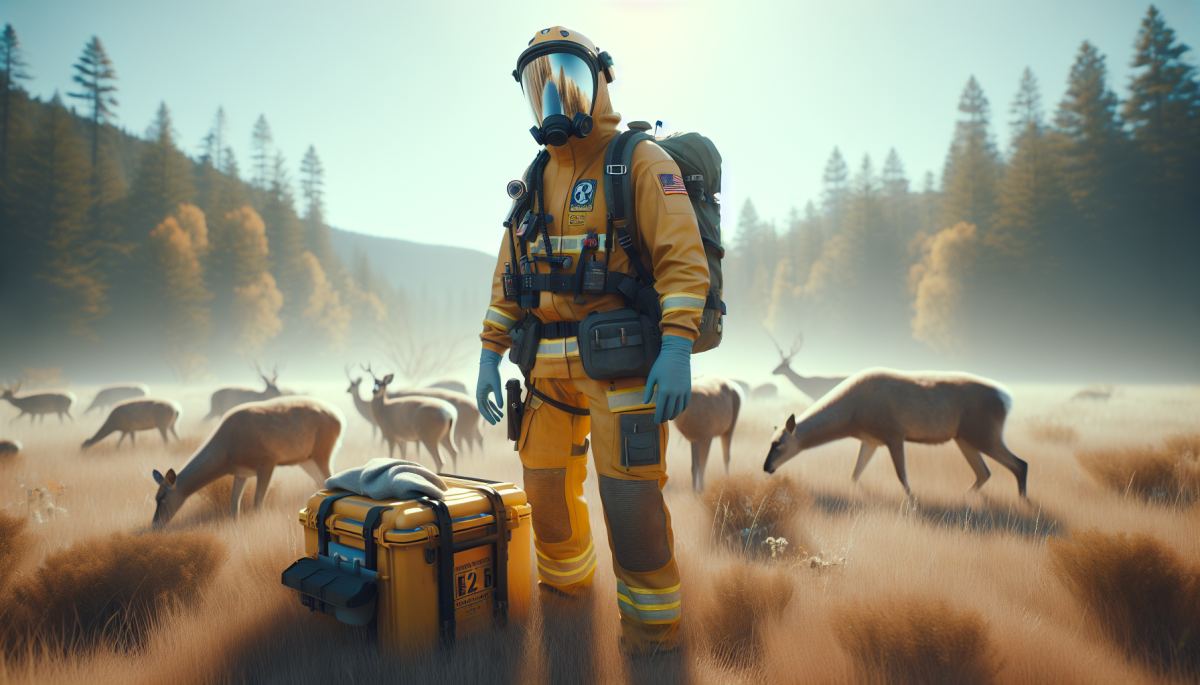
Wesley Sarmento didn't have a job description to borrow from. When Montana hired him in 2017 as the state's first-ever prairie-based grizzly bear manager, he was stepping into a role that hadn't existed before, because the situation that required it hadn't existed before either. Grizzly bears, once nearly exterminated from the American West, had recovered enough in population that they were pushing beyond the mountain ecosystems most people associate with them and spreading into the open grasslands of eastern Montana. That recovery is, by any ecological measure, a success story. It is also a collision course.
Sarmento spent roughly seven years navigating the fault line between a federally protected species still listed as threatened under the Endangered Species Act and a human population that has been steadily expanding into landscapes that were, not so long ago, genuinely wild. His work wasn't just biological fieldwork. It was diplomacy, crisis management, and community relations rolled into a single job title that barely existed on any organizational chart. The emergence of that role tells us something important about where conservation is heading, and about the compounding pressures that are quietly reshaping how governments, ecosystems, and rural communities interact.
Grizzly bears were listed as threatened under the Endangered Species Act in 1975, when the lower-48 population had collapsed to somewhere around 700 to 800 animals, concentrated in a handful of isolated ecosystems. Decades of federal protection, habitat management, and reduced hunting have pushed that number significantly higher. The Greater Yellowstone Ecosystem alone now supports an estimated 1,000 grizzlies, and the Northern Continental Divide Ecosystem, which includes Glacier National Park, holds another 1,000 or more. That growth has consequences for range. Bears, particularly young males displaced by dominant individuals, are moving outward, and the prairie of eastern Montana represents new territory.

This is where the systems dynamics get interesting. Conservation success, the very outcome wildlife managers spent decades working toward, generates its own second-order pressures. A recovered predator population doesn't stay neatly within the boundaries drawn for it. It disperses into agricultural land, encounters livestock, and triggers fear and economic anxiety among ranchers and rural residents who had no living memory of sharing their landscape with grizzlies. The political and social infrastructure for coexistence simply wasn't built, because for generations, it wasn't needed.
Sarmento's position was essentially a real-time attempt to build that infrastructure on the fly. His work likely involved responding to bear-livestock conflicts, tracking individual animals, advising landowners on deterrence, and serving as the human face of a federal protection regime that many in rural Montana view with deep suspicion. That last part is perhaps the most underappreciated dimension of the job. Wildlife management at this frontier isn't primarily a biological problem. It's a trust problem.
The broader pattern here extends well beyond Montana. As climate change shifts habitat ranges and as decades of conservation work begin to show results for species like wolves, mountain lions, and bears, wildlife agencies across North America are encountering a structural gap. The science of recovery has outpaced the social and institutional capacity to manage what recovery actually looks like on the ground. Hiring a single prairie grizzly manager is a meaningful step, but it also reveals how thin the human infrastructure for coexistence remains.
There's a feedback loop embedded in this situation that deserves attention. When bear-human conflicts escalate and go unmanaged, public tolerance for grizzly recovery erodes. That erosion creates political pressure to delist the species or weaken protections, which in turn threatens the population gains that took fifty years to achieve. A wildlife first responder like Sarmento is, in this sense, not just managing individual bears. He is managing the political conditions under which conservation remains possible at all.
The job title may sound novel, but the underlying need is urgent and growing. As species recover and as human development continues to fragment and encroach on wild landscapes, the demand for people who can operate at this human-wildlife interface will only increase. Universities, agencies, and conservation organizations are only beginning to formalize training for this kind of work. The question isn't whether more Wesley Sarmentos will be needed. It's whether the institutions responsible for wildlife will build the capacity to hire them before the next conflict makes the news.
Discussion (0)
Be the first to comment.
Leave a comment