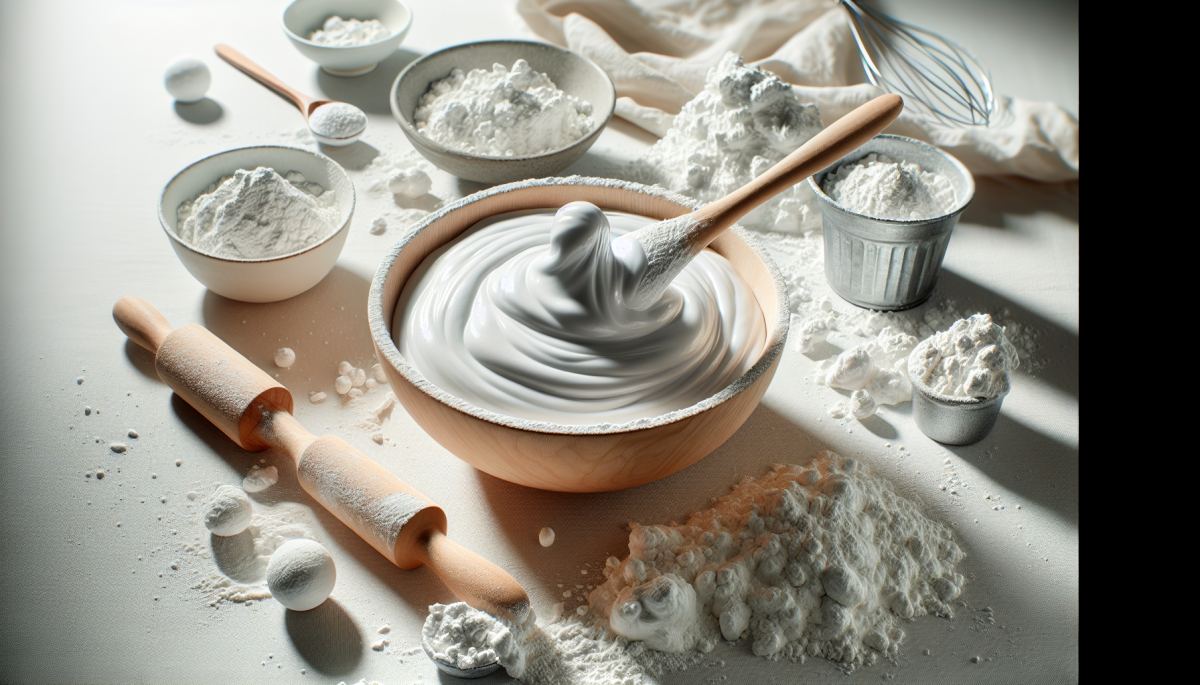
Oobleck, that gooey mixture of cornstarch and water that has delighted science teachers and stumped physicists for decades, turns out to be hiding at least one more trick. New research has found that dense drops of oobleck subjected to high shear rates behave in a way that defies the tidy categories scientists have long used to describe it: the drops first spread out like an ordinary liquid before abruptly stiffening into a solid. That sequence, liquid then solid, in a single impact event, is not what most models predicted, and it opens a surprisingly wide set of questions about how we understand materials that refuse to pick a side.
Oobleck belongs to a class of materials called non-Newtonian fluids, substances whose viscosity changes depending on the forces applied to them. Unlike water or oil, which flow predictably regardless of how hard you stir them, oobleck becomes dramatically more resistant to deformation under stress. Hit it fast and it acts like concrete. Let your hand sink in slowly and it swallows you like quicksand. This property, known as shear thickening, has been studied seriously since at least the mid-20th century, and researchers have long understood the basic mechanism: at high concentrations, cornstarch particles jam together under pressure, forming transient solid-like clusters. What the new findings suggest, however, is that the transition between states is not instantaneous or uniform across a drop. There is a temporal sequence, a brief liquid phase during spreading, before the jamming front catches up and locks the material in place.
The distinction between "stiffens on impact" and "spreads first, then stiffens" may sound academic, but it carries real engineering weight. Materials designed to absorb impacts, whether in body armor, athletic padding, or protective packaging, are often engineered around the assumption that shear-thickening fluids respond more or less instantaneously. If there is a measurable window during which the material is still behaving like a liquid, that window represents a vulnerability. A fast enough projectile, or a sufficiently concentrated force, could exploit that lag before the jamming response kicks in.
This also complicates the feedback loop that engineers rely on when they model these materials computationally. Most simulations treat the shear-thickening transition as a threshold event: below a certain stress, liquid; above it, solid. A time-dependent spreading phase introduces a dynamic that is much harder to parameterize. The material's behavior becomes path-dependent, meaning the history of how force was applied matters as much as the magnitude. That is a significantly more complex design problem, and it suggests that some existing oobleck-based protective materials may be performing differently in the field than their models predict.
There is a broader systems-level lesson embedded in this finding, one that extends well beyond fluid dynamics. Oobleck has been studied in laboratories, featured in countless viral videos, and even proposed as a component in real-world protective gear, all while apparently concealing a phase behavior that only becomes visible under specific conditions of drop density and shear rate. It is a reminder that complex systems, whether physical, biological, or social, routinely exhibit behaviors that only emerge at particular scales or under particular pressures. The tools we use to study them at one resolution can systematically miss what happens at another.
The second-order consequence worth watching here is what this finding does to the pipeline of oobleck-inspired materials currently in development. Research into STF, or shear-thickening fluid, body armor has been ongoing for years, with groups at institutions like the U.S. Army Research Laboratory and various university labs exploring how to embed these fluids into flexible fabrics. If the spreading-before-stiffening behavior is reproducible and significant, it may prompt a round of re-evaluation across that entire research space, not just a tweak to one paper's conclusions but a reassessment of foundational assumptions.
Science rarely moves in straight lines, and the history of non-Newtonian fluids is full of moments where a material thought to be well understood revealed new depth. The fact that a mixture of cornstarch and water, something a ten-year-old can make in a kitchen, is still generating genuine surprises in peer-reviewed research says something worth sitting with. The most familiar systems are not always the most fully understood, and the gap between those two things is where the most interesting physics tends to live.
Discussion (0)
Be the first to comment.
Leave a comment