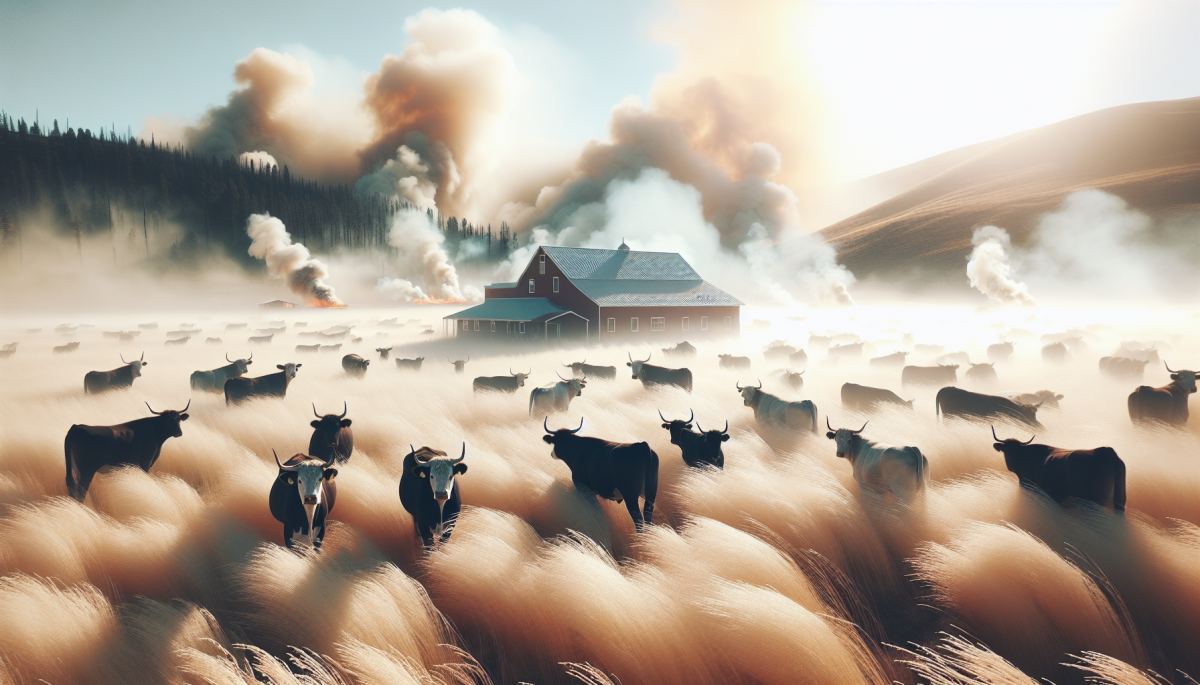
The grasslands of Nebraska have always carried a certain quiet resilience. Ranchers have worked these plains for generations, reading the sky, rotating their herds, and absorbing the slow rhythms of drought and recovery. But 2025 has delivered something different. Nearly a million acres have burned across the state this year, and the fires are no longer behaving the way ranchers remember. One expert has called it "a new kind of wildfire era," and the phrase carries weight that goes well beyond the dramatic.
For cattle ranchers, fire has always been a dual force. Controlled burns refresh pasture, clear invasive species, and stimulate new grass growth. But uncontrolled wildfire at this scale is something else entirely. It destroys the fencing infrastructure that ranchers depend on to manage grazing rotations, wipes out the forage that cattle need to gain weight before market, and in the worst cases, kills livestock outright. The financial hit is not just immediate. It compounds across seasons, because burned pasture can take two to three years to recover enough to support a full herd. Ranchers who lose their grass in spring may be forced to sell cattle early, flooding the market at exactly the wrong moment and driving down prices for everyone.
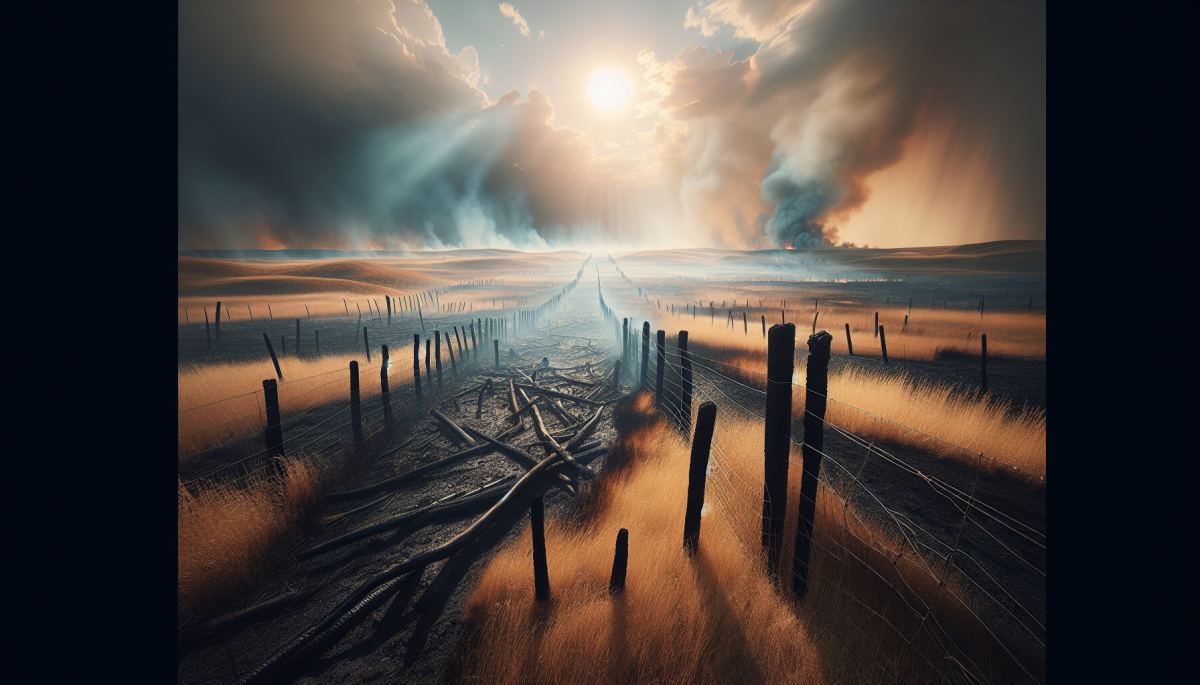
What makes Nebraska's situation particularly instructive from a systems perspective is how several pressures have converged to create conditions that amplify each other. Drought weakens grass, which dries out faster and burns hotter. Warmer winters allow invasive grasses like cheatgrass to spread further north, and cheatgrass is notorious for creating continuous fuel beds that carry fire across landscapes that would have naturally broken a blaze in earlier decades. Meanwhile, the same economic pressures that have squeezed ranching margins for years have made it harder for operations to invest in firebreaks, water infrastructure, or the kind of landscape-level coordination that might slow a fire's spread.
There is also a land fragmentation problem quietly underneath all of this. As ranching operations have consolidated or sold off parcels over the decades, the patchwork of ownership across Nebraska's grasslands has made coordinated fire management harder to execute. A prescribed burn that makes sense for one property may create liability concerns for a neighbor. The result is a landscape that is simultaneously more flammable and less managed.
Federal and state programs like the USDA's Emergency Livestock Assistance Program exist to help ranchers recover feed and infrastructure costs after disasters, but these programs are designed for episodic events, not for a baseline shift in fire frequency and intensity. When fires become a near-annual expectation rather than a rare emergency, the relief architecture starts to strain. Ranchers who have filed multiple claims in recent years describe a bureaucratic process that moves far slower than the fire season itself.
The second-order consequences of this shift are still unfolding, but some are already visible. Nebraska is one of the top cattle-producing states in the country, and sustained pressure on its ranching sector will eventually move through the beef supply chain. Herd liquidations driven by pasture loss reduce the national cattle inventory, which takes years to rebuild given the biological timelines of beef production. Consumers who noticed beef prices climbing in recent years are looking at a market that has very little slack left in it.
There is also a quieter demographic consequence. Ranching in the Great Plains is already an aging profession, with the average age of principal farm operators in Nebraska sitting above 57 according to USDA data. Catastrophic fire seasons accelerate the calculus for older ranchers weighing whether to rebuild or retire. Each exit removes not just a business but decades of accumulated land knowledge that does not transfer easily to whoever comes next, whether that is a younger rancher, a corporate operation, or a conservation land trust.
The phrase "new kind of wildfire era" is doing a lot of work. It is an acknowledgment that the mental models ranchers and land managers have relied on are no longer sufficient, and that adaptation will require not just better equipment or more federal dollars, but a rethinking of how grassland landscapes are managed collectively. The ranchers who figure that out first may find themselves not just surviving the next fire season, but quietly redefining what cattle country looks like for the generation after them.
References
- USDA National Agricultural Statistics Service (2022) — 2022 Census of Agriculture: Nebraska State Profile
- Balch et al. (2017) — Introduced annual grass increases regional fire activity across the arid western USA
- USDA Farm Service Agency (2024) — Emergency Livestock Assistance Program
- Donovan et al. (2017) — The role of drought in driving wildfire risk
Discussion (0)
Be the first to comment.
Leave a comment