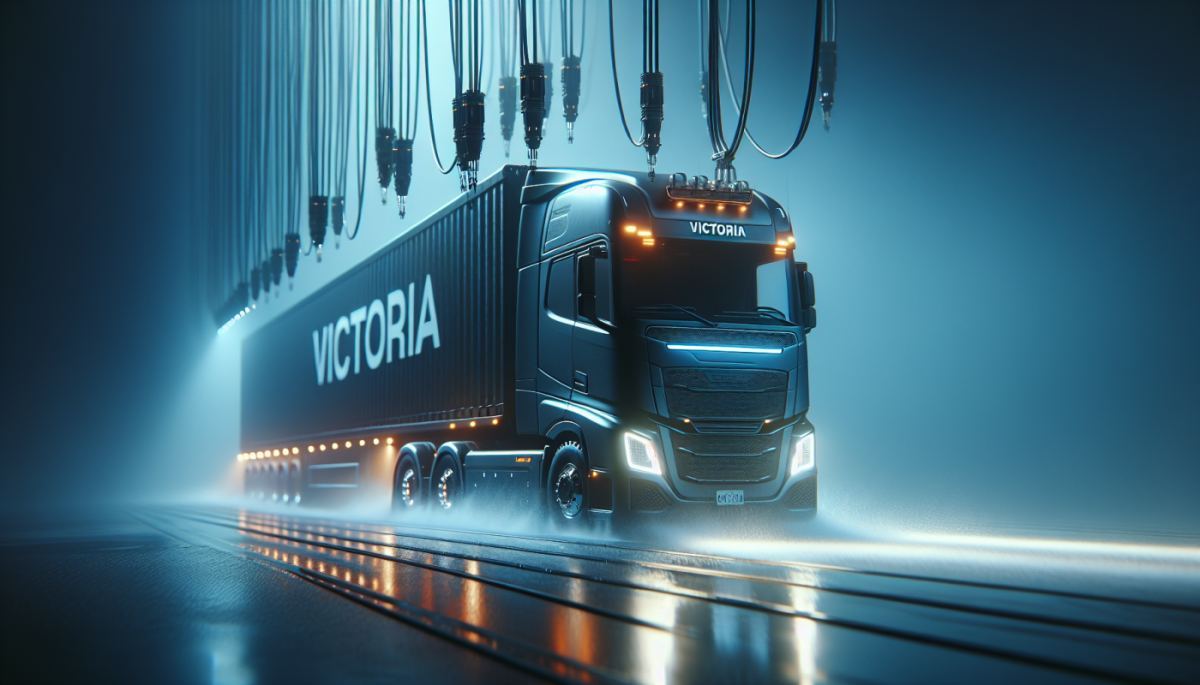
The Victorian government has quietly made a significant wager on the future of commercial transport, announcing two new programs designed to help freight businesses reduce their dependence on diesel and transition toward low and zero-emission vehicles. The move comes as fuel costs continue to squeeze margins across the logistics sector, and as pressure mounts on Australian states to show measurable progress on industrial emissions.
On the surface, this looks like a clean energy subsidy story. But the underlying logic is more interesting than that. Freight operators in Australia have been caught in a particularly brutal cost structure for several years now. Diesel prices, which spiked sharply following global supply disruptions, have remained stubbornly elevated relative to pre-pandemic norms. For businesses running large fleets across Victoria's sprawling supply chains, fuel can represent anywhere from 25 to 40 percent of total operating costs. When a government frames an EV transition program around "saving money" rather than "saving the planet," it is making a calculated rhetorical choice, one aimed at operators who are skeptical of green mandates but acutely sensitive to their bottom line.
That framing matters enormously. The freight industry has historically been one of the harder sectors to decarbonize, not because the technology is unavailable, but because the economics have been slow to align. Electric heavy vehicles carry higher upfront costs, charging infrastructure along freight corridors remains patchy, and range anxiety is a genuine operational concern for long-haul operators. Victoria's two-program approach appears to acknowledge this complexity by targeting both adoption incentives and the structural barriers that make adoption feel risky.
What often gets missed in announcements like this one is that vehicle subsidies alone rarely move the needle in freight. The real constraint is infrastructure. A logistics company can purchase an electric truck, but if the depot lacks high-capacity charging, if the route between Melbourne and Geelong has no reliable fast-charging stop, and if the grid connection upgrade takes 18 months to approve, the vehicle sits underutilized or gets quietly sidelined. This is the feedback loop that has stalled EV freight adoption in multiple jurisdictions globally: incentives flow toward vehicles, but the supporting ecosystem lags, which produces disappointing utilization rates, which then dampens enthusiasm for further investment.

Victoria has been building toward a broader zero-emission vehicle ecosystem for some time. The state's Zero Emissions Vehicle Roadmap, released in 2021, set a target of 50 percent of new light vehicle sales being zero-emission by 2030. Extending that ambition into the freight sector is a logical next step, but the complexity scales considerably. A passenger EV charges overnight in a driveway. A freight depot running a dozen heavy vehicles needs industrial-scale power infrastructure, potentially requiring upgrades to local grid connections that fall under federal and network operator jurisdiction, not state government control.
The more consequential long-term effect of programs like this may not be the direct emissions reduction, which will be modest in the near term, but the market signal they send to fleet managers, vehicle manufacturers, and infrastructure investors. When a state government formalizes support for zero-emission freight, it shifts the risk calculus for private actors who were waiting to see whether policy would remain stable. Fleet replacement cycles in the freight industry run seven to fifteen years. A business that begins evaluating electric options today, even tentatively, is making decisions that will shape its emissions profile well into the 2030s.
There is also a competitive dynamic worth noting. If Victorian freight operators begin adopting lower-cost electric fleets at scale, they gain a structural cost advantage over interstate competitors still running on diesel. That competitive pressure could accelerate adoption in New South Wales and Queensland without any additional government intervention, a classic diffusion-of-innovation cascade that policymakers rarely get credit for engineering.
Whether Victoria's programs are designed with enough depth to actually trigger that cascade remains to be seen. The details of funding levels, eligibility criteria, and infrastructure co-investment will determine whether this is a genuine inflection point or another well-intentioned announcement that moves too few vehicles to matter. The freight industry will be watching the fine print closely, and so should anyone interested in how industrial decarbonization actually happens in practice.

Discussion (0)
Be the first to comment.
Leave a comment