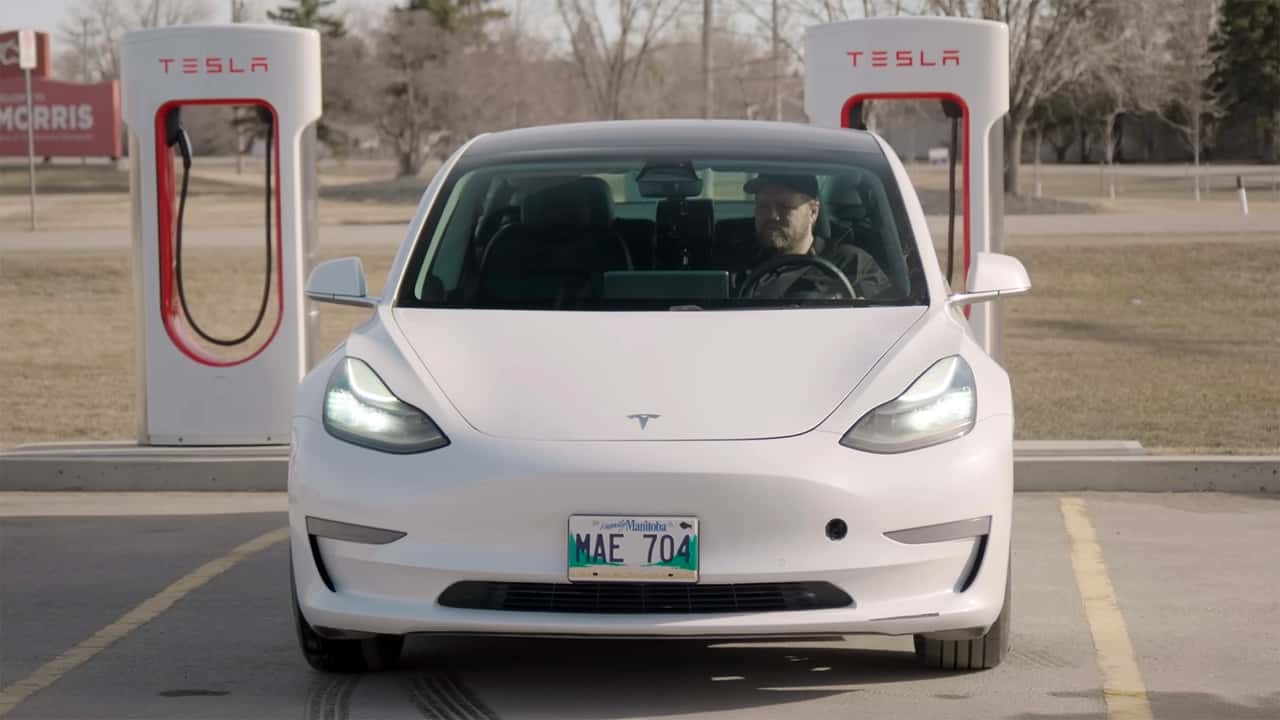
Battery degradation has always been the quiet anxiety underneath the electric vehicle revolution. Range anxiety gets the headlines, but the slower, more insidious worry is whether the battery that powers your car today will still be worth anything in five or ten years. A 2019 Tesla Model 3 Standard Range Plus with 380,000 miles on its original battery pack offers one of the most concrete data points yet on that question, and the answer is genuinely complicated.
The car still drives. That part is remarkable. At 380,000 miles, most internal combustion engines would have consumed multiple timing belts, water pumps, and quite possibly an entire rebuilt drivetrain. This Model 3 is running on its original motor and its original battery. But the battery has lost roughly a third of its original capacity. A pack that once delivered around 240 miles of EPA-rated range now offers something closer to 160. For a daily commuter who charges at home every night, that might be entirely livable. For someone who bought the car expecting to take long road trips without frequent stops, it represents a meaningful erosion of the product they paid for.
To understand what 380,000 miles actually means for a battery, it helps to think in charge cycles rather than distance. Tesla's Standard Range Plus pack carries roughly 54 kilowatt-hours of usable energy. At an average efficiency of around 4 miles per kilowatt-hour, 380,000 miles represents somewhere in the neighborhood of 1,750 full charge cycles, though real-world charging behavior, partial cycles, temperature exposure, and charging speed all affect how the chemistry ages. Lithium-ion cells degrade through a combination of calendar aging and cycle aging, and the two interact in ways that are still being actively researched.
A 33 percent capacity loss over that distance is actually consistent with what battery researchers have long predicted for first-generation lithium-ion chemistries under real-world conditions. Studies from institutions like the Idaho National Laboratory and independent EV research groups have found that most lithium-ion packs lose between 20 and 30 percent of capacity over 100,000 to 150,000 miles, with the rate of loss typically slowing after the initial steep drop. Reaching 380,000 miles with only a third of capacity gone suggests the degradation curve flattened significantly after the early years, which is a pattern consistent with the electrochemical literature.
Tesla itself has published data suggesting its vehicles retain around 90 percent of battery capacity after 200,000 miles, though that figure applies to newer chemistries and may not reflect the 2019 Standard Range Plus pack, which used a different cell configuration than later models.
The real story here is not about one car. It is about what happens to the used EV market as these vehicles age into their second and third ownership cycles. A buyer purchasing a 2019 Model 3 today is not buying a new car. They are buying a car with an uncertain battery history, a pack that may have already lost 20 or 30 percent of its capacity, and a replacement cost that, depending on the model and year, can run anywhere from $10,000 to $20,000 or more. That replacement cost does not disappear just because the car is used. It transfers to the next owner, often invisibly.
This creates a feedback loop with serious implications for EV adoption. The promise of lower total cost of ownership for electric vehicles depends heavily on battery longevity. If buyers in the used market begin to internalize the risk of degraded packs, demand for older EVs could soften, suppressing resale values and making it harder for first owners to recoup their investment. That in turn makes new EVs less financially attractive, slowing the transition at exactly the moment when policymakers are counting on accelerating it.
There is also a recycling and second-life dimension. A battery at 67 percent of original capacity is not dead. It retains real value for stationary energy storage applications, where weight and volume constraints are less critical than in a vehicle. Companies like Nissan and BMW have already piloted programs repurposing degraded EV batteries for grid storage. But the infrastructure to capture that value at scale, to move batteries efficiently from aging vehicles into second-life applications, barely exists yet in the United States.
The 380,000-mile Model 3 is, in one sense, a success story. In another, it is a preview of a transition the industry has not fully prepared for, one where the question is no longer whether electric vehicles can last, but whether the systems around them can keep up.
References
- Idaho National Laboratory (2022) — Electric Vehicle Battery Degradation Study
- Woody, M. et al. (2020) — The role of pickup truck electrification in the decarbonization of light-duty vehicles
- Neubauer, J. & Wood, E. (2014) — The impact of range anxiety and home, workplace, and public charging infrastructure on simulated battery electric vehicle lifetime utility

Discussion (0)
Be the first to comment.
Leave a comment