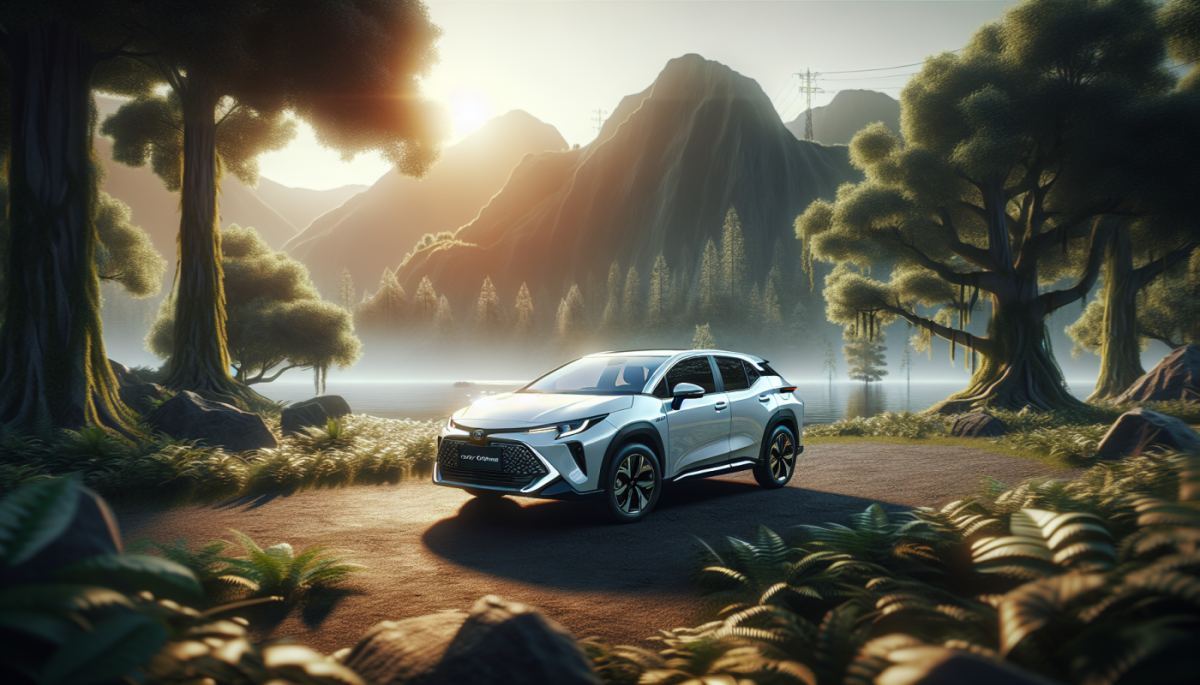
The 2027 Toyota Corolla Cross Hybrid arrives not with fanfare but with the quiet confidence of a company that has been running this particular race longer than almost anyone else. Toyota's hybrid lineage stretches back to the original Prius in 1997, and three decades later, the automaker is applying that accumulated engineering patience to one of the most fiercely contested segments in the global car market: the compact crossover. The Corolla Cross Hybrid is not trying to be exciting. It is trying to be inevitable.
The vehicle sits at the intersection of two powerful consumer trends. Crossovers and SUVs now account for roughly 60 percent of new vehicle sales in the United States, a structural shift that has essentially retired the traditional sedan as a mass-market product. At the same time, hybrid powertrains are experiencing a renaissance that pure battery-electric vehicles have, at least temporarily, failed to sustain. Range anxiety, charging infrastructure gaps, and sticker prices that remain stubbornly high have pushed a significant portion of eco-conscious buyers back toward the hybrid middle ground. Toyota, which never fully abandoned hybrids in its rush toward an all-electric future, finds itself in an unexpectedly strong position.
The Corolla Cross Hybrid packages Toyota's familiar two-motor hybrid system into a body that is compact enough for urban parking but tall enough to satisfy the psychological need for road presence that defines modern consumer preference. Fuel economy figures in the mid-to-upper 40s per gallon place it well ahead of most non-hybrid competitors in its class, and the all-wheel-drive variant, which uses a third electric motor to power the rear axle without a mechanical driveshaft, is a piece of engineering that deserves more attention than it typically receives in mainstream reviews. It is a system that delivers genuine traction benefits while adding minimal weight and mechanical complexity, a combination that is harder to achieve than it sounds.
Pricing is where the Corolla Cross Hybrid makes its most consequential argument. By positioning the hybrid variant at only a modest premium over the standard gasoline model, Toyota is doing something strategically significant: it is collapsing the psychological barrier that has historically made hybrid ownership feel like a sacrifice or a statement rather than simply a sensible transaction. When the fuel savings over a typical ownership period credibly offset the purchase premium within two or three years, the hybrid stops being a values-driven choice and becomes a financial one. That is a much larger market.
This pricing discipline reflects lessons absorbed from years of watching hybrid adoption curves. Early adopters will pay a premium for virtue. The mass market will not. Toyota's volume ambitions for the Corolla Cross Hybrid depend entirely on reaching buyers who are not particularly interested in their carbon footprint but are intensely interested in their monthly fuel bill. In an environment where gasoline prices remain volatile and household budgets remain stretched, that audience is substantial and growing.
The competitive pressure this creates for rivals is not trivial. Automakers who bet heavily on battery-electric vehicles as their primary response to emissions regulations are now watching Toyota capture hybrid market share with technology that is already amortized, already reliable, and already trusted by consumers who remember the Prius era. The R&D costs that would cripple a new entrant are, for Toyota, essentially sunk. That is a structural advantage that does not show up in a single model review but shapes the entire competitive landscape.
The deeper systems consequence of the Corolla Cross Hybrid's market positioning may not be visible in sales charts for another few years. If affordable, accessible hybrids continue to capture the buyers who might otherwise have eventually moved to battery-electric vehicles, they could extend the timeline of internal combustion dependency in ways that complicate national emissions targets. A buyer who purchases a 42-mpg hybrid today is likely to own that vehicle for a decade or more. That is a decade during which charging infrastructure builds out, battery costs fall further, and grid electricity gets cleaner. The hybrid buyer may ultimately transition to full electrification in better conditions than today's early EV adopters faced.
Or the hybrid may simply become the permanent destination rather than the bridge. Toyota, to its credit or its critics' frustration depending on your perspective, has never fully resolved that ambiguity in its own public messaging. What the 2027 Corolla Cross Hybrid does resolve, at least for now, is the question of what a practical, affordable, low-drama path to lower emissions looks like for the median car buyer. It looks exactly like this: familiar, competent, and priced to move.
Discussion (0)
Be the first to comment.
Leave a comment