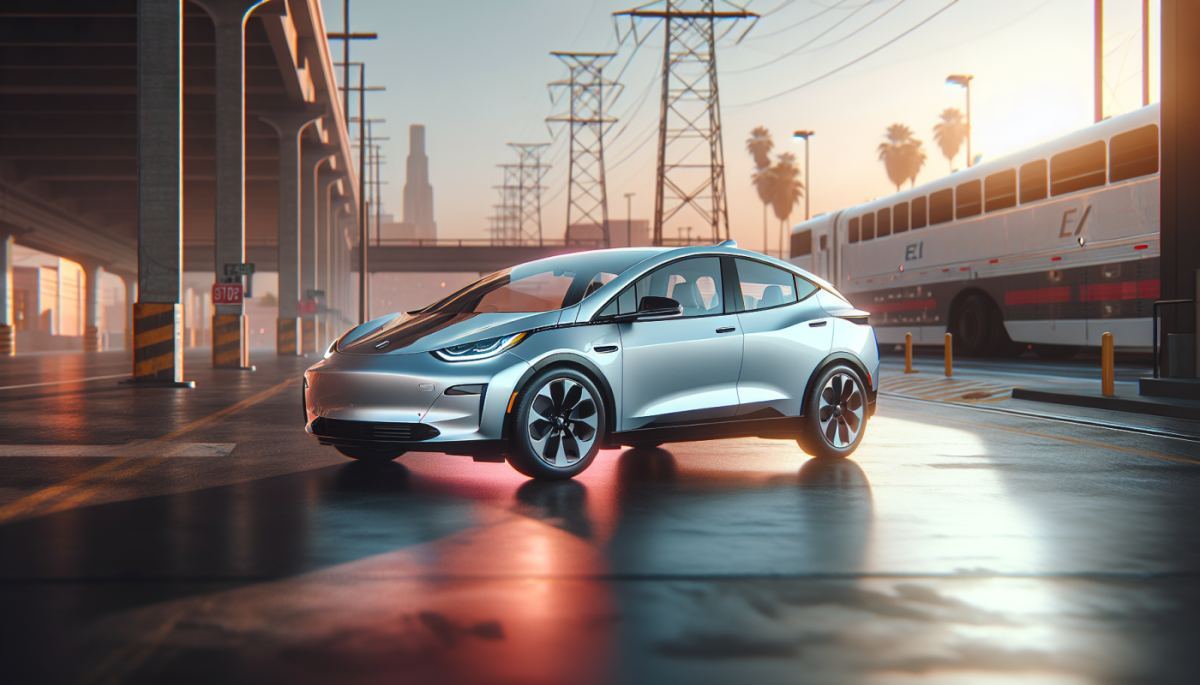
Gas prices have a way of reshaping consumer behavior faster than almost any other economic signal. When prices spike at the pump, the ripple effects move quickly through household budgets, commuting decisions, and eventually the used car market itself. What's different this time is that there's a genuine alternative sitting in dealership lots and on private listings that didn't exist at scale even five years ago: affordable, depreciated electric vehicles that have quietly become one of the smartest financial moves an average driver can make.
The timing matters. With gas prices under renewed upward pressure, a growing number of buyers are discovering that the used EV market has matured into something genuinely accessible. Models that once carried $40,000 or $50,000 sticker prices are now trading hands for well under $20,000, sometimes significantly less. The depreciation curve on early EVs was steep, driven by range anxiety, charging infrastructure uncertainty, and rapid model iteration. That same depreciation is now a windfall for secondhand buyers who are willing to do a little homework.
The economics of used EVs are counterintuitive in the best possible way. A 2019 or 2020 Nissan Leaf, Chevrolet Bolt, or Hyundai Kona Electric can often be found for prices that rival a basic used compact sedan, yet the operating costs are dramatically lower. Electricity, even at current rates, costs a fraction of what gasoline does on a per-mile basis. For a driver putting 12,000 to 15,000 miles on a vehicle annually, the savings compound quickly enough to offset any price premium within the first year or two of ownership.
What drove those prices down wasn't a flaw in the vehicles themselves. It was a combination of market psychology and the relentless pace of EV development. Consumers worried about battery degradation, about being stranded without a charger, about whether a 150-mile range vehicle would meet their needs. Many of those concerns were legitimate in 2018. They are considerably less so today, when the national charging network has expanded substantially and most American drivers cover fewer than 40 miles per day according to Federal Highway Administration data. A used EV with a real-world range of 100 miles is, for the majority of daily use cases, entirely sufficient.
The battery degradation question deserves honest treatment. Lithium-ion batteries do lose capacity over time, and a used EV will not perform identically to a new one. But the rate of degradation has proven more manageable than early skeptics feared. Studies from organizations like Recurrent, which tracks real-world battery health across tens of thousands of EVs, have found that most vehicles retain the majority of their usable range even after several years of regular use. Buyers who check battery health reports before purchasing are in a much stronger position than those who bought used gasoline vehicles and simply hoped the engine was sound.
The broader implications of a used EV market gaining momentum are worth thinking through carefully. When a meaningful share of cost-conscious buyers shifts toward electric vehicles, even used ones, the demand signal it sends back through the system is significant. Insurance companies are already recalibrating their models for EVs. Independent repair shops are investing in training and equipment. Apartment complexes and employers are accelerating charging infrastructure decisions that they had been deferring.
There is also a feedback loop operating at the policy level. States with active used EV markets generate data that informs utility planning, grid investment, and incentive design. California, for instance, has extended its Clean Vehicle Assistance Program to help lower-income residents purchase used EVs, recognizing that the secondhand market is where electrification actually reaches working-class households. As more states observe this dynamic, similar programs are likely to follow.
The gas price anxiety driving today's used EV searches may prove temporary. Prices fluctuate, and a supply surge or demand softening could ease pressure at the pump within months. But the buyers who make the switch during a period of price stress tend not to switch back. The convenience of home charging, the lower maintenance burden of a vehicle with fewer moving parts, and the simple psychological relief of not watching a gas gauge with dread all create their own retention effects.
The used EV market is not a perfect solution. Charging access remains genuinely unequal across geographies and housing types, and battery replacement costs, while declining, can still be a financial shock for unprepared owners. But for a buyer with a reliable place to charge and a realistic assessment of their daily driving needs, the math has shifted decisively. The question is no longer whether a used EV makes financial sense. It's whether enough buyers realize it before the next price spike forces the calculation on them.

Discussion (0)
Be the first to comment.
Leave a comment