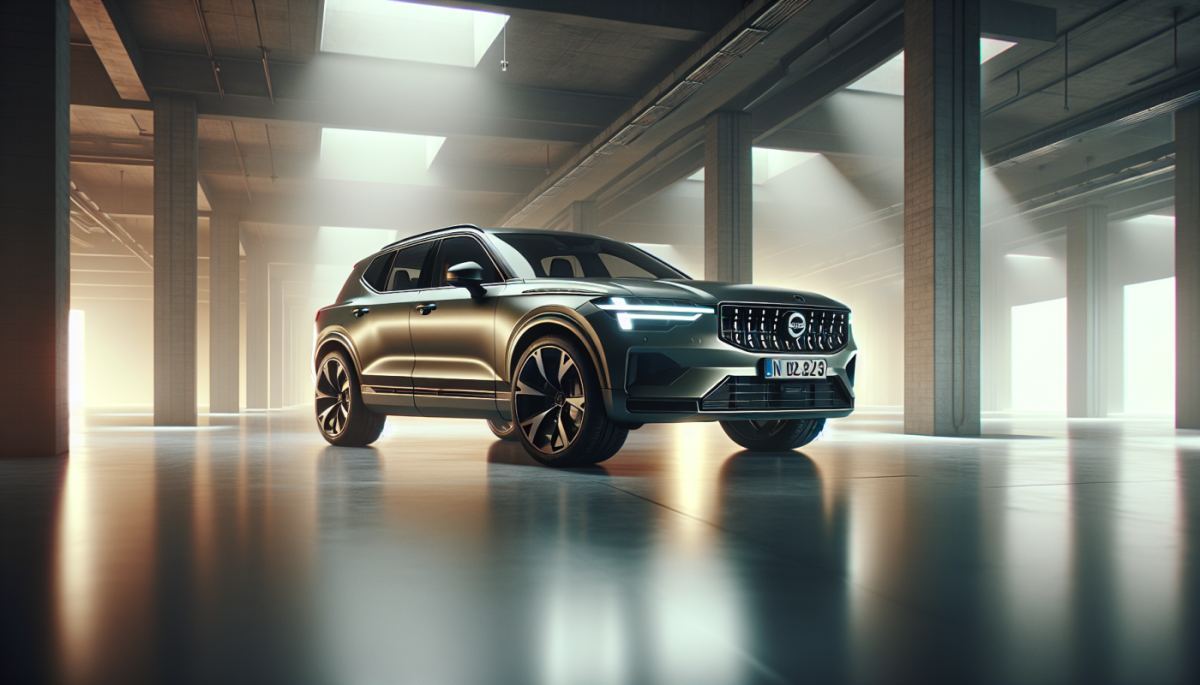
There is a particular kind of automotive theater that high-performance SUVs have perfected over the past decade. The BMW X5 M growls. The Lamborghini Urus screams. The Porsche Cayenne Turbo GT performs a kind of mechanical opera every time you press the throttle. These are vehicles engineered as much for the senses as for the road, and for a long time, that formula was the only one that mattered in the segment. The Polestar 3 does not play that game, and it turns out that might be exactly why it wins.
The Swedish electric SUV, developed under the Polestar brand that grew out of Volvo's performance division, has been quietly accumulating a reputation among drivers who actually push cars hard on twisty roads rather than drag strips or valet queues. The verdict from those who have sampled the full field, from the theatrical Italian to the brutish Bavarian, is striking: the Polestar 3 is more fun to drive hard than any of them. Not louder, not faster in a straight line, not more dramatic. Just better, in the way that actually matters when the road starts to curve.
Understanding why requires thinking about what performance actually means in a two-ton SUV. The traditional approach has been to throw power at the problem. The Urus produces over 650 horsepower. The X5 M Competition makes 617. These numbers are genuinely impressive, but they also expose a fundamental tension: the more power you add to a tall, heavy vehicle, the more engineering effort you must spend managing the chaos that power creates. The result is often a car that feels fast but not particularly connected, one that relies on layers of electronic intervention to keep its considerable mass pointed in the right direction.
Electric drivetrains reframe this problem entirely. The Polestar 3's dual-motor setup delivers torque with a precision and immediacy that no combustion engine can match, and crucially, that torque can be distributed between axles in milliseconds rather than the fractions of a second that mechanical systems require. The physics of the battery pack, mounted low in the floor, also drops the center of gravity in a way that no amount of active suspension tuning can fully replicate in a conventionally engineered SUV. The car simply sits differently in a corner. It rotates more willingly. It communicates more honestly through the steering.
This is not a new observation about electric vehicles in general, but the Polestar 3 appears to have executed on it more completely than most. Where some electric SUVs feel fast but sterile, the Polestar 3 has apparently threaded the needle between engagement and efficiency in a way that its combustion rivals, for all their engineering sophistication, have not.
The deeper story here is not really about one car. It is about what happens to the performance SUV market when the underlying technology shifts so fundamentally that the old metrics of prestige, engine displacement, exhaust note, and brand heritage, begin to decouple from actual driving quality. For decades, buyers in this segment paid a premium for theater because theater and performance were genuinely correlated. A louder, more powerful engine usually did mean a faster, more capable car. That correlation is breaking down.
If electric platforms consistently produce better driving dynamics at equivalent or lower price points, the established players face a problem that goes beyond product development. Their brand identities are built on sensory experiences that electric powertrains cannot replicate. Lamborghini can tune the Urus's exhaust to rattle windows, but it cannot make a battery pack sound like a naturally aspirated V10. The question is whether the buyers who have always paid for that theater will follow the dynamics when the two diverge, or whether they will pay a premium for the performance of nostalgia.
Polestar, for its part, is betting that a younger generation of performance buyers cares more about how a car behaves than how it sounds. That bet is not guaranteed to pay off. Brand building in the luxury segment is slow, and Polestar is still establishing the kind of heritage that Porsche or BMW has accumulated over generations. But on a twisty road, at least, the argument is already being made in the most persuasive language available: the language of the road itself.
The real disruption may not arrive when electric SUVs outsell combustion ones. It may arrive when buyers start asking, for the first time, whether the noise was ever really the point.
Discussion (0)
Be the first to comment.
Leave a comment