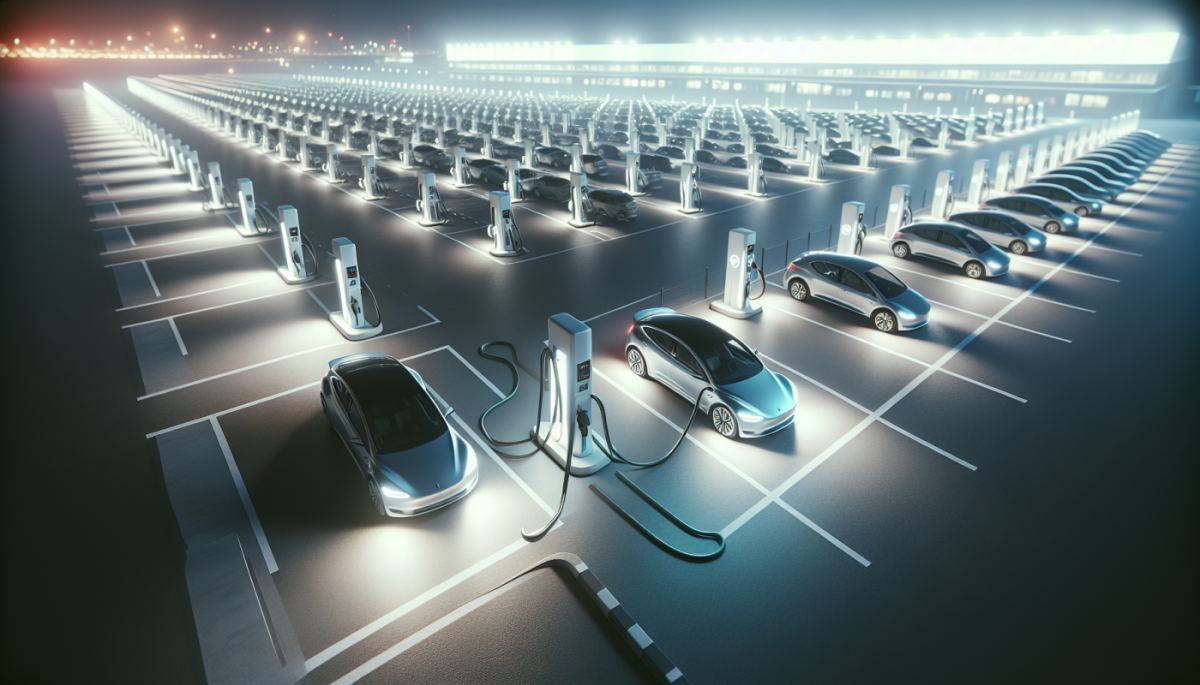
The electric vehicle market in early 2026 looks nothing like the chaotic, overcrowded showroom floor of two years ago. Automakers have been quietly pulling underperforming models from lineups, consolidating resources, and doubling down on the vehicles that actually sell. What's left standing is a leaner, sharper field — and for consumers who've been waiting on the sidelines, the timing has rarely been better.
The culling was inevitable. When legacy automakers rushed EVs to market between 2021 and 2023, many were chasing regulatory credits and investor sentiment more than genuine consumer demand. Vehicles launched with underwhelming range, awkward software interfaces, and price tags that made even enthusiastic early adopters hesitate. The market responded the way markets do: it punished the weak. Ford scaled back production targets on the F-150 Lightning. GM delayed or cancelled several Ultium-platform models. Smaller players either pivoted or folded entirely. What survived that shakeout wasn't luck — it was engineering discipline and pricing honesty.
The models drawing the most attention in March 2026 span nearly every category, from compact crossovers to full-size trucks, and the technology gap between the best and the rest has widened considerably. Charging speeds that once seemed futuristic — 350 kW peak rates, 10-to-80 percent in under 20 minutes — are now table stakes for premium offerings. Real-world range figures, long a source of consumer frustration due to the gap between EPA estimates and actual highway performance, have also improved as automakers have gotten more honest about thermal management and efficiency tuning.
The most disruptive force reshaping which EVs qualify as "best" right now isn't coming from Detroit or Stuttgart. It's coming from a price compression dynamic that Chinese manufacturers set in motion and that domestic and European brands are still scrambling to absorb. BYD's aggressive global pricing — even where its vehicles aren't directly sold in the U.S. due to tariff barriers — has established a psychological ceiling on what American consumers believe a capable EV should cost. That ceiling keeps dropping.
The Inflation Reduction Act's consumer tax credit structure, which ties eligibility to North American assembly and battery sourcing requirements, has created a bifurcated market. Vehicles that qualify for the full $7,500 credit effectively cost thousands less at the point of sale, giving compliant models a structural advantage that has nothing to do with the quality of the car itself. This has pushed several automakers to accelerate domestic battery supply chain investments not because it was the most efficient manufacturing decision, but because the alternative was pricing themselves out of the consideration set entirely.
The result is a feedback loop worth watching: tax policy shapes purchase behavior, purchase behavior shapes production investment, and production investment reshapes which companies can compete at scale in the next cycle. Automakers that threaded that needle early — Tesla, GM with its Equinox EV, Hyundai through its Georgia plant — are now reaping the compounding benefits of having done so.
The EVs that have earned top marks across categories in early 2026 share a few traits that go beyond spec sheets. They tend to come from manufacturers that treated software as a core product rather than an afterthought. Over-the-air update capability, once a Tesla differentiator, is now widespread — but the quality and frequency of those updates varies enormously. The best vehicles get meaningfully better after purchase. The worst get the occasional bug fix and little else.
There's also a reliability story emerging that the industry has been reluctant to tell loudly. Early EV adopters absorbed a disproportionate share of first-generation growing pains — battery degradation surprises, charging network unreliability, software glitches that bricked infotainment systems. Consumer Reports and J.D. Power data from the past 18 months suggest that gap between EV and ICE reliability is narrowing, though it hasn't closed. For mainstream buyers, that trajectory matters more than where the numbers sit today.
The second-order consequence worth tracking is what happens to the used EV market as lease returns from 2022 and 2023 flood dealer lots. Those vehicles, many of them first-generation products from brands that have since improved dramatically, will either become affordable entry points that expand EV adoption further down the income ladder — or they'll become cautionary tales that reinforce skepticism if reliability problems surface at scale. How that plays out over the next 18 months may do more to shape the long-term trajectory of EV adoption than any new model launch.
The best EVs of March 2026 are genuinely impressive machines. The more interesting question is whether the infrastructure, the policy environment, and the used-car ecosystem can keep pace with them.
Discussion (0)
Be the first to comment.
Leave a comment