Rivian has never been a company that does things quietly. It arrived with a splash, promising electric trucks and SUVs that could haul gear into the backcountry while still feeling premium enough for the school pickup line. But ambition without profitability is just a very expensive hobby, and Rivian has been burning cash at a rate that would make even seasoned investors reach for antacids. The R2 is the company's attempt to change that calculus — and the way it plans to do so says a great deal about where the broader EV industry is heading.
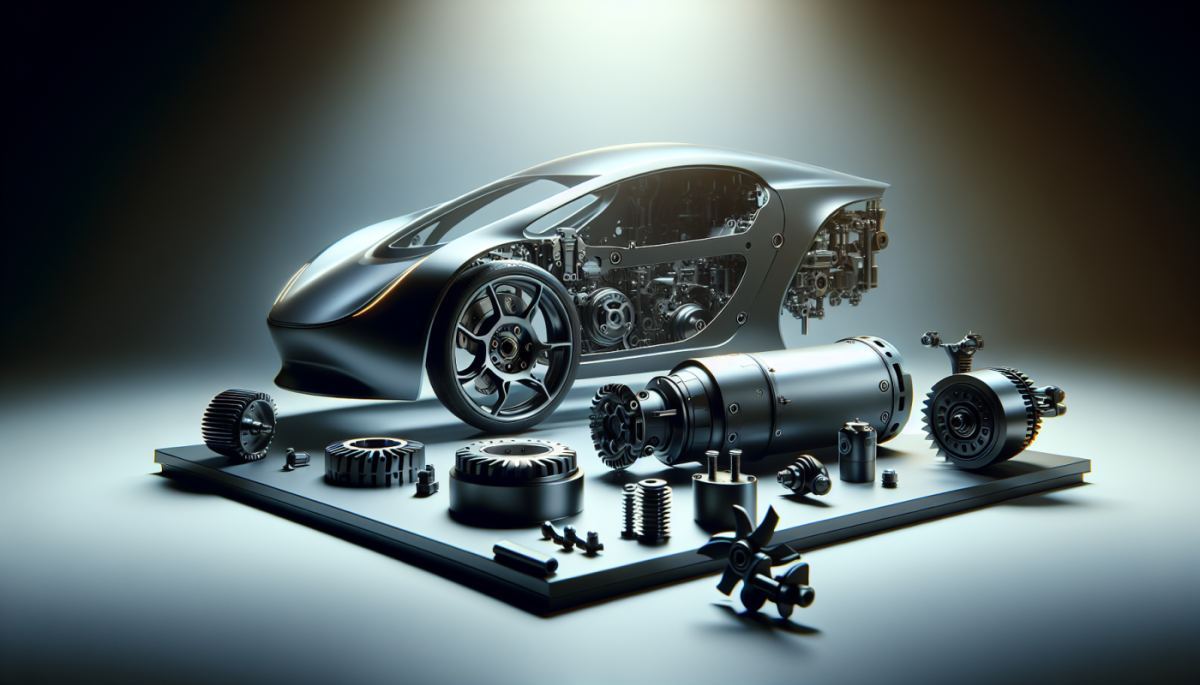
The R2 is set to be Rivian's first globally distributed electric vehicle, a compact SUV priced around $45,000 that targets a far wider audience than the R1T truck or R1S SUV ever could. But the more interesting story isn't the vehicle itself — it's the engineering philosophy underneath it. Rivian is deliberately shrinking its parts inventory, consolidating components across platforms so that fewer unique parts are needed to build more vehicles. It's a strategy borrowed from the manufacturing playbook that Toyota refined over decades and that Tesla has more recently weaponized through its aggressive use of large-scale casting and shared architecture.
For Rivian, this isn't just smart engineering — it's survival arithmetic. The company has faced persistent pressure on its gross margins, and every redundant bracket, unique fastener, or platform-specific module represents money that doesn't need to be spent. When you're producing vehicles at the scale Rivian currently operates, complexity is a hidden tax that compounds across the supply chain, the factory floor, and the service network.
Designing a vehicle for global distribution adds layers of difficulty that domestic-only launches don't face. Regulatory requirements vary significantly between markets — crash standards, emissions certifications, software compliance rules, and even headlight regulations differ enough that engineers typically have to build in flexibility from the start rather than retrofit it later. The fact that Rivian is positioning the R2 as a global product from day one suggests the company has internalized lessons from watching other American EV makers struggle to adapt U.S.-centric designs for European and Asian roads.
There's also a demand logic at work here. The $70,000-plus price point of the R1 series limits the addressable market considerably. The R2's lower price opens Rivian up to the segment where EV adoption is actually accelerating fastest — the middle of the market, where consumers are price-sensitive but increasingly willing to go electric if the value proposition holds. In Europe especially, compact SUVs dominate sales charts, and Rivian would be entering a space currently contested by Volkswagen's ID.4, Hyundai's Ioniq 5, and a growing fleet of Chinese competitors that are themselves masters of cost-efficient manufacturing.
The parts consolidation strategy becomes even more significant in this context. If Rivian can build the R2 on a platform that shares meaningful components with future vehicles — a rumored smaller R3 has already been teased — then the fixed costs of developing and certifying those parts get spread across higher volumes. That's the kind of structural cost improvement that shows up in gross margins over time, not just in a single quarter's press release.
If Rivian's parts-reduction approach works as intended, the downstream effects extend well beyond the company's own balance sheet. A leaner parts strategy means a simpler supply chain, which means fewer single points of failure — a lesson the entire auto industry learned painfully during the semiconductor shortages of 2021 and 2022. Companies that had rationalized their supplier relationships and reduced component variety recovered faster than those running sprawling, fragmented procurement operations.
There's also a service and repair dimension that rarely gets discussed in launch coverage. Fewer unique parts means dealers and independent repair shops carry less inventory to service the vehicles, which reduces ownership costs and could meaningfully improve customer satisfaction scores over the vehicle's lifetime. In a market where EV skeptics still cite repair complexity and parts availability as reasons to stick with internal combustion, this is not a trivial advantage.
The deeper question is whether Rivian can execute. The company has the engineering talent and, thanks to its Amazon delivery van contract, real manufacturing experience at scale. But the gap between a compelling strategy and a profitable product has swallowed more than a few promising automakers. The R2 is scheduled to begin production at Rivian's Normal, Illinois plant, with a new Georgia facility also in development. How quickly those lines ramp, and how cleanly the simplified parts strategy translates to actual build quality, will determine whether Rivian's global ambitions become a case study in smart reinvention or a cautionary tale about the brutal economics of car manufacturing.
What's certain is that the R2 represents a different kind of bet than the R1 ever did — less about proving what an EV could be, and more about proving that Rivian itself can last long enough to matter.
Discussion (0)
Be the first to comment.
Leave a comment