
Rivian has quietly raised the stakes on its most consequential bet yet. The electric vehicle maker has revised upward the planned production capacity at its forthcoming Georgia manufacturing facility to 300,000 units annually, while reaffirming that the plant remains on schedule to begin production in 2028. For a company that has spent much of its short public life managing investor anxiety about cash burn and output shortfalls at its Normal, Illinois facility, the announcement signals something more than an operational update. It is a declaration of intent in a market that is simultaneously expanding and consolidating.
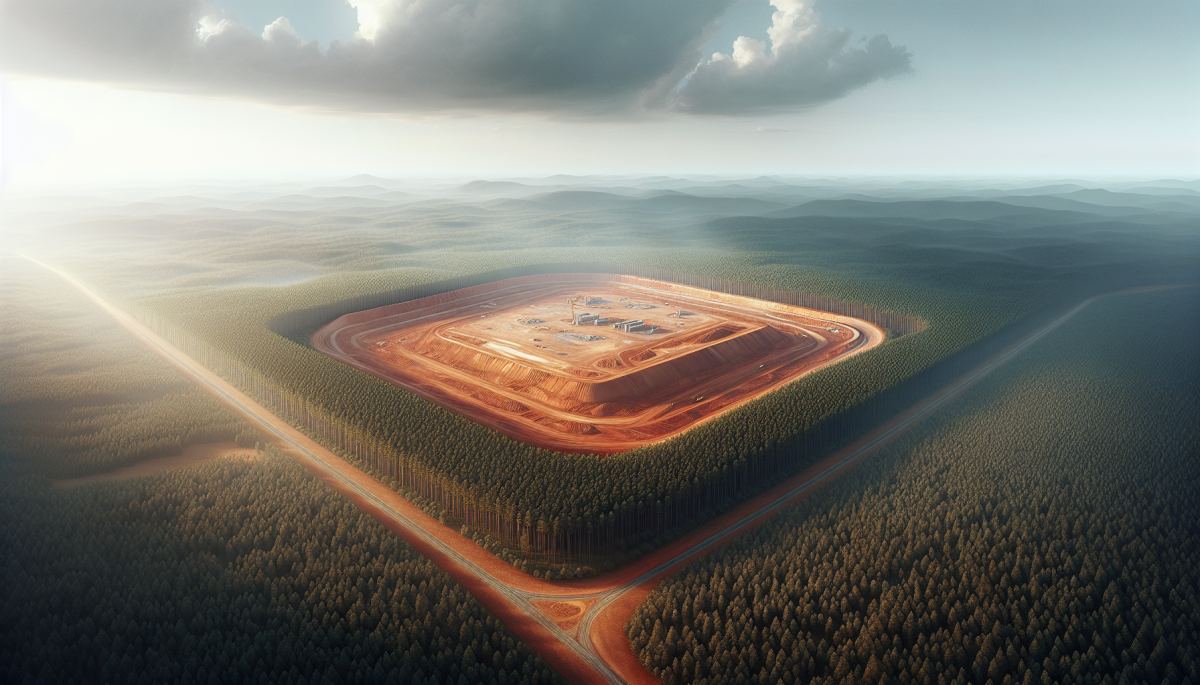
The Georgia plant, located in Joint Development Authority territory near Social Circle, has been years in the making. Rivian originally announced the facility in 2022 with a projected investment of around $5 billion and initial capacity targets that were more modest. Boosting that figure to 300,000 units places the plant in a different strategic category entirely. For context, Rivian delivered roughly 51,000 vehicles in 2023 and has been working through the painful early stages of scaling its Normal plant, which has a current capacity of around 150,000 units per year. Doubling down on Georgia before Normal is anywhere near full utilization is either visionary or audacious, depending on how the next four years unfold.
The timing of this capacity revision is not accidental. Rivian secured a critical lifeline in 2024 when Volkswagen committed to a joint venture worth up to $5.8 billion, providing both capital and a pathway to licensing Rivian's electrical architecture to a legacy automaker with global scale. That partnership fundamentally changed Rivian's financial runway and, perhaps more importantly, its credibility with institutional investors and state-level economic development officials who had been watching the company's cash position with some concern.
Georgia, for its part, has been aggressively positioning itself as the buckle of what boosters call the "EV Corridor" stretching through the American South. The state offered Rivian an incentive package reported to be among the largest in Georgia's history, and the broader regional ecosystem now includes Hyundai's Metaplant in Savannah and a growing cluster of battery suppliers. Rivian's decision to raise capacity targets likely reflects both its own revised demand assumptions and a negotiated signal to Georgia officials that the company intends to be a long-term anchor tenant in that ecosystem, not a cautious entrant hedging its bets.
There is also a product logic at play. Rivian is expected to launch its more affordable R2 platform, a midsize SUV targeting a sub-$45,000 price point, out of the Georgia facility. The R2 is widely seen as the vehicle that could finally bring Rivian into volume territory, appealing to a broader consumer base than the R1T pickup and R1S SUV, which start well above $70,000. A 300,000-unit capacity figure only makes sense if the R2 achieves meaningful commercial traction, which means the Georgia announcement is as much a forecast about consumer demand as it is about manufacturing ambition.
The less-discussed consequence of this announcement involves the competitive pressure it places on the broader EV supply chain in the Southeast. When a manufacturer commits to 300,000 units of annual capacity, tier-one and tier-two suppliers begin making their own location decisions. Battery cell suppliers, seat manufacturers, software integration firms, and logistics providers all recalibrate around anchor plants of this scale. Rivian's upward revision will likely accelerate supplier clustering in Georgia and neighboring states, which in turn makes it harder for any future EV entrant to establish a competing footprint in the region without facing a more entrenched incumbent ecosystem.
There is also a feedback loop worth watching on the labor side. Georgia has been a right-to-work state, and the EV manufacturing buildout there has proceeded largely without the United Auto Workers presence that has complicated expansion conversations in traditional Midwest auto country. If Rivian's Georgia plant reaches anything close to its stated capacity, it will become one of the largest non-union manufacturing employers in the state, which will inevitably draw renewed organizing attention from the UAW, particularly after the union's successful 2024 campaigns at several Southern plants.
Rivian's 2028 production start gives the company time, but not unlimited time. The EV market it will enter four years from now will look different from today's, shaped by whatever tariff regime is in place, how aggressively Chinese manufacturers have penetrated adjacent markets, and whether the R2's price point still feels competitive against a field that keeps moving. The Georgia plant is being built for a future Rivian is betting it can see clearly. Whether that vision holds is the question that will define the company's next chapter.
References
- Rivian Automotive (2024) — Rivian and Volkswagen Group announce joint venture
- Georgia Department of Economic Development (2022) — Rivian to Build New Manufacturing Facility in Georgia
- Colias, M. (2024) — Rivian Struggles to Ramp Up Production, Wall Street Journal
- Wayland, M. (2023) — Rivian delivers about 50,000 vehicles in 2023, CNBC

Discussion (0)
Be the first to comment.
Leave a comment