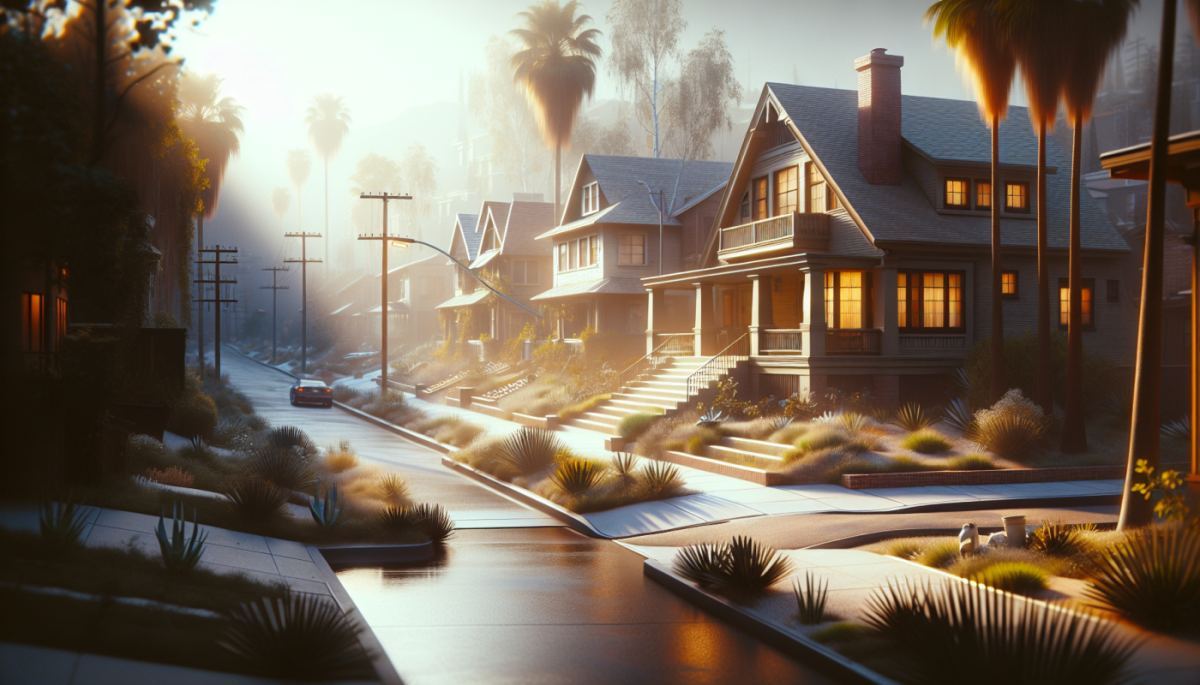
The fires that tore through Los Angeles left behind a familiar kind of wreckage: charred foundations, melted cars, neighborhoods reduced to ash. And they left behind a familiar kind of political response: promises to rebuild stronger, stricter codes, better materials. Officials have moved quickly to signal readiness, and the construction industry is already circling. But the hard, uncomfortable truth emerging from fire scientists, urban planners, and community advocates is that making individual homes more fire-resistant, while necessary, addresses only one layer of a problem that runs far deeper.
The Los Angeles fires were not simply a building failure. They were a systems failure, one shaped by decades of decisions about where to build, how to manage land, how to fund fire services, and how to govern the chaotic edge where dense urban development meets fire-prone wildland. Treating the aftermath as primarily a construction problem risks locking in the same vulnerabilities under a newer coat of fire-resistant paint.
The concept at the center of this crisis has a name that sounds almost bureaucratic: the wildland-urban interface, or WUI. It refers to the zones where human development pushes up against fire-adapted ecosystems, and it is where the majority of destructive fires in the American West now occur. California has more WUI land than almost any other state, and Los Angeles sits at its most extreme expression, a megacity whose residential sprawl climbs directly into chaparral-covered hillsides that evolved to burn.
Chaparral is not a passive backdrop. It is a fire-dependent ecosystem that accumulates fuel over years and decades, and when conditions align, as they increasingly do with hotter temperatures and drier winds driven by climate change, it releases that stored energy with extraordinary speed and intensity. The Santa Ana winds that periodically rake Southern California can push fire faster than people can run. No single home, however well-built, can fully withstand that kind of assault if the surrounding landscape is primed to burn.
This is the core systems insight that often gets lost in post-disaster rebuilding conversations. A house hardened with ember-resistant vents, non-combustible siding, and tempered glass windows does meaningfully reduce risk under moderate fire conditions. But community-level survival depends on factors that extend well beyond the property line: the vegetation management of adjacent parcels, the width and condition of evacuation routes, the spacing between structures, the availability of water at pressure when dozens of hydrants are open simultaneously, and the capacity of fire agencies to respond across a geography that keeps expanding.
There is a feedback loop embedded in the current approach to fire recovery that deserves more scrutiny. When a neighborhood burns, property values in the immediate aftermath often drop, attracting buyers who rebuild. State and federal disaster funds flow in. Insurance, where it still exists, pays out. The rebuilt homes are frequently larger and more expensive than what they replaced, which increases the tax base, which makes local governments more financially dependent on continued development in fire-prone areas. The political incentive to restrict or redirect that development is therefore weak, even as the physical risk compounds.
This dynamic is not unique to Los Angeles, but it is particularly acute there. California's housing crisis has pushed development further into the hills and canyons precisely because land is cheaper where fire risk is higher. The people who end up in those locations are often not wealthy enough to absorb the losses when fire comes, and frequently discover too late that their insurance has been cancelled or their coverage is inadequate. The burden of rebuilding then falls disproportionately on lower-income households, even as the political conversation focuses on architectural standards that primarily benefit those with resources to implement them.
A genuinely resilient Los Angeles would require confronting that loop directly: rethinking where subsidized rebuilding is appropriate, investing in community-scale vegetation management rather than just parcel-by-parcel compliance, and treating evacuation infrastructure as seriously as building codes. Some of that work is beginning, but it is slow, contested, and underfunded relative to the scale of the problem.
The second-order consequence worth watching is what happens to the communities that cannot afford to fireproof themselves under any framework. If hardening standards rise without corresponding support for lower-income homeowners and renters, the practical effect may be accelerated displacement, pushing vulnerable residents out of rebuilt neighborhoods and into other fire-prone areas where costs are lower. Resilience, in that scenario, becomes a luxury good, and the geography of risk simply shifts rather than shrinks.
The next fire season in Southern California will arrive regardless of whether the policy conversation catches up to the science. The question is not whether Los Angeles can build back. It almost certainly will. The question is whether it builds back in a way that honestly reckons with the landscape it chose to inhabit.
References
- Radeloff et al. (2018) — Rapid growth of the US wildland-urban interface raises wildfire risk
- Calfire (2023) — California Wildfire and Forest Resilience Action Plan
- Headwaters Economics (2022) — The Wildland-Urban Interface: A Primer
- Insurance Information Institute (2024) — Homeowners Insurance in California

Discussion (0)
Be the first to comment.
Leave a comment