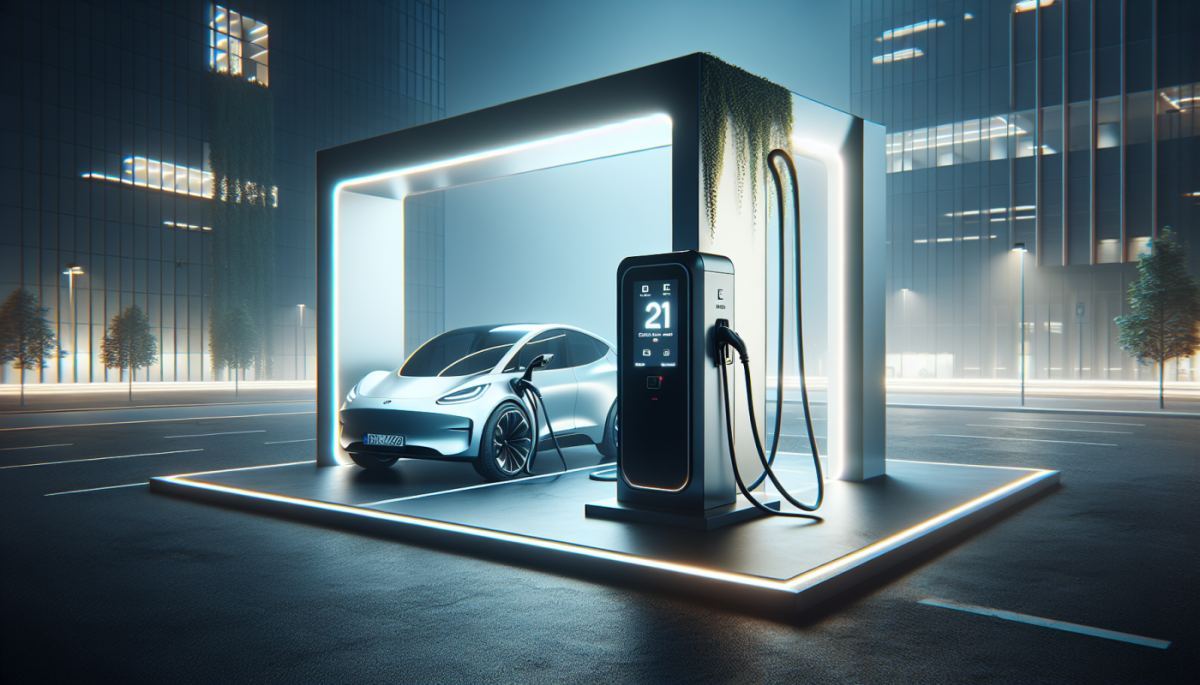
Two years into operation, Ionna has quietly become one of the more compelling stories in America's electric vehicle infrastructure race. The DC fast charging network, which was born out of a joint venture between seven major automakers, is marking its second anniversary not with a press release full of vague ambitions, but with something more concrete: discounted charging rates designed to pull drivers onto its network and keep them there.
The timing is deliberate. The EV charging landscape in the United States is in the middle of a brutal consolidation phase. Electrify America has faced repeated reliability criticisms. EVgo is expanding but still working to shed its reputation for out-of-service stations. ChargePoint has pivoted its business model more than once. Into this fractured market, Ionna has positioned itself on a simple premise: that the experience of charging should feel less like a gamble and more like a utility. Offering serious discounts at its second anniversary is less a celebration and more a customer acquisition strategy dressed up as one.
What makes Ionna structurally different from its competitors is its ownership model. Backed by BMW, General Motors, Honda, Hyundai, Kia, Mercedes-Benz, and Stellantis, the network has automaker money and, crucially, automaker incentive baked into its foundation. These are companies that need public charging to work because their EV sales depend on it. Range anxiety is not an abstract marketing problem for them. It is a direct drag on transaction volume at dealerships. That alignment of interest between network operator and vehicle manufacturer is something neither Tesla's Supercharger network nor the independent charging companies can fully replicate.
When a charging network offers discounts, the surface-level read is promotional generosity. The deeper read is that price remains one of the biggest behavioral barriers to EV adoption among drivers who are still on the fence. Studies from the International Council on Clean Transportation have consistently shown that total cost of ownership is a primary decision factor for prospective EV buyers, and charging costs feed directly into that calculation. A driver who experiences sticker shock at a DC fast charger, particularly after years of cheap home electricity or low gas prices, is a driver who tells that story to friends and family.
Ionna's discount push is an attempt to rewrite that narrative at the experiential level. If early adopters and curious first-timers have a cheap, fast, reliable session on an Ionna charger, that memory competes with the horror stories that have circulated about broken screens, failed payment terminals, and stations that simply do not work. Reliability and price together form the two-variable equation that determines whether public charging infrastructure earns trust or erodes it.
The second-order consequence worth watching here is what Ionna's pricing does to the broader market. If a well-capitalized, automaker-backed network starts competing aggressively on price, independent operators with thinner margins face a genuine squeeze. Smaller regional networks that have been quietly building out coverage in secondary markets may find it harder to justify their rate structures. This could accelerate consolidation across the industry, leaving fewer but larger players, which carries its own risks for coverage in rural and underserved corridors where the business case for charging infrastructure is already fragile.
There is a longer arc to consider here. The United States has committed billions in federal funding through the National Electric Vehicle Infrastructure program to build out a national charging network, and the expectation embedded in that investment is that private operators will meet public dollars with private reliability. Ionna's anniversary milestone matters not just as a business story but as a data point in whether the automaker-backed model can deliver on that expectation faster and more durably than the independent operator model has so far.
Two years is still early. The real test for any charging network is not what it looks like at launch or at a promotional anniversary, but what it looks like at year five, when the hardware has aged, the software has been patched a dozen times, and the novelty has worn off. The networks that survive that test will be the ones that built operational discipline into their culture from the beginning, not just into their press materials.
Ionna has the capital backing and the structural incentives to be one of those survivors. Whether the discounts it is offering today translate into the kind of habitual loyalty that sustains a network through the inevitable rough patches ahead is the question that will define its next two years far more than this one.
References
- ICCT (2023) — Charging up: A closer look at EV charging infrastructure in the United States
- U.S. Department of Transportation (2023) — National Electric Vehicle Infrastructure Formula Program
- EVgo Inc. (2024) — EVgo Investor Relations and Network Updates
- Electrify America (2024) — Network and Reliability Reporting
Discussion (0)
Be the first to comment.
Leave a comment