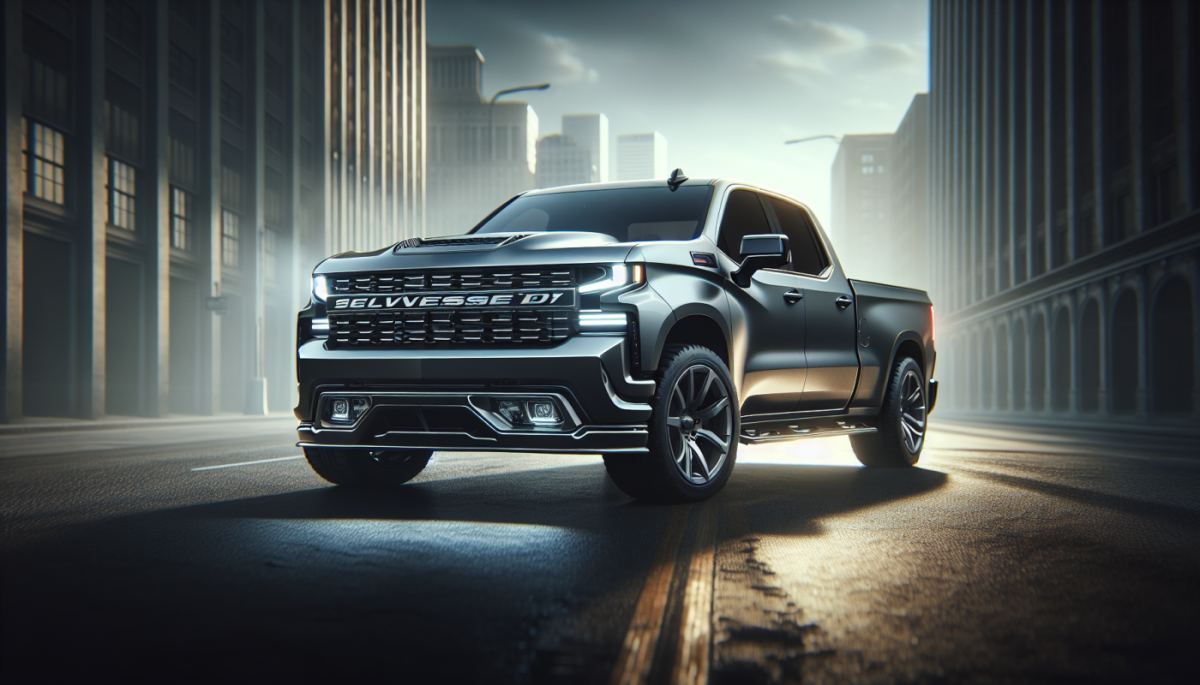
The supercharged arms race in the full-size truck segment just got louder. Hennessey Performance, the Texas-based tuner with a long history of pushing factory vehicles well past their engineering comfort zones, has unveiled the Goliath 700, a modified Chevrolet Silverado 1500 ZR2 that produces 700 horsepower from a supercharged 6.2-liter V-8. Only 100 units will be built, each carrying a $140,000 price tag, and the target on its hood is painted squarely in the direction of Ram's TRX.
The timing is not accidental. Ram's TRX, powered by a supercharged 6.2-liter Hellcat engine producing 702 horsepower, spent several years as the undisputed king of factory-built performance trucks. But with Ram having announced the end of the TRX's production run as the brand pivots toward its next-generation lineup, a vacuum has opened at the top of the segment. Hennessey, which has built its entire brand identity around filling exactly these kinds of vacuums, moved quickly. The Goliath 700 is not a factory offering from General Motors. It is an aftermarket conversion built on top of the already capable ZR2 platform, which comes from the factory with Multimatic DSSV dampers, front and rear electronic locking differentials, and a wider stance designed for serious off-road use. Hennessey layers the supercharger system on top of that foundation, along with upgraded suspension components, custom wheels, and exterior styling that makes the truck's intentions unmistakably clear.
At $140,000, the Goliath 700 costs roughly twice what a well-equipped stock Silverado ZR2 retails for, and that gap is the entire point. Hennessey is not competing with General Motors. It is competing with a specific kind of buyer psychology, one that wants the cultural cachet of a high-performance truck but also wants something that cannot be ordered through a dealership. Limited production runs of 100 units create scarcity, and scarcity in the truck market has proven to be a remarkably durable sales strategy. The Ford F-150 Raptor R, which produces 700 horsepower from a supercharged V-8 borrowed from the Shelby GT500, demonstrated that buyers will pay a significant premium for a truck that sits above the standard lineup. Ram's TRX proved the same thing. Hennessey is essentially arguing that the appetite for this category of vehicle is larger than any single manufacturer has been willing to satisfy.
There is a systems-level dynamic worth watching here. When aftermarket tuners like Hennessey consistently find profitable markets at the extreme end of the performance spectrum, they send a signal back to the original equipment manufacturers. Ford responded to the original Raptor's success by eventually building the Raptor R. Ram responded to the Hellcat truck concept by building the TRX. The feedback loop between tuner culture and factory product planning is real, and it tends to move in one direction: toward more power, more capability, and higher prices. The Goliath 700 may be a limited-run curiosity today, but it is also a data point that GM's product planners will notice.
The second-order consequence that rarely gets discussed in coverage of these trucks is what this escalation does to the broader market for full-size pickups. When the performance ceiling rises, the aspirational floor rises with it. Buyers who cannot afford a $140,000 Goliath or even a $90,000 Raptor R still absorb the marketing and the cultural messaging around these vehicles, and that shapes their expectations for what a $55,000 truck should feel like. Automakers respond by pushing more power and more technology into their mainstream trims, which raises average transaction prices across the entire segment. The truck wars, in other words, are not just a story about a handful of wealthy enthusiasts buying extreme vehicles. They are a story about how the entire pricing architecture of America's best-selling vehicle category gets ratcheted upward, one supercharger at a time.
With GM yet to announce any factory response to the Raptor R's dominance following the TRX's exit, the Goliath 700 exists in an interesting space: part performance statement, part market pressure, and part provocation. Whether GM eventually answers with something wearing an official bowtie badge may depend, at least in part, on how quickly those 100 Hennessey units find buyers.

Discussion (0)
Be the first to comment.
Leave a comment