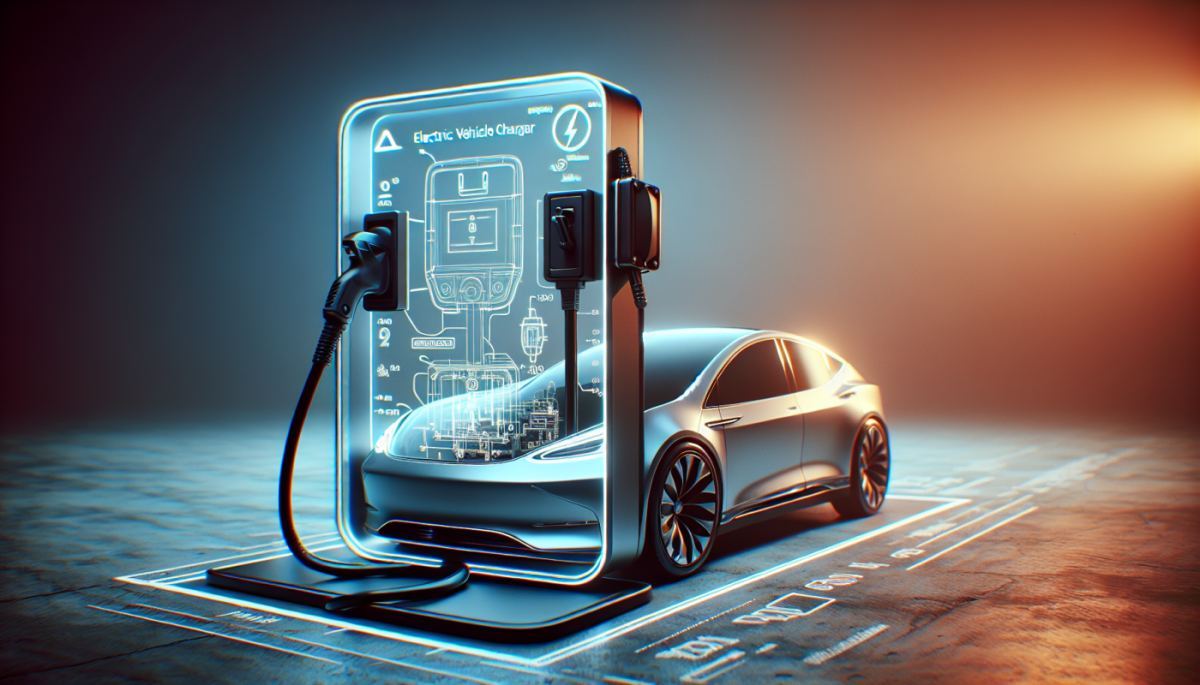
General Motors has filed a patent for a charging system that would allow multiple electric vehicles to share a single power source through a sequential, daisy-chain configuration. The concept is straightforward on the surface: plug several EVs together, let the system figure out which car needs juice most urgently, and prioritize accordingly based on each vehicle's voltage level. But the implications of that simple idea run considerably deeper than the patent filing itself suggests.
The core technical premise is that the system would intelligently route power to the vehicle with the highest voltage demand first, then cascade down the line. This isn't just a convenience feature. It's a direct response to one of the most persistent and underappreciated friction points in EV adoption: the gap between how many charging ports exist and how many EVs are competing for them. As of early 2024, the U.S. had roughly 60,000 public charging stations, but the number of registered EVs had already surpassed three million and was climbing fast. The math has never quite worked out, and GM appears to be betting that the answer isn't only more infrastructure, but smarter infrastructure.
The charging access problem in America is partly a buildout problem and partly a utilization problem. Installing new charging hardware is expensive, slow, and tangled in permitting processes that vary wildly by municipality. A daisy-chain approach, if it works as described, could multiply the effective capacity of existing installations without requiring new grid connections or construction permits. One outlet, properly managed, could serve a small fleet of vehicles parked in sequence. For apartment complexes, workplace lots, and fleet operators, that's not a minor convenience. It's a potential unlock.

What makes GM's approach particularly interesting from a systems perspective is the voltage-based prioritization logic. Rather than a simple first-come, first-served queue, the system would theoretically assess each vehicle's state and allocate power dynamically. That kind of embedded intelligence is what separates a clever hardware hack from a genuinely scalable solution. It also hints at a broader direction the industry is moving: away from dumb infrastructure and toward networked, responsive charging ecosystems where vehicles and chargers communicate in real time.
This connects to a larger trend that's been building quietly in the background. Bidirectional charging, vehicle-to-grid technology, and now multi-vehicle sharing arrangements are all part of the same underlying shift. The EV is no longer just a car. It's becoming a node in an energy network, and the boundaries between transportation infrastructure and electrical infrastructure are blurring faster than most policymakers have noticed.
The second-order consequences here are worth thinking through carefully. If daisy-chain charging becomes commercially viable and widely adopted, it could meaningfully reduce the pressure on utilities and municipalities to rapidly expand public charging networks. That sounds like good news, but it also carries risk. Slower infrastructure expansion could entrench disparities between EV owners who have access to private or workplace charging and those who depend entirely on public networks, a group that skews lower-income and urban. A technology that solves the problem for fleet operators and suburban homeowners could inadvertently deprioritize the communities that need charging access most.
There's also the question of grid load management. Daisy-chain systems that draw from a single connection point could, if poorly designed or widely deployed without coordination, create new stress concentrations on local distribution grids. The same intelligence that makes the system appealing, its ability to prioritize and sequence demand, would need to be integrated with utility-side demand response systems to avoid simply shifting the bottleneck rather than eliminating it.
GM filing this patent doesn't mean the technology ships next year. Patents are often exploratory, staking out conceptual territory rather than announcing imminent products. But the direction of the thinking matters. The company that cracked the Chevy Bolt's affordability problem and then stumbled on its recall is now signaling that it sees charging architecture as a competitive differentiator, not just a commodity.
If the industry follows GM's lead and begins treating multi-vehicle charging as a software and systems problem rather than a hardware and construction problem, the entire calculus of EV infrastructure investment could shift. The question then becomes whether regulators, utilities, and city planners are ready to adapt to an energy grid that increasingly thinks for itself.

Discussion (0)
Be the first to comment.
Leave a comment