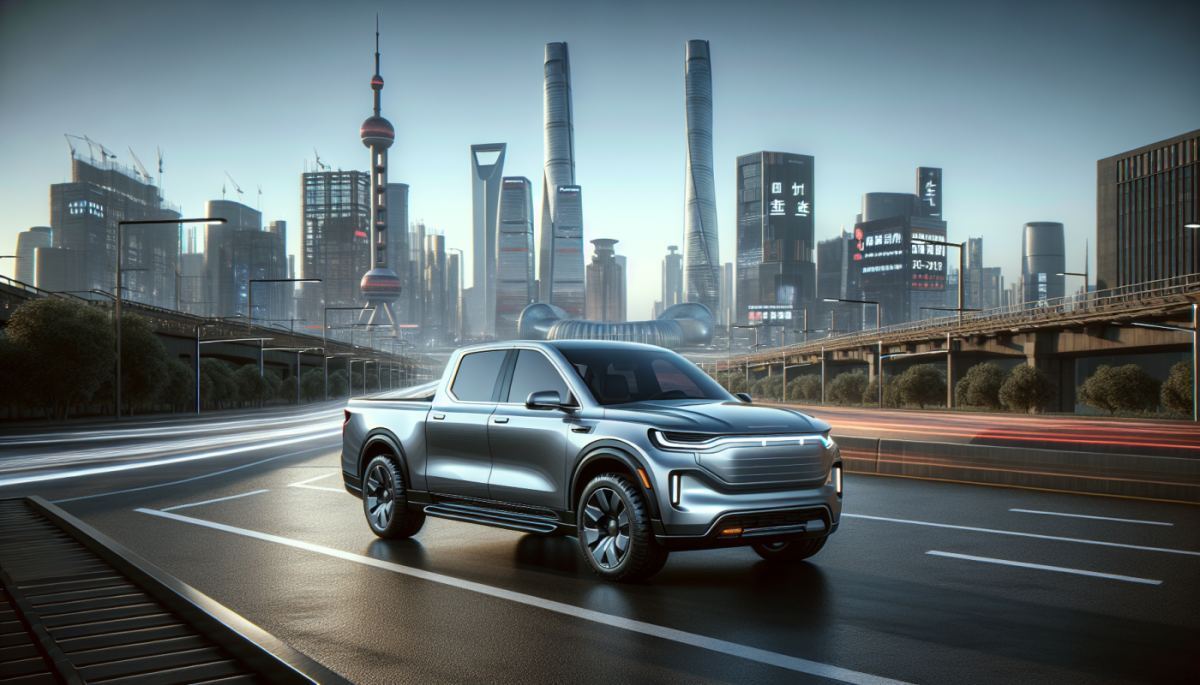
Jim Farley did not mince words. Speaking recently about the competitive landscape in the global truck market, Ford's chief executive acknowledged that Chinese automakers have built electrified pickups that are, in his phrase, 'different animals' — and that despite Ford's century-long dominance in truck manufacturing, Chinese brands are producing a 'pretty competitive product.' For an industry that has long treated the pickup truck as sacred American territory, that admission carries more weight than it might first appear.
The F-Series has been the best-selling vehicle in the United States for over four decades. It is not just a product line; it is a financial pillar. Truck margins have historically subsidised Ford's losses in other segments, funded its EV transition, and kept the company solvent through downturns that would have otherwise been catastrophic. When Farley says a foreign competitor is making something competitive in that space, he is not offering a polite compliment. He is signalling a structural vulnerability.
What makes China's electrified pickups genuinely disruptive is not simply that they exist, but how they were built. Chinese manufacturers did not try to replicate the traditional truck formula and bolt on a battery. They approached the vehicle as a software-defined, energy-flexible platform from the ground up. Many of these trucks function as mobile power stations, can operate farm or construction equipment directly from the vehicle, and carry advanced driver-assistance systems that Western legacy automakers are still rolling out incrementally. The 'different animal' framing is apt — these are not just cheaper alternatives, they represent a different philosophy of what a working vehicle should do.
For now, American consumers cannot easily buy these vehicles. A 100 percent tariff on Chinese-made EVs, imposed under the Biden administration and maintained under Trump, has effectively sealed the U.S. market. Ford and its Detroit peers have been operating behind that wall, which creates a dangerous dynamic: the protection reduces the urgency to compete on pure product merit. Companies that survive on tariff shelter rather than product superiority tend to be caught flat-footed when the shelter eventually shifts.
The more immediate competitive pressure is playing out in markets where no such wall exists. Southeast Asia, Latin America, the Middle East, and increasingly Europe are all battlegrounds where Chinese electric trucks and SUVs are gaining ground without the handicap of punitive import duties. Ford's global ambitions depend on those markets too, and losing them to BYD, Chery, or Great Wall Motors would erode the revenue base that funds the R&D needed to stay competitive at home. The tariff, in other words, buys time but does not buy a solution.
Farley's comments suggest Ford understands this. The company has been investing heavily in its Pro commercial vehicle division and in the electric F-150 Lightning, though the Lightning's rollout has been bumpy, with production cuts and price adjustments reflecting softer-than-expected demand. The challenge is that Ford is trying to transform a legacy manufacturing system, a unionised workforce, and a century of combustion-engine institutional knowledge simultaneously — while a competitor in Shenzhen is building from a blank page.
The deeper systems consequence here is not about which truck wins a comparison test. It is about what happens to the communities and supply chains built around American truck dominance if that dominance erodes gradually rather than suddenly. A slow bleed is harder to respond to politically and economically than a crisis. Steel suppliers, transmission manufacturers, dealership networks, and the tax bases of towns across Michigan, Ohio, and Kentucky are all downstream of Ford's truck margins. If those margins compress over a decade as global market share shifts, the adjustment will be diffuse, painful, and largely invisible until it is too late to address.
Farley's candour is, in a strange way, the most useful thing Ford can offer right now. Acknowledging that a competitor makes something genuinely good is the first step toward building something better. The American auto industry spent years dismissing Japanese quality and paid an enormous price for that arrogance. The question is whether this generation of executives has absorbed that lesson deeply enough to act on it before the tariff wall comes down, trade deals shift, or a Chinese brand finds a manufacturing partner on the right side of the border.
The truck wars are not coming. According to Ford's own CEO, they have already started.
Discussion (0)
Be the first to comment.
Leave a comment