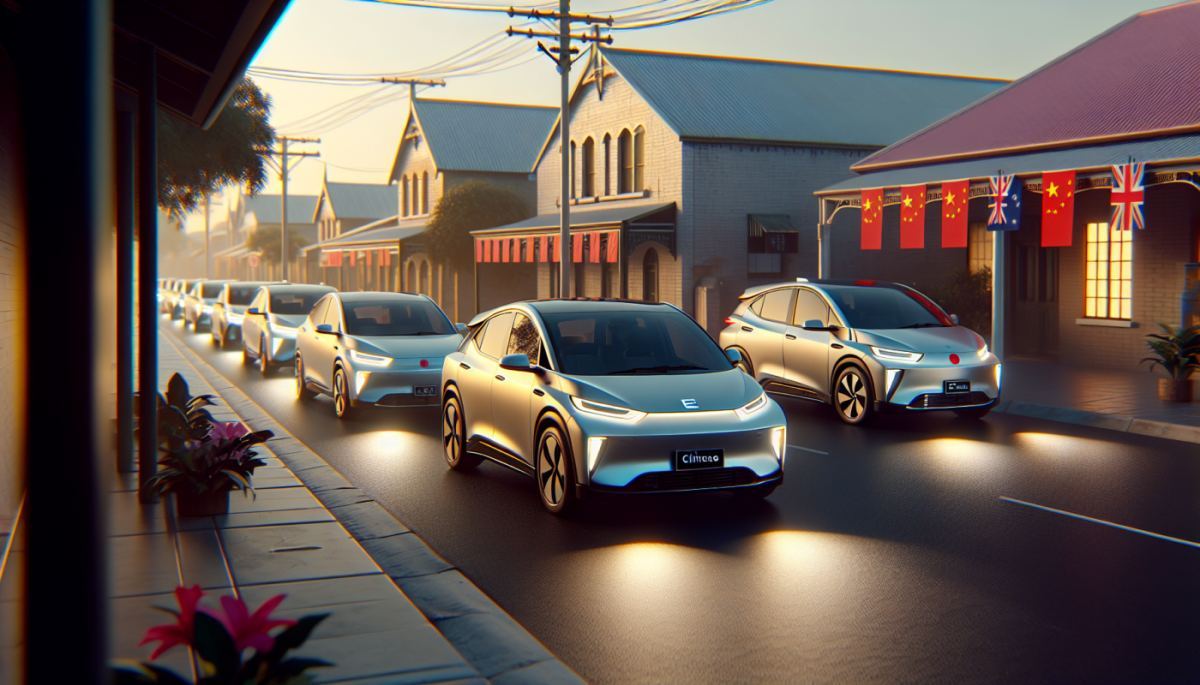
The Australian car market has long been a quiet stronghold for Japanese reliability. Toyota, Mazda, and Honda built decades of loyalty on the back of durable, affordable vehicles that suited the country's vast distances and practical sensibilities. That loyalty is now being tested in ways that no amount of brand heritage can easily absorb. Chinese electric vehicle manufacturers have not merely entered the Australian market — they are, by several measures, beginning to dominate it.
A recent conversation between automotive commentators Neerav and Sam, conducted inside an updated Toyota BZ4X, cut to the heart of a shift that many industry watchers have been tracking with growing urgency. The BZ4X is Toyota's flagship electric offering, and it represents the Japanese giant's most serious attempt to compete in the EV segment. Yet the discussion itself was framed around a pointed question: have Chinese carmakers already won this race in Australia? The fact that the question is even being asked seriously tells you something about how dramatically the competitive landscape has changed.
The core driver of Chinese EV success in Australia is not mystery — it is price. Brands like BYD, MG, and GWM Ora have entered the market with electric vehicles that undercut their Japanese and Korean rivals by thousands of dollars, often while offering comparable or superior range, larger screens, and more standard features. BYD's Atto 3, for instance, arrived with a price point and feature set that forced direct comparisons to vehicles costing significantly more. When consumers run those comparisons, the math is increasingly difficult to ignore.
This pricing advantage is not accidental. Chinese EV manufacturers benefit from a vertically integrated supply chain that Japanese automakers spent decades avoiding, preferring instead to outsource components across global networks. BYD, to take the most prominent example, manufactures its own batteries, semiconductors, and electric motors. That integration compresses costs in ways that Toyota's more distributed model structurally cannot match in the short term. The result is a price floor that Japanese brands simply cannot reach without fundamentally restructuring how they build cars.
Toyota's BZ4X is a capable vehicle, and its updated version addresses several criticisms leveled at the original — including charging speed and software responsiveness. But capable is no longer enough when the competition is offering capable at a lower price. In a market where EV adoption is still in its growth phase and buyers are making their first electric purchase, price sensitivity is acute. First-time EV buyers are not trading brand loyalty; they are building it. And right now, many of them are building it with Chinese brands.
The immediate story is market share. The more consequential story is what happens next. If Chinese brands continue to capture first-time EV buyers in Australia, they are not just winning a sale — they are establishing service relationships, software ecosystems, and emotional associations that tend to compound over time. A buyer who purchases a BYD today and has a positive experience is statistically more likely to buy another BYD, recommend the brand to family, and dismiss future Toyota EV offerings without serious consideration. Brand loyalty, once transferred, is expensive to reclaim.
There is also a dealer network dynamic at play. As Chinese EV brands grow their Australian sales volumes, they gain the financial justification to expand service infrastructure, improve parts availability, and invest in local marketing. Each of those improvements reduces the friction that has historically deterred some buyers from choosing newer, less-established brands. The feedback loop here is self-reinforcing: more sales fund better infrastructure, which enables more sales.
For Toyota, the pressure extends beyond Australia. The company is navigating a global EV transition while simultaneously defending its hybrid dominance and managing shareholder expectations around profitability. Its EV lineup remains thinner than many rivals, and its battery supply chain is less integrated than BYD's. These are structural challenges that cannot be resolved with a software update or a marketing campaign.
What Australia represents, in this context, is a preview. It is a mid-sized, English-speaking market with relatively open trade conditions and a growing appetite for EVs — exactly the kind of environment where competitive dynamics play out quickly and visibly. If Japanese automakers cannot defend their position here, the questions about Europe, Southeast Asia, and eventually North America will only grow louder. The race is not over, but the starting gun fired earlier than most legacy automakers were ready for.
Discussion (0)
Be the first to comment.
Leave a comment