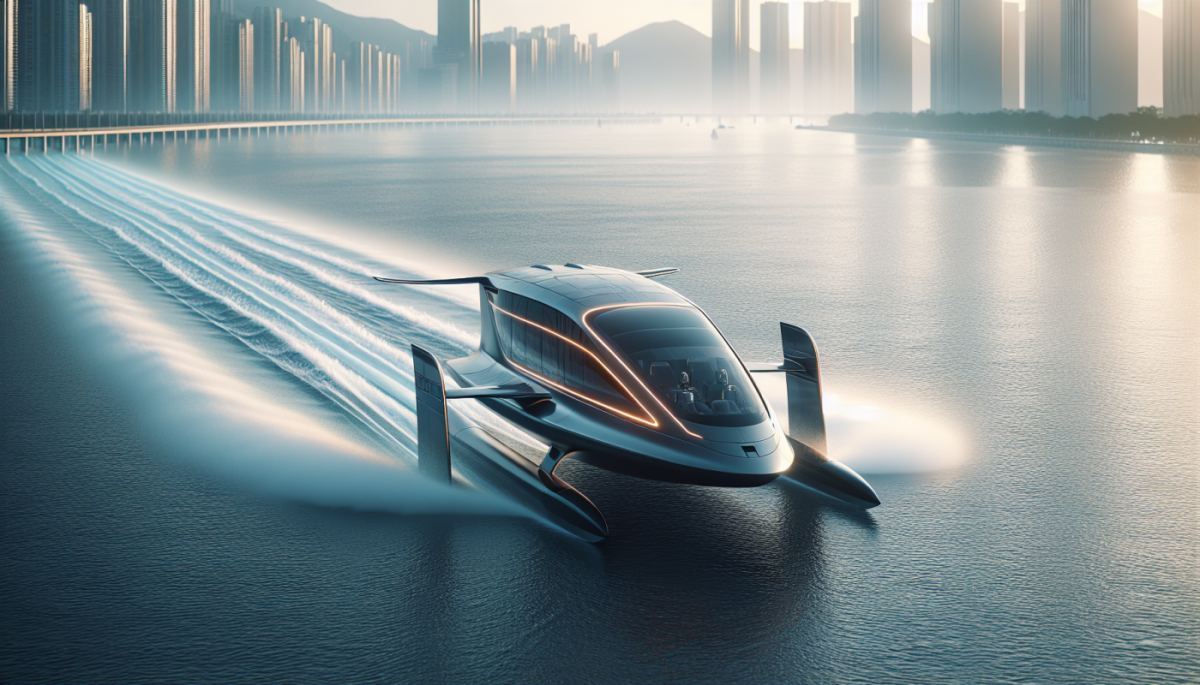
The ferry has long been one of the most stubborn holdouts in the clean transportation revolution. Planes get the headlines, trucks get the policy fights, and cars get the subsidies, but the humble passenger vessel has largely been left to burn diesel in the background, chugging across harbors and river crossings with little pressure to change. Candela, the Swedish electric hydrofoil company, is making a serious push to disrupt that inertia. The company has secured €30 million in fresh funding to build a second manufacturing facility, a signal that its bet on electrically powered, foil-lifted ferries is attracting enough commercial confidence to justify scaling up production.
Hydrofoils are not a new idea. The physics have been understood for decades: lift a hull out of the water on submerged wings and you eliminate most of the drag that makes boats so energy-hungry. What Candela has done is combine that principle with modern electric drivetrains and sophisticated flight control software, producing a vessel that can travel faster and farther on a battery charge than conventional electric boats. Their P-12 ferry, designed for urban water transit routes, reportedly uses around 80 percent less energy per passenger than a traditional diesel ferry operating on the same corridor. That number matters enormously when you start thinking about the economics of electrifying entire transit networks.

The funding round lands at a moment when several forces are converging. European cities are under mounting pressure to decarbonize public transit, and waterways represent an underused corridor in many urban environments. Stockholm, where Candela is based, has already begun integrating the P-12 into its commuter network, giving the company a live proving ground that other potential operators can point to. Meanwhile, the cost of marine-grade battery systems has been falling steadily, improving the unit economics of electric vessels in ways that were not plausible even five years ago.
There is also a regulatory tailwind building. The International Maritime Organization has committed to net-zero emissions from international shipping by or around 2050, and while that target covers ocean freight rather than inland ferries, it has accelerated a broader cultural shift within the maritime industry toward electrification. Port authorities and municipal transit agencies that once viewed electric ferries as a curiosity are now fielding serious questions from city councils about why their fleets still run on diesel.
The second manufacturing facility is the logical response to a demand signal that a single production line cannot satisfy. Candela has reportedly received orders and interest from operators across Europe and beyond, and the constraint on growth has been supply rather than appetite. Building out manufacturing capacity now, before competitors establish themselves, is a classic move in an emerging hardware market where first-mover advantages in production efficiency can be durable.
The more interesting systemic consequence of Candela's expansion may not be about ferries at all. It is about what happens to urban geography when fast, quiet, affordable water transit becomes genuinely available. Cities that developed around road and rail infrastructure made implicit bets about where density should concentrate. Waterfront areas that were once considered too disconnected from transit networks to support residential or commercial density could become newly viable if a hydrofoil ferry can reliably deliver commuters to a city center in fifteen minutes. That is the kind of shift that rewrites property values, rezoning decisions, and infrastructure investment priorities over a decade or two.
There is also a feedback loop embedded in the manufacturing story itself. As Candela builds more vessels, it accumulates operational data from real-world deployments, which feeds back into software improvements for the flight control systems, which improves range and reliability, which makes the ferries more attractive to new operators, which justifies further production scale. This is the same compounding dynamic that allowed Tesla to pull ahead of legacy automakers in software-defined vehicles, and it is not obvious that traditional shipbuilders are positioned to replicate it quickly.
The €30 million round will not by itself transform global maritime transit. But it represents a meaningful escalation in the seriousness with which the market is treating electric hydrofoils as infrastructure rather than novelty. The question now is whether cities are thinking creatively enough about their waterways to meet that ambition halfway.

Discussion (0)
Be the first to comment.
Leave a comment