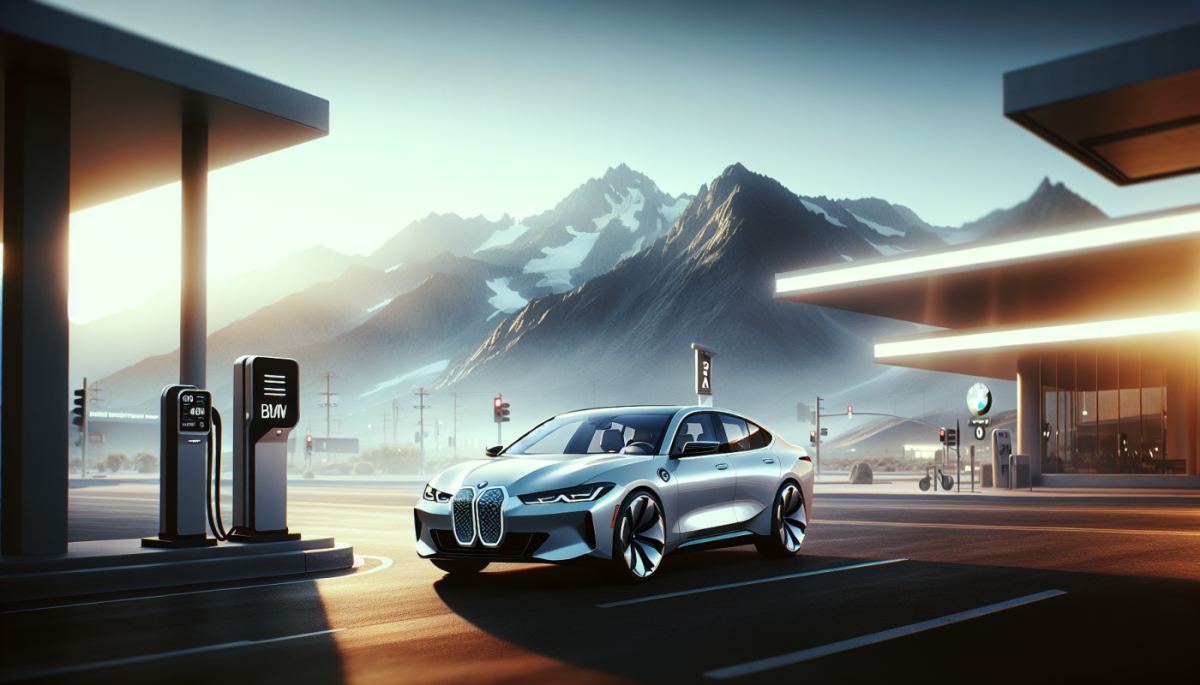
The luxury sedan segment has long been Tesla's most comfortable territory, but BMW is now planting a flag directly in that ground. The new BMW i3, the brand's first fully electric 3 Series, arrives with an 800-volt electrical architecture and ultra-fast charging speeds that position it as a genuine technical rival to anything currently wearing a Tesla badge. More striking still, BMW is claiming a range figure that surpasses every Tesla currently on the market, a statement that, if it holds up in real-world conditions, would mark a genuine inflection point in the premium EV wars.
For years, the 800-volt architecture was the exclusive domain of Hyundai's Ioniq lineup and Porsche's Taycan, vehicles that used the higher voltage to dramatically reduce charging times and manage heat more efficiently than the 400-volt systems that Tesla and most other manufacturers have relied on. The physics are straightforward: higher voltage means you can deliver the same power with less current, which reduces heat buildup in cables and battery cells and allows for faster, more sustained charging rates. BMW adopting this architecture for its bread-and-butter 3 Series signals that 800-volt is no longer a premium curiosity. It is becoming the baseline expectation for serious electric vehicles.
The claim that the new i3 offers more range than any Tesla is the kind of headline that demands careful reading. Range figures in the automotive industry are notoriously slippery. The EPA cycle, the WLTP standard used in Europe, and real-world highway driving can produce wildly different numbers from the same vehicle. Tesla has historically performed well on EPA ratings while sometimes falling short on long highway trips at sustained speeds. BMW, like most European manufacturers, has often leaned on WLTP figures, which tend to be more generous. Until independent testers like those at Edmunds or the team behind the AMCI testing protocol put the new i3 through its paces under controlled conditions, the range crown should be considered provisional.
That caveat aside, the direction of travel is unmistakable. BMW has spent the better part of a decade absorbing criticism that its early EVs, including the original i3 city car, were underpowered, short-ranged, and too compromised to compete with Tesla's purpose-built platforms. The new i3 is a direct answer to that criticism. It is built on a dedicated electric architecture rather than an adapted combustion platform, which allows engineers to optimize the battery placement, suspension geometry, and weight distribution in ways that retrofitted EVs simply cannot match.
The second-order consequence worth watching here is what this does to Tesla's pricing power in the mid-to-large luxury sedan segment. The Model 3 and Model S have operated with relatively limited direct competition from legacy European brands that buyers actually trust for long-term build quality and dealer support. BMW's entry, particularly if the range and charging claims hold up, gives conquest-minded buyers a credible alternative that comes with a century of brand equity and an established service network.
This matters beyond just market share. Tesla's valuation has always rested partly on the assumption that legacy automakers would be slow, clumsy, and late to the electric transition. Each credible launch from BMW, Mercedes, or Hyundai chips away at that narrative. If the i3 performs as advertised, it will accelerate a feedback loop in which Tesla feels pressure to cut prices or accelerate its own next-generation platform development, both of which compress margins and force faster capital deployment.
There is also a charging infrastructure dimension. BMW's 800-volt system is compatible with high-powered DC fast chargers, and the brand has been expanding its access to charging networks across North America and Europe. As more 800-volt vehicles enter the fleet, the business case for installing higher-powered chargers strengthens, which in turn makes 800-volt vehicles more attractive to buyers, which pulls more manufacturers toward the architecture. BMW joining Porsche and Hyundai in this space does not just benefit BMW owners. It accelerates the entire ecosystem.
The 3 Series has always been the car that defines what a driver's sedan should feel like. If the electric version lives up to that legacy while also out-ranging Tesla, the conversation about EV leadership may need to be rewritten sooner than most analysts expected.
Discussion (0)
Be the first to comment.
Leave a comment