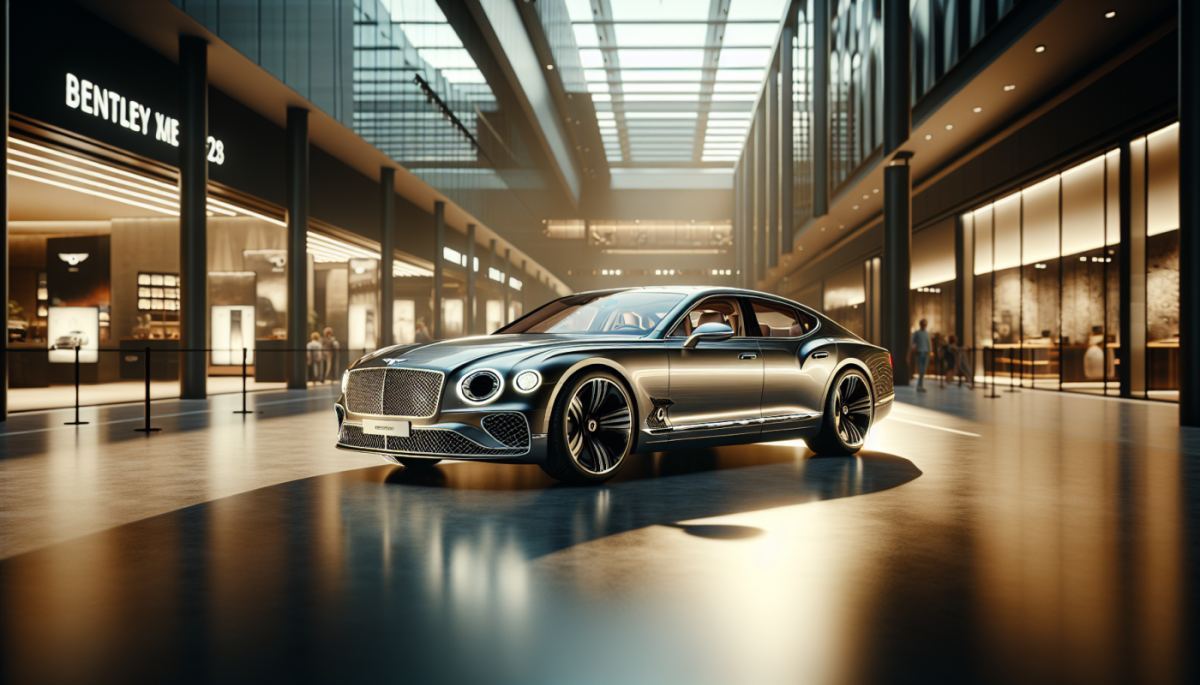
There is something almost philosophically restless about a car that costs more than most American homes, burns gasoline with theatrical enthusiasm, and still plugs into a wall socket at night. The Bentley Flying Spur Speed is exactly that kind of machine, and its existence says something worth examining about where the luxury automotive industry is heading, and what forces are quietly steering it there.
The Flying Spur Speed pairs a twin-turbocharged V-8 with an electric motor to produce a combined 771 horsepower, a figure that would have seemed like science fiction in a road car a generation ago. Bentley claims meaningful electric-only range, enough for urban commutes and the kind of short trips that make up a surprisingly large share of even wealthy drivers' daily routines. The result is a vehicle that can glide silently through a Beverly Hills neighborhood in the morning and announce itself with a full-throated V-8 rumble on a canyon road by afternoon. That duality is not a design flaw. It is the entire point.
To understand why Bentley built this car, it helps to understand the regulatory environment that made building it almost mandatory. European emissions standards, particularly the EU's CO2 fleet-average targets, impose significant financial penalties on manufacturers whose lineups exceed prescribed limits. For a brand like Bentley, which sells relatively few vehicles at very high prices, the math is unforgiving. A plug-in hybrid powertrain, even one wrapped around a large-displacement V-8, dramatically improves a vehicle's official tested emissions figure because regulatory testing cycles credit electric range heavily. The Flying Spur Speed is, among other things, a compliance instrument dressed in hand-stitched leather.
This is not cynicism so much as systems logic. Bentley's parent company, Volkswagen Group, faces enormous pressure to decarbonize across its entire portfolio. Luxury nameplates like Bentley and Porsche serve a dual function: they generate the profit margins that fund electrification elsewhere in the group, and their high-visibility technology showcases help normalize premium pricing for electric vehicles across the broader market. When Bentley engineers a hybrid powertrain that delivers both genuine electric capability and a visceral combustion experience, they are threading a needle between regulatory survival and brand identity preservation.
The V-8 soundtrack the Flying Spur Speed produces is not incidental. Bentley's core buyers are not purchasing transportation. They are purchasing a sensory experience, a statement of taste, and in many cases a rolling assertion of continuity with a certain idea of motoring heritage. The brand understands that electrification, pursued too aggressively or too clinically, risks severing that emotional connection. The plug-in hybrid architecture is therefore a bridge strategy, buying time and regulatory credits while the industry figures out whether a fully electric Bentley can carry the same emotional weight.
The deeper consequence of vehicles like the Flying Spur Speed may not be environmental at all. It may be cultural and economic. When ultra-luxury automakers successfully reframe plug-in hybrids as performance enhancements rather than compromises, they shift the aspirational narrative around electrification for the entire market. Mainstream buyers take cues from luxury segments, sometimes consciously and sometimes not. If 771 horsepower and a wall-charger coexist in a Bentley without apparent contradiction, the psychological resistance to electrification softens incrementally across income brackets.
There is also a charging infrastructure consequence worth noting. Wealthy early adopters of plug-in vehicles tend to install home charging equipment, patronize premium charging networks, and generate the kind of visible, high-status usage that accelerates infrastructure investment in affluent urban corridors. Rodeo Drive, where the Flying Spur Speed was reportedly tested, is not a random backdrop. It is a signal about who this technology is currently for, and by extension, who will normalize it first.
The risk in this dynamic is that the trickle-down timeline for genuinely clean luxury motoring remains long and uncertain. A 771-horsepower plug-in hybrid is cleaner than a 771-horsepower pure combustion vehicle, but it is not clean. The gap between regulatory credit and real-world emissions reduction is substantial, particularly for buyers who rarely plug in. Whether the bridge strategy ultimately leads somewhere or simply extends the combustion era under a greener label is a question the industry has not yet answered honestly.
What seems clear is that the Flying Spur Speed is less a destination than a negotiation, between performance and responsibility, between heritage and inevitability, between what luxury buyers want today and what regulators will permit tomorrow. The next generation of this car will almost certainly be fully electric. The question is whether Bentley can make that version feel just as alive.
Discussion (0)
Be the first to comment.
Leave a comment