
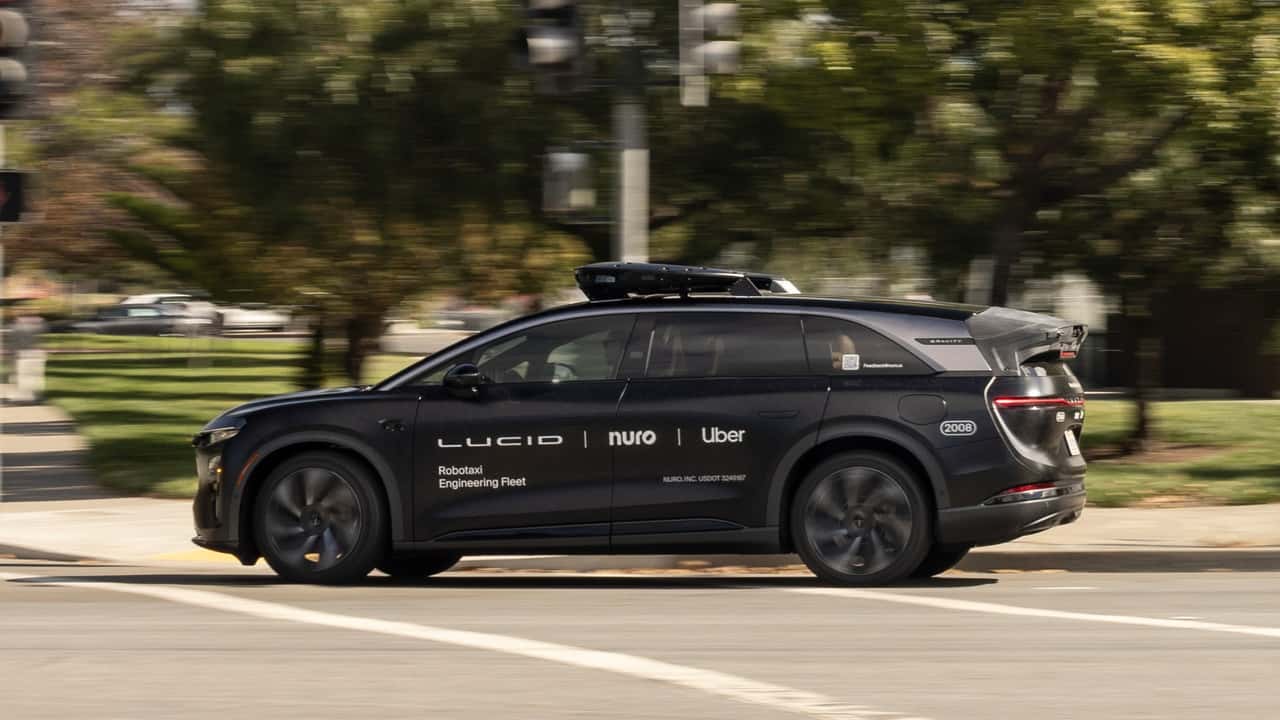
Australia stands at a crossroads that most wealthy nations are quietly approaching, where the seductive promise of autonomous vehicles collides with a tangle of infrastructure realities, behavioral economics, and environmental trade-offs that no single policy lever can easily resolve. A new study examining the potential rollout of self-driving cars across Australia has found that while the technology carries genuine benefits, including reduced emissions and dramatically lower demand for urban parking, it also carries a set of unintended consequences that could quietly undo those gains before they are ever fully realized.
The study's core optimism rests on two pillars that urban planners have long dreamed about. First, autonomous vehicles could meaningfully cut tailpipe emissions, particularly if the fleet transitions toward electric drivetrains alongside automation. Second, because self-driving cars could drop passengers off and then park themselves in cheaper, more distant locations, or simply circulate until needed, cities could reclaim enormous swaths of land currently devoted to parking. In dense Australian cities like Sydney and Melbourne, where parking infrastructure consumes valuable real estate and contributes to urban heat, this is no small thing. Some estimates globally suggest that parking lots occupy between 5,000 and 17,000 square miles of land in the United States alone, and Australian cities, built with similar car-centric logic, face comparable inefficiencies.
But the study's more sobering finding is the one that deserves the most attention, and it is a classic systems-thinking trap: making something easier often means people do more of it. If autonomous vehicles reduce the friction of driving, whether by eliminating the stress of navigation, allowing passengers to sleep or work during commutes, or making car travel accessible to people who previously could not drive, total vehicle miles traveled could increase substantially. This is the rebound effect, and transportation researchers have documented it repeatedly across technologies that promised efficiency gains. Fuel-efficient cars did not reduce fuel consumption as much as projected because people simply drove more. The same logic applies here with particular force.
An autonomous vehicle that can drop someone off and then cruise empty through city streets looking for cheap parking, or waiting for its next trip, adds what researchers call "ghost miles" to the road network. These are trips that generate congestion and emissions without moving a single human being. At scale, across a major metropolitan area, the cumulative effect on traffic could be severe. Australian roads, many of which were not designed for the volume of traffic that even current growth projections anticipate, could face a compounding pressure that no amount of smart infrastructure spending easily absorbs.
There is also a subtler second-order consequence worth tracking. If autonomous vehicles make long-distance commuting genuinely comfortable, by turning a 90-minute drive into productive or restful time, they could accelerate urban sprawl. Australians already live in some of the most sprawling cities in the developed world. If the psychological cost of distance collapses because the drive no longer feels like a burden, demand for housing further from city centers could surge, pushing development into greenfield sites, increasing per-capita emissions from longer trips, and straining water and utility infrastructure in ways that take decades to become visible.
The governance question sits underneath all of this and remains largely unresolved. Australia does not have a single federal framework for autonomous vehicle deployment. Regulation is fragmented across state jurisdictions, and the pace of technology is almost certainly faster than the pace of legislative coordination. The study's findings implicitly raise the question of whether Australia's regulatory architecture is capable of capturing the benefits of self-driving technology while actively managing its downsides, or whether the country will, as has happened with ride-sharing platforms, allow the technology to embed itself deeply before the rules catch up.
The emissions benefit, for instance, is not automatic. It depends heavily on whether autonomous vehicles are electric, whether the electricity grid is clean, and whether policy actively discourages empty cruising. None of those conditions are guaranteed, and some require deliberate intervention that runs against the commercial interests of the companies deploying the technology.
What Australia does in the next five to ten years will matter enormously, not just for its own cities, but as a case study for mid-sized, car-dependent nations watching closely. The countries that get this transition right will not be the ones that simply allowed the technology to arrive. They will be the ones that treated the arrival of autonomous vehicles as a systems problem from the beginning, designing incentives, infrastructure, and regulation together rather than sequentially. The bumpy path the study predicts is not inevitable. It is, however, the default.
References
- Litman, T. (2024) — Autonomous Vehicle Implementation Predictions
- International Transport Forum (2021) — Safe Micromobility
- Department of Infrastructure, Australian Government (2023) — Future of Automated Vehicles in Australia
- Wadud, Z. et al. (2016) — Help or hindrance? The travel, energy and carbon impacts of highly automated vehicles
Discussion (0)
Be the first to comment.
Leave a comment