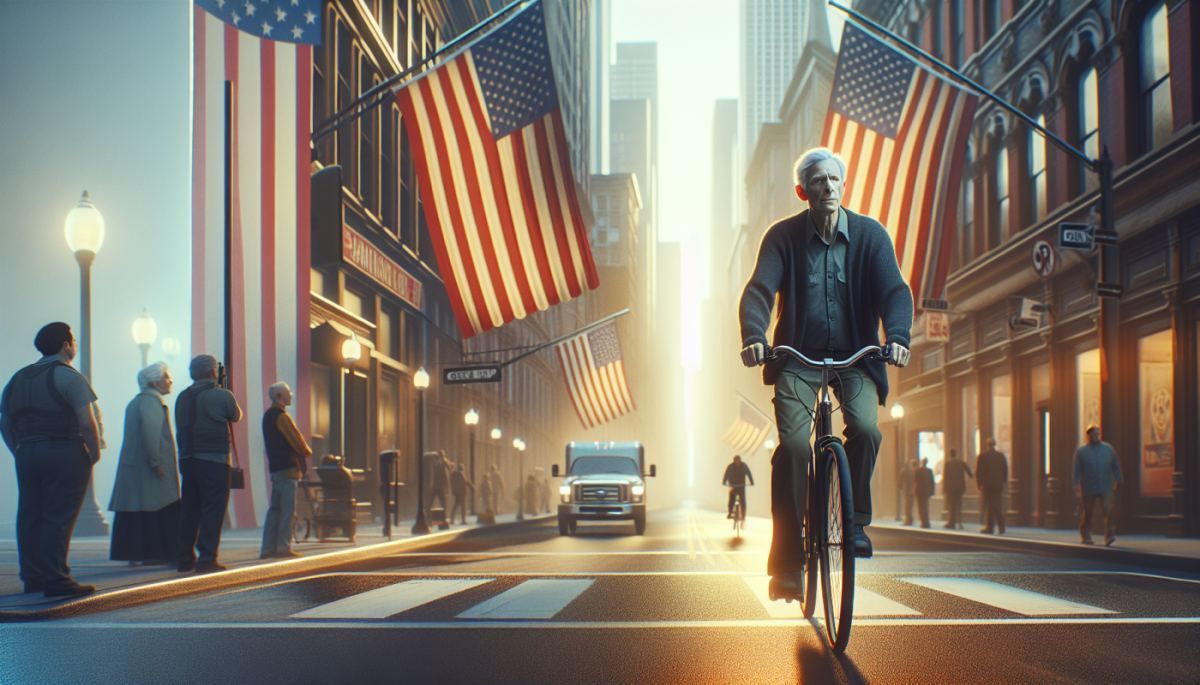
Anne Lusk has spent years studying something most urban planners overlook: what happens to cycling infrastructure when you design it for the young and able-bodied, and then watch an entire generation of potential riders stay home. Lusk, a lecturer in urban agriculture at Boston University, has been examining how older adults, specifically people in their 60s and 70s, relate to cycling as a mode of transportation, and what she's found points to a quiet but significant failure in how American cities think about mobility.
Most older adults currently get around by driving, walking, or using public transit. That's not surprising. But Lusk's research suggests that many seniors would be open to cycling if the infrastructure actually met them where they are, physically, psychologically, and practically. The problem is that it rarely does. The typical American bike lane, a narrow strip of painted asphalt wedged between moving traffic and parked cars, is not designed with a 68-year-old's balance concerns or fear of dooring in mind. And that gap between what exists and what older riders need is widening precisely as the population that could benefit most from cycling continues to grow.
The United States is in the middle of a demographic shift that urban planners are only beginning to reckon with. The number of Americans aged 65 and older is projected to nearly double by 2060, reaching around 95 million people, according to the U.S. Census Bureau. At the same time, cycling has been growing as both a recreational and commuting activity across the country. Those two trends should logically intersect in productive ways. Instead, they're largely passing each other by.
Older adults often have specific concerns that standard bike infrastructure doesn't address. Two-wheeled bikes present balance challenges for many seniors. Narrow lanes offer little margin for error. Intersections with fast-moving traffic are genuinely dangerous for riders whose reaction times may have slowed. And the psychological dimension matters too: feeling unsafe, even when objective risk is relatively low, is enough to keep most older people off bikes entirely. Research on cycling behavior consistently shows that perceived safety is one of the strongest predictors of whether someone will ride at all, regardless of age.

What Lusk's work points toward is a need for networks that accommodate not just traditional bicycles but also three-wheeled cycles, e-bikes, and other adaptive options that give older riders stability and confidence. Protected bike lanes, physically separated from car traffic by barriers rather than just paint, are already known to attract a broader range of riders. Cities like Amsterdam and Copenhagen built their cycling cultures on exactly this kind of infrastructure, and their older populations cycle at rates that would seem remarkable by American standards.
The implications of getting this right, or continuing to get it wrong, extend well beyond transportation policy. Cycling for older adults is also a public health issue of considerable scale. Regular physical activity reduces the risk of cardiovascular disease, type 2 diabetes, cognitive decline, and depression, all conditions that become more prevalent with age and more costly to treat. If better bike infrastructure could shift even a modest percentage of older Americans from sedentary car trips to active cycling trips, the downstream effects on healthcare spending and quality of life could be substantial.
There's also a social dimension. Older adults who can no longer drive safely often face isolation, losing access to social networks, errands, and community life. Public transit helps, but it has its own accessibility limitations. Cycling, particularly on e-bikes or adaptive cycles with appropriate infrastructure, could offer a middle path: independent, affordable, and physically beneficial. Cities that fail to build for this population are, in effect, making a choice to accelerate that isolation.
The feedback loop here is worth naming directly. When infrastructure excludes older riders, older people don't cycle. When older people don't cycle, they remain invisible in the data that planners use to justify infrastructure investments. And when older riders are invisible in the data, planners continue building for the demographic that already shows up: younger, typically male, and comfortable with more risk. Breaking that loop requires a deliberate decision to design for the rider who isn't there yet, not just the one who already is.
As American cities continue to invest in cycling infrastructure, often with federal dollars flowing through the Bipartisan Infrastructure Law, the choices made now about lane width, separation, surface quality, and network connectivity will shape who gets to ride for decades. The question isn't whether older Americans want to cycle. Lusk's research suggests many of them do. The question is whether cities will build the conditions that make it possible before that window closes.
References
- U.S. Census Bureau (2023) — The Older Population in the United States
- Pucher et al. (2010) — Infrastructure, Programs, and Policies to Increase Bicycling
- Winters et al. (2011) — How Far Out of the Way Will We Travel? Built Environment Influences on Route Selection for Bicycle and Car Travel
- Federal Highway Administration (2022) — Bipartisan Infrastructure Law and Active Transportation



Discussion (0)
Be the first to comment.
Leave a comment