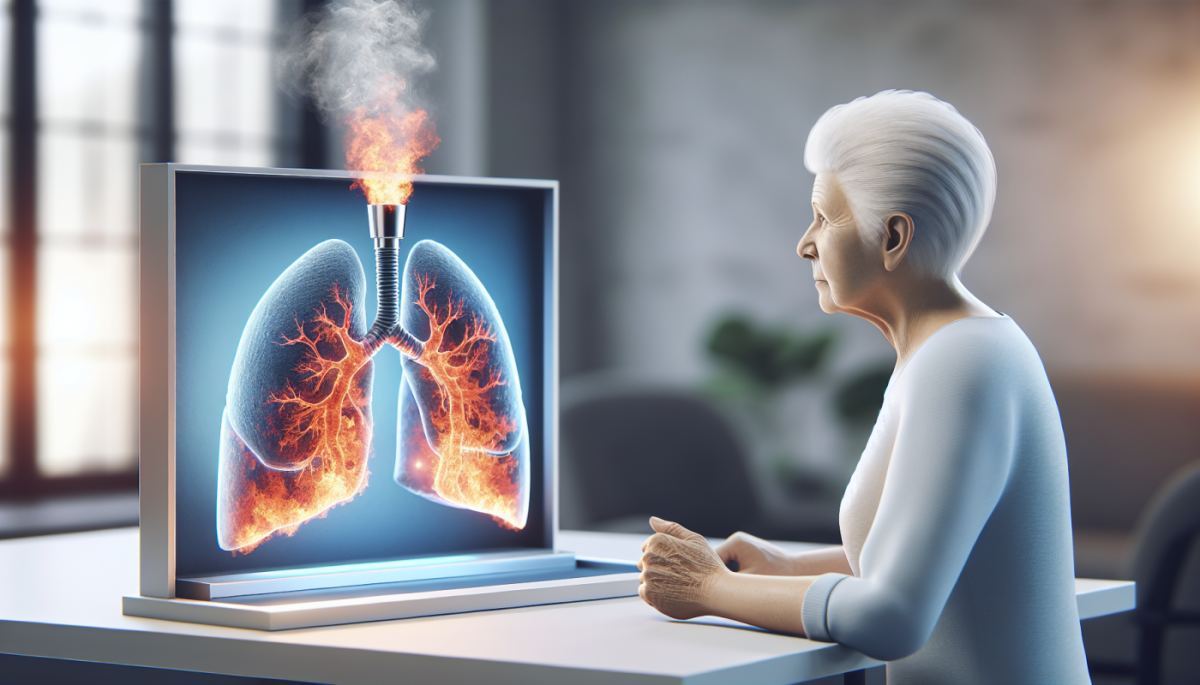
There is a quiet biological crisis unfolding inside older bodies long before any infection arrives. Researchers publishing in Aging Cell have identified a mechanism that helps explain why pneumonia kills the elderly at rates that dwarf its toll on younger people, and the culprit is not simply a weakened immune system. It is, paradoxically, one that has been burning too long.
The phenomenon at the center of this research is called inflammaging, a portmanteau that captures something deeply counterintuitive: the chronic, low-grade inflammation that accumulates with age. Unlike the sharp, purposeful inflammation that flares during an acute infection and then resolves, inflammaging is a persistent background hum of immune activation. The body is perpetually on a low-level war footing, and that state of chronic alert turns out to be profoundly self-defeating when a real threat like pneumonia finally arrives.
At the center of the new findings are neutrophils, the short-lived white blood cells that function as the immune system's first responders. When bacteria or pathogens invade the lungs, neutrophils are among the earliest cells to flood the site, engulfing pathogens and releasing chemical signals that coordinate a broader immune response. They are, in the language of immunology, polymorphonuclear leukocytes, and their speed and aggression are precisely what makes them valuable.
But the research in Aging Cell suggests that in older organisms, the inflammaging environment fundamentally compromises how these cells function. The chronic inflammatory milieu that characterizes aged tissue appears to dysregulate neutrophil behavior, impairing their ability to respond effectively when pneumonia takes hold. The cells are not simply fewer in number or slower to arrive. They are operating within a system that has already been distorted by years of low-level inflammatory signaling, and that distortion changes what they do when they get there.
This distinction matters enormously. Much of the conventional framing around aging and infection focuses on immunosenescence, the gradual decline in immune cell production and responsiveness. That framing implies a simple deficit model: older people get sicker because they have less immune firepower. What inflammaging research complicates is the assumption that more immune activity would necessarily help. In fact, the chronic inflammatory state may be actively interfering with the precise, coordinated response that effective pathogen clearance requires.
What makes inflammaging particularly difficult to address is its self-reinforcing nature. As cells age, they increasingly enter a state called senescence, where they stop dividing but refuse to die. Senescent cells secrete a cocktail of inflammatory molecules known as the senescence-associated secretory phenotype, or SASP. Those molecules contribute to the broader inflammaging environment, which in turn promotes further cellular stress and senescence in neighboring tissue. It is a feedback loop that tightens with every passing year.
The lungs are not insulated from this dynamic. Pulmonary tissue accumulates senescent cells with age, and the inflammatory signals they emit create a microenvironment that is already primed and irritated before any pathogen arrives. When pneumonia enters this landscape, the immune response it triggers is layered on top of an existing inflammatory substrate, and the results can be catastrophic. Excessive or misdirected inflammation in the lungs is not a side effect of severe pneumonia in the elderly. For many patients, it is the primary mechanism of organ damage.
The cascading consequence worth watching here extends well beyond pneumonia. If inflammaging systematically degrades the quality of neutrophil responses, the implications ripple outward to every infection, every post-surgical recovery, every vaccine response that depends on a clean, well-regulated immune reaction. Influenza, sepsis, and even the severity of respiratory complications from COVID-19 have all been linked to dysregulated inflammatory responses in older patients. The inflammaging framework offers a unifying explanation for why aging bodies seem to fail in similar ways across such different clinical contexts.
There is also a pharmaceutical dimension beginning to take shape. Researchers and biotech companies have been exploring senolytics, drugs designed to selectively clear senescent cells and reduce the SASP-driven inflammatory burden. If the Aging Cell findings hold in human models, the case for testing senolytics as a way to restore more effective neutrophil function before infection strikes becomes considerably stronger.
The deeper implication of this research is that protecting older people from pneumonia may require intervening in the immune environment years before any pathogen appears, which means the window for meaningful prevention is far earlier, and far quieter, than a hospital admission would suggest.


Discussion (0)
Be the first to comment.
Leave a comment