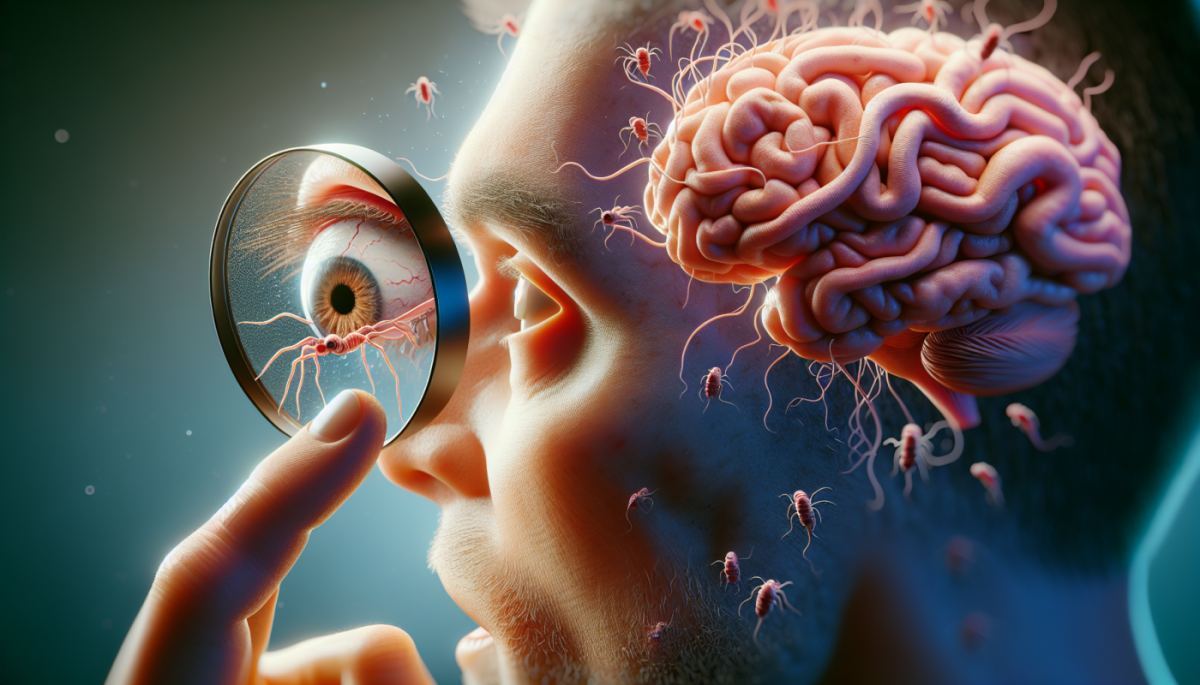
For decades, the scientific consensus on Toxoplasma gondii followed a reassuringly simple narrative: the parasite infects the brain, forms a cyst, and then goes quiet. The immune system keeps it in check, the patient feels nothing, and life continues. An estimated one-third of the global human population carries this organism, most of them never knowing it. That story, it turns out, was far too comfortable.
New research has revealed that the cysts Toxoplasma forms inside brain tissue are not the static, sleeping structures scientists assumed. They are dynamic communities, containing multiple distinct subtypes of the parasite operating simultaneously. Some of these subtypes appear specifically primed to reactivate, ready to shift back into the fast-replicating form that causes acute, life-threatening disease. The cyst, in other words, is not a dormitory. It is closer to a staging ground.
This distinction matters enormously. The reason Toxoplasma infections have resisted treatment for so long is that existing drugs, primarily pyrimethamine and sulfadiazine, target the active replicating form of the parasite but cannot reach or eliminate the cyst stage. Physicians treating immunocompromised patients, including those living with HIV or undergoing organ transplants, have long faced a frustrating ceiling: they can suppress the parasite during an acute episode, but they cannot eradicate it. Reactivation remains a persistent threat. The new findings suggest that this therapeutic blind spot exists precisely because the cyst was never truly dormant to begin with. It was always preparing for its next move.
The discovery of multiple parasite subtypes within a single cyst reframes the biology of chronic Toxoplasma infection in a fundamental way. Rather than a uniform population of slow-dividing bradyzoites simply waiting out the immune response, researchers found a more stratified internal architecture. Certain cells within the cyst appear to occupy transitional states, positioned between the dormant bradyzoite form and the rapidly dividing tachyzoite form that causes tissue damage. This gradient of readiness means the parasite has essentially pre-loaded the machinery for reactivation, reducing the time and biological cost required to shift gears when the host's immune defenses weaken.
From a systems biology perspective, this is a sophisticated survival strategy. The parasite is not gambling on a single form. It is hedging, maintaining a spectrum of developmental states so that some portion of the population is always close to active regardless of the host environment. This kind of bet-hedging is well documented in bacterial populations under stress, but finding it operating at this level of complexity inside a eukaryotic parasite cyst is a significant observation. It suggests Toxoplasma has evolved a form of internal redundancy that makes it exceptionally difficult to fully suppress through any single therapeutic mechanism.
The implications for treatment are both sobering and, cautiously, energizing. On one hand, the findings confirm why decades of drug development efforts aimed at the cyst stage have largely failed. If the cyst contains populations already primed for reactivation, a drug would need to penetrate the cyst wall, identify and eliminate not just dormant cells but transitional ones as well, and do so without causing collateral neurological damage. That is an extraordinarily precise pharmacological challenge.
On the other hand, the identification of these transitional subtypes opens new molecular targets. If researchers can characterize the specific proteins or signaling pathways that govern the shift between dormancy and reactivation, those mechanisms become candidates for intervention. Blocking the reactivation pathway rather than trying to kill a static cyst is a fundamentally different and potentially more tractable problem. Several research groups are already working on compounds that target bradyzoite-specific surface antigens, and this new understanding of cyst heterogeneity could sharpen that work considerably.
The second-order consequence worth watching is what this research means for the much larger population of immunocompetent carriers. Current clinical guidance treats asymptomatic Toxoplasma infection as essentially benign in healthy individuals. But if cysts are continuously active at a low level, the long-term neurological effects of carrying a dynamic, heterogeneous parasite population across decades may be more significant than current models assume. The links between Toxoplasma seropositivity and certain psychiatric and neurological conditions remain contested and correlational, but they have never fully gone away. A more complete picture of what the parasite is actually doing inside the brain may eventually force a reassessment of what it means to be an asymptomatic host.
The parasite was never dormant. Science is only now catching up to what it was doing all along.



Discussion (0)
Be the first to comment.
Leave a comment