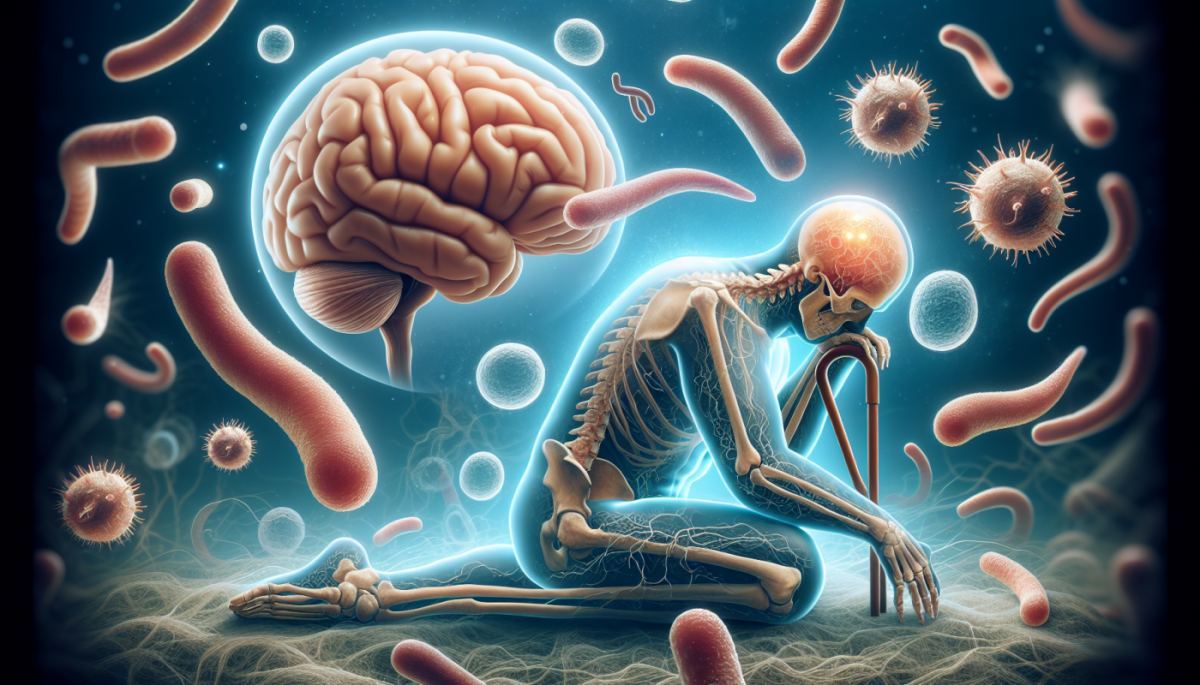
Something remarkable is happening in the space between your intestines and your mind. Scientists have long suspected that the gut and brain are in constant conversation, but a new study is pushing that intuition into sharper, more unsettling focus: the microbial communities living in your digestive tract may be actively shaping how well your brain functions as you age, and one bacterial species in particular appears to be doing much of the talking.
The research points to microbiome remodeling, the gradual, often invisible shift in the composition of gut bacteria that occurs as we get older, as a meaningful mechanism behind age-related cognitive decline. This is not a fringe hypothesis anymore. The study identifies a specific bacterial species as the likely driver of this effect, and the proposed pathway is the vagus nerve, the long, wandering highway of neural tissue that connects the brainstem to the gut and carries signals in both directions. What begins as a change in microbial population, in other words, may end as a measurable change in how clearly you think.
The gut-brain axis has been a fashionable subject in neuroscience for the better part of a decade, but much of the early enthusiasm outpaced the evidence. Researchers knew the connection existed. They could see it anatomically. What they struggled to do was identify the specific actors and mechanisms with enough precision to make the science clinically useful. This study represents a step toward that precision.
The vagus nerve is an elegant candidate for this kind of signaling. It is the longest cranial nerve in the body, and unlike most neural pathways, it carries information predominantly upward, from the organs to the brain, rather than the other way around. Roughly 80 percent of its fibers are afferent, meaning they report conditions in the gut to the brain rather than issuing commands downward. If a bacterial species is producing metabolites or triggering immune signals that the vagus nerve then relays upward, the brain is essentially receiving a continuous, chemically encoded status report from the microbiome. When that report changes with age, and the microbial community shifts toward compositions that generate different signals, the cognitive consequences could be profound and gradual enough to be mistaken for simple aging.
This framing matters because it reorients the question. Rather than asking what goes wrong in the brain during cognitive decline, it invites researchers to ask what went wrong in the gut first, and how long ago.
The implications of this research extend well beyond the laboratory. If a specific bacterial species is confirmed as a key mediator of age-related cognitive decline through the vagus nerve, the therapeutic possibilities shift dramatically. Probiotic interventions, dietary protocols, and even vagus nerve stimulation, a technique already approved for epilepsy and depression, could become tools in the fight against dementia and cognitive aging. The pharmaceutical industry, which has poured enormous resources into targeting amyloid plaques in Alzheimer's disease with mixed results, might find itself looking at the gut as an upstream intervention point that is cheaper, safer, and more accessible than anything currently in the pipeline.
But there is a second-order consequence worth watching carefully. As microbiome research accelerates, so does the commercial ecosystem around it. The supplement and probiotic industry already generates billions of dollars annually on claims that are, in many cases, weakly supported by evidence. A high-profile study linking gut bacteria to brain aging is exactly the kind of finding that gets laundered through press releases and marketing copy before the scientific community has had time to replicate it. Consumers, desperate for anything that might protect their cognitive future, are a vulnerable audience. The gap between what the science actually says and what a probiotic label implies could widen considerably in the months following this kind of research.
That tension, between genuine scientific progress and the commercial machinery that rushes to monetize it, is one of the defining problems of modern health journalism. The finding itself is serious and worth taking seriously. The bacterial species identified, the vagus nerve pathway proposed, the connection to microbiome remodeling as a function of age: these are specific, testable, falsifiable claims. That is exactly what good science looks like at an early stage.
The more interesting question, as replication studies begin and the mechanistic picture sharpens, is whether the aging brain turns out to be less a story of neurons failing and more a story of a microbial ecosystem slowly changing its tune, note by note, decade by decade, in ways the brain above can no longer ignore.


Discussion (0)
Be the first to comment.
Leave a comment