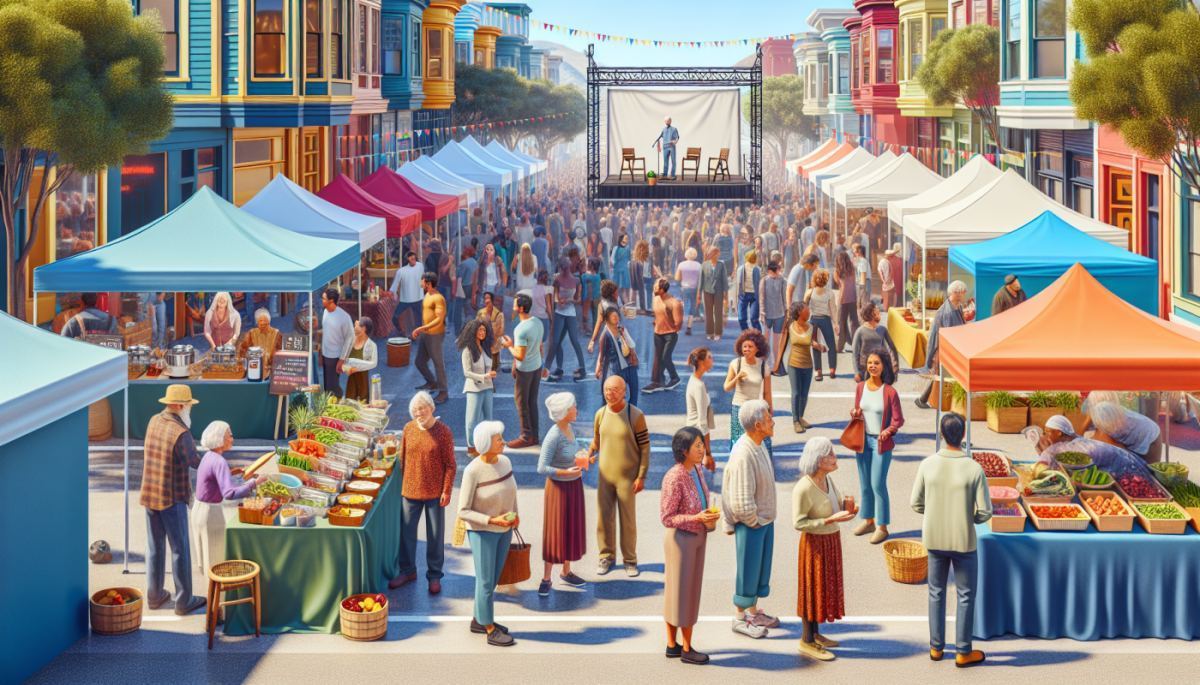
Every May, a particular kind of optimism descends on Berkeley. It is not the political kind, nor the nostalgic kind the city is famous for. It is something stranger and more urgent: the belief, held with increasing scientific seriousness, that human aging is not a fixed sentence but an engineering problem waiting to be solved. Vitalist Bay 2026, the world's largest longevity festival, returns to the Lighthaven Campus from May 14 through 17, and its very existence says something important about how far this conversation has traveled from the fringes.
The Vitalism Foundation, which organizes the event, has built Vitalist Bay into a gathering that sits at an unusual intersection. It is part scientific conference, part cultural festival, part ideological statement. That combination is not accidental. The longevity field has long struggled with a credibility problem, caught between rigorous geroscience on one side and the wilder shores of biohacking influencers on the other. A multi-day festival format, held on a campus rather than a convention floor, is a deliberate attempt to collapse that distance and build something that feels more like a movement than a trade show.
The choice of Berkeley as a home base is worth examining. The Bay Area has become the undisputed capital of longevity investment, with billions of dollars flowing into companies working on everything from senolytics to epigenetic reprogramming. Altos Labs, funded in part by Jeff Bezos, is headquartered nearby. Calico, the Alphabet-backed longevity research company, operates out of South San Francisco. Unity Biotechnology, NewLimit, and a constellation of smaller startups have clustered in the region, creating a feedback loop where talent, capital, and ambition reinforce each other in ways that are genuinely difficult to replicate elsewhere.
Lighthaven Campus itself is a telling venue choice. Originally a conference and retreat center with roots in the rationalist and effective altruism communities, it carries a particular intellectual flavor, one that takes seriously the idea that large-scale coordination around ambitious goals is not naive but necessary. Hosting a longevity festival there signals something about the audience being courted: people who are comfortable with long time horizons, probabilistic thinking, and the uncomfortable question of what it would actually mean to live significantly longer than current biology allows.
The festival format also reflects a maturation in how longevity advocates think about public persuasion. Early longevity conferences were largely insider affairs, dense with data and inaccessible to anyone without a background in molecular biology. The shift toward a multi-day festival, with its implied invitation to linger, connect, and absorb ideas gradually, suggests an awareness that the field's biggest obstacle is no longer scientific but cultural. Convincing regulators, insurers, and ordinary people that aging is a treatable condition requires a different kind of communication than peer-reviewed papers can provide.
The systems-level implications of a maturing longevity movement are only beginning to come into focus, and they are considerably more complicated than the straightforward promise of longer, healthier lives. Consider what extended healthspans would do to institutions built around the assumption of a relatively fixed human lifespan. Pension systems, retirement ages, inheritance patterns, housing markets, and even the pace of generational turnover in politics and corporate leadership all rest on demographic assumptions that longevity science is quietly preparing to disrupt.
There is also a compounding inequality dynamic that deserves serious attention. If the first generation of meaningful longevity interventions is expensive, and history suggests it will be, the result could be a world where biological age and chronological age diverge sharply along economic lines. The wealthy would not merely accumulate more assets over time; they would accumulate more time itself. That is a qualitatively different kind of inequality than anything existing social frameworks were designed to address.
Festivals like Vitalist Bay matter in this context not just as networking events but as norm-setting exercises. The stories told at gatherings like this one, about who longevity is for, what problems it is meant to solve, and what kind of society it is meant to produce, will shape the policy and investment decisions that follow. The scientific questions are hard. The social questions may be harder.
As May approaches and the Lighthaven Campus prepares to host another convergence of researchers, investors, and true believers, the most interesting thing to watch will not be which interventions are closest to clinical reality. It will be whether the movement can articulate a vision of extended life that feels genuinely inclusive rather than merely aspirational, because the answer to that question will determine whether longevity science becomes one of the great democratic advances in human history or simply the most expensive members-only club ever built.



Discussion (0)
Be the first to comment.
Leave a comment