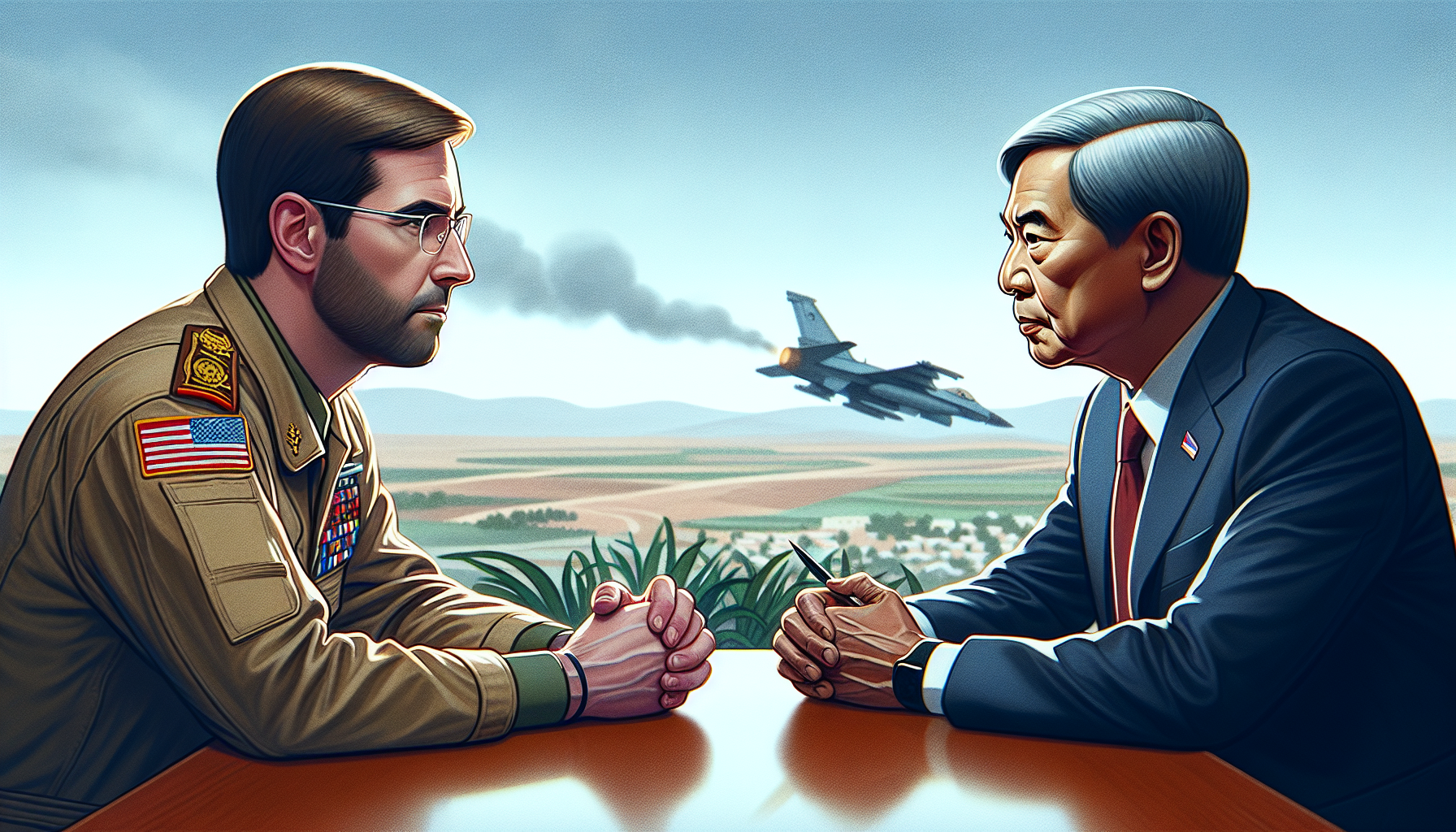
There is a particular kind of diplomatic signal that arrives not in the form of a statement, but in the form of an absence. When Donald Trump asked to postpone his planned summit with Chinese President Xi Jinping, citing the need to remain in Washington as the United States becomes entangled in the conflict with Iran, the message sent to Beijing was layered and, depending on how it is read, either reassuring or deeply unsettling.
On the surface, the postponement looks like straightforward crisis management. A sitting president cannot easily fly to a high-stakes bilateral summit when missiles are in the air and war councils are convening. The optics alone would be catastrophic. But the decision also reveals something about the structural limits of American foreign policy bandwidth, and the degree to which the Middle East continues to consume strategic attention that Washington has repeatedly promised to redirect toward the Indo-Pacific.
For years, successive American administrations have spoken about pivoting away from the Middle East and toward Asia as the defining theater of the 21st century. The logic was sound: China's rise, Taiwan's precarious status, and the economic architecture of the Pacific all demanded sustained focus. Yet the region that was supposed to recede keeps pulling Washington back in. Afghanistan, ISIS, Syria, and now Iran have each, in turn, disrupted the pivot. The postponement of the Xi summit is the latest evidence that the United States has not solved what strategists sometimes call the "two-theater problem," the difficulty of maintaining credible deterrence and active diplomacy in two geographically and politically distinct arenas simultaneously.
For Xi, the delay is information. It tells him that the American president is stretched, that the administration's attention is divided, and that the window for substantive engagement on trade, Taiwan, and technology competition is narrowing under the weight of events elsewhere. Whether Beijing interprets this as an opportunity or a complication depends on what China's own calculus around Iran looks like. China has deep economic ties with Tehran, and any American military escalation that disrupts Iranian oil exports or destabilizes the broader Gulf region creates real costs for Chinese energy security and Belt and Road investments.
The second-order consequences of postponing a summit of this magnitude are rarely discussed in the immediate news cycle, but they accumulate. Summits between the leaders of the world's two largest economies are not simply photo opportunities. They are the moments when back-channel understandings get formalized, when red lines get quietly communicated, and when the bureaucracies of both governments receive a signal about which direction to lean. Delay those moments and you delay the entire machinery of bilateral management.
This matters particularly now because the US-China relationship is navigating an unusually dense thicket of live disputes. Tariff negotiations that had shown tentative signs of progress, semiconductor export controls, and the perennial tension over Taiwan all require sustained high-level attention. A postponed summit does not freeze those issues. It simply means they continue to evolve without the stabilizing influence of direct presidential engagement.
There is also a reputational dimension that cuts in multiple directions. Allies in Asia, from Tokyo to Seoul to Canberra, watch American diplomatic scheduling closely as a proxy for commitment. When Washington cancels or delays engagement with Beijing, it can read as either strength or distraction depending on the circumstances. In this case, with the reason being an active military confrontation in the Middle East, the reading in many Asian capitals is likely to be the latter.
The deeper irony is that the Iran conflict and the China relationship are not entirely separate files. Beijing's willingness to pressure Tehran, or its refusal to do so, is itself a variable in how the Middle East crisis unfolds. A summit postponed because of Iran is also, therefore, a summit postponed at precisely the moment when the United States might most benefit from a direct conversation with the one power that has meaningful leverage over Iranian decision-making.
If the conflict with Iran extends beyond the immediate horizon, the pressure to reschedule will only grow more complicated. The longer the gap, the more the bilateral agenda calcifies around grievance rather than negotiation, and the harder it becomes for either leader to arrive at the table without domestic audiences demanding confrontation over compromise.



Discussion (0)
Be the first to comment.
Leave a comment