
General Motors spent years and billions of dollars building Ultium, its proprietary battery platform, as the technological backbone of its electric future. The Blazer EV, the Silverado EV, the Equinox EV — all of them run on the same modular Ultium architecture, a system designed to scale across vehicle classes and price points. Then along came the new Chevy Bolt, a car that doesn't use Ultium at all, and it charges faster than most of them. That's not a minor footnote. It's a quiet indictment of how the industry has been thinking about EV architecture.
The core issue is voltage. The new Bolt operates on an 800-volt architecture, which allows it to accept DC fast charging at significantly higher rates than the Ultium-based vehicles, most of which run on 400-volt systems. Physics doesn't negotiate: higher voltage means more power can be pushed through the same cable in the same amount of time, which translates directly into shorter charging stops. For everyday drivers, the difference between adding 100 miles in 20 minutes versus 35 minutes isn't abstract. It's the difference between a tolerable errand and a frustrating wait. GM's own flagship electric trucks and crossovers, vehicles that cost tens of thousands more than the Bolt, can't match it on this single, increasingly important metric.
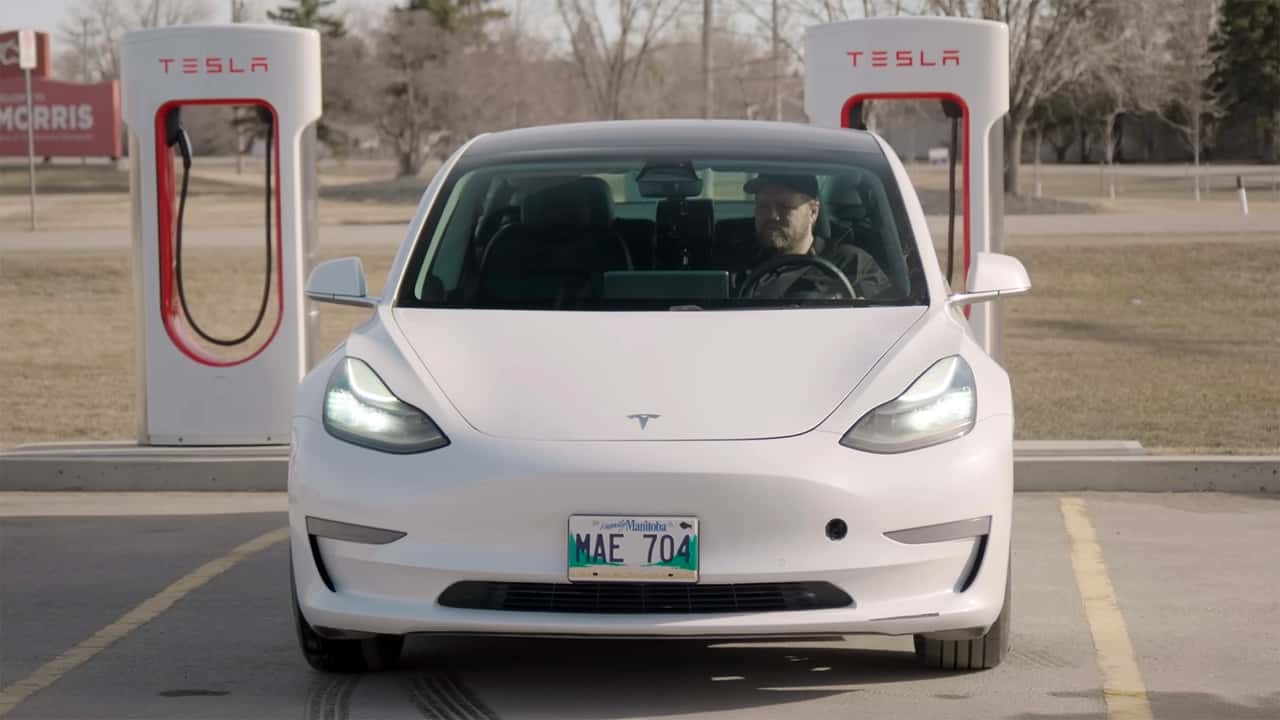
This matters because charging speed has become one of the sharpest competitive edges in the EV market. Hyundai and Kia moved to 800-volt systems with the Ioniq 5 and EV6 several years ago, and those vehicles earned outsized praise precisely because of how quickly they could replenish range. Porsche built the Taycan around 800 volts from the start. Tesla's V3 Supercharger network pushes high power through its own architecture. The industry has been signaling for years that 400-volt systems are a transitional technology, not a destination. GM, despite its enormous investment in Ultium, appears to have built its flagship platform on the wrong side of that transition.
The Ultium platform was never really about charging speed. It was about manufacturing flexibility and cost reduction at scale — the ability to use the same battery modules in a compact crossover and a full-size pickup without retooling the entire production line. That's a legitimate industrial logic, and it has real value. But it also reflects a set of priorities that were shaped more by factory economics than by the charging experience a driver actually lives with. When you optimize for modularity and margin, you sometimes sacrifice the thing the customer notices most.
What makes the Bolt's advantage particularly pointed is that it arrives in a car positioned as GM's affordable, accessible EV. The Bolt was always the people's electric car — practical, unsexy, quietly competent. The fact that GM apparently chose to give it a more advanced electrical architecture than its premium lineup suggests either a deliberate segmentation strategy that wasn't well communicated, or a product planning process that didn't fully reckon with how consumers would compare the two. Either way, the optics are awkward. Buyers spending $70,000 on a Silverado EV are now in a position to feel like they got the slower car.
The deeper systems consequence here isn't just about GM's internal lineup. It's about what this signals for the broader EV adoption curve. Charging anxiety remains one of the most cited barriers to EV purchase consideration, and charging speed is the most visceral expression of that anxiety. When a mass-market, affordably priced vehicle demonstrably outperforms premium alternatives on the one dimension that most directly addresses that anxiety, it reshapes consumer expectations across the entire segment.
If buyers begin to treat 800-volt charging capability as a baseline expectation rather than a premium feature, automakers still running 400-volt platforms face a quiet but compounding credibility problem. Dealers will field questions. Reviews will make comparisons. Forum threads will circulate. The feedback loop between consumer expectation and product specification tends to tighten faster than product development cycles can respond, which means manufacturers who didn't prioritize voltage architecture early are now running to catch up while simultaneously defending vehicles already on the lot.
GM has the engineering resources to evolve Ultium toward higher-voltage configurations, and there are indications that future iterations of the platform will do exactly that. But the Bolt, almost accidentally, has made the timeline feel more urgent. The affordable car set the standard. Now the expensive ones have to meet it.

Discussion (0)
Be the first to comment.
Leave a comment