
The assumption has long been that losing weight fixes the damage obesity does to the body. Shed the pounds, restore the metabolic markers, and the biological slate is wiped clean. A new study is challenging that comfortable logic in a way that has significant implications for how medicine thinks about obesity, inflammation, and long-term disease risk.
Researchers have found that T cells, the immune system's frontline adaptive responders, may retain a pro-inflammatory character long after a person returns to a normal weight following a period of obesity. In mouse models, this altered immune phenotype persisted for weeks after the animals had lost the excess weight. Scaled to human biology, where immune memory operates on far longer timescales, the effect could linger for years.
This is not a minor footnote. T cells are central to how the body regulates inflammation, fights infection, and even surveils for early cancer. When they are persistently skewed toward a pro-inflammatory state, the downstream consequences reach into cardiovascular disease, autoimmune conditions, and metabolic dysfunction. The finding suggests that obesity does not merely stress the immune system while it is present. It may reprogram it.
The mechanism behind this persistence likely involves epigenetic modification, the chemical tags that sit on top of DNA and influence how genes are expressed without changing the underlying sequence. Obesity creates a sustained inflammatory environment, and sustained environments have a way of leaving marks. T cells that mature and differentiate during a period of obesity may be imprinted with transcriptional patterns that favor inflammation, patterns that do not simply reset when caloric balance is restored.
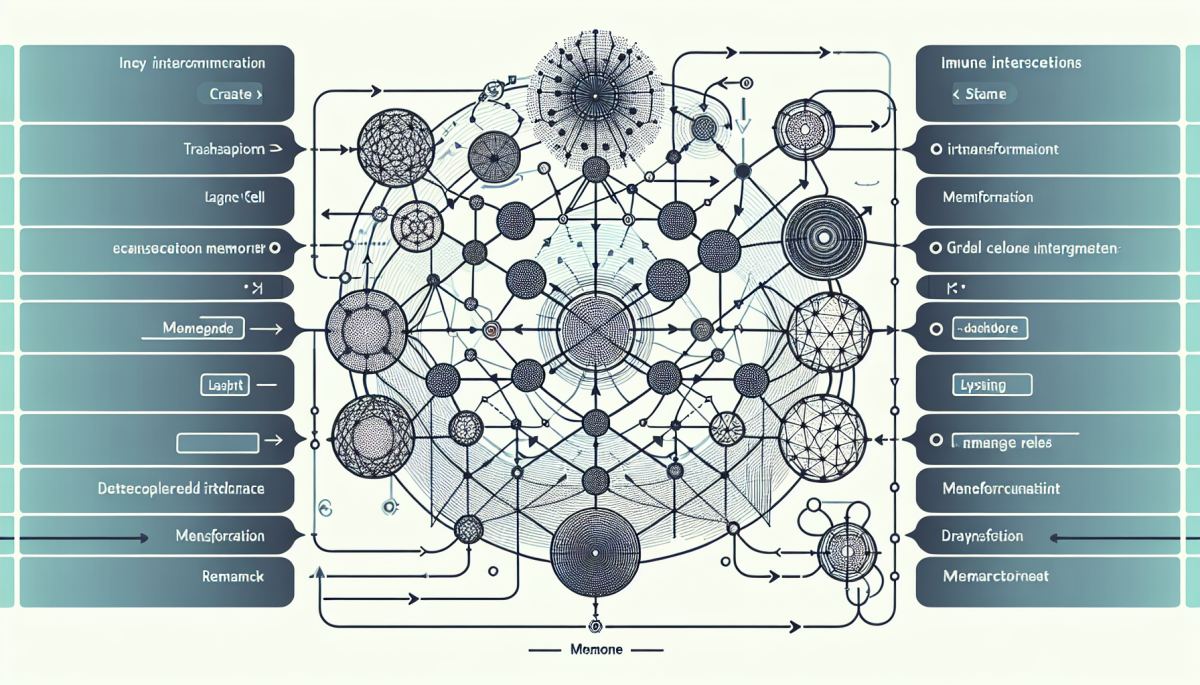
This is consistent with a broader body of research on what immunologists sometimes call "trained immunity," where immune cells retain functional memory of prior conditions. The concept was initially developed in the context of infections and vaccines, but the same logic appears to apply to metabolic states. A 2018 study published in Nature Immunology demonstrated that macrophages exposed to high-fat diet conditions retained altered epigenetic profiles even after the dietary stimulus was removed. The T cell findings extend that picture further into the adaptive immune compartment, which has even more sophisticated memory architecture.
What makes this particularly difficult to address clinically is that standard measures of recovery from obesity, things like BMI, fasting glucose, and lipid panels, do not capture immune phenotype. A patient who looks metabolically recovered by every conventional benchmark may still be carrying an immune system operating in a state of low-grade chronic inflammation. That inflammation, invisible on a standard lab panel, may be quietly elevating risk for conditions that will not manifest for years.
The implications for public health policy are uncomfortable. Much of the current framework around obesity treatment is organized around weight loss as the primary endpoint. Bariatric surgery is evaluated largely on metabolic outcomes. GLP-1 receptor agonists like semaglutide, which have reshaped the obesity treatment landscape, are celebrated for their ability to drive significant weight reduction. These are real and meaningful benefits. But if immune reprogramming persists independently of weight status, then weight loss alone is an incomplete therapeutic goal.
This also complicates the narrative around weight cycling, the pattern of losing and regaining weight that is extremely common in people who diet. If each period of obesity leaves an immunological residue, repeated cycles could have a compounding effect on inflammatory tone over a lifetime, even in people whose weight appears controlled at any given snapshot. The immune system, in this framing, is keeping a kind of biological ledger that the scale cannot read.
There is also a feedback loop worth watching. Chronic low-grade inflammation itself contributes to insulin resistance and metabolic dysfunction, which in turn make weight management harder. If obesity primes the immune system toward inflammation, and that inflammation then makes future obesity more likely or more metabolically damaging, the cycle becomes self-reinforcing in ways that purely behavioral or pharmacological interventions may struggle to fully interrupt.
The research is still early, and translating mouse-model timescales to human ones requires caution. But the directional signal is clear enough to warrant serious attention. The question medicine may need to start asking is not just how to help people lose weight, but how to help the immune system forget what it learned while they were carrying it.



Discussion (0)
Be the first to comment.
Leave a comment