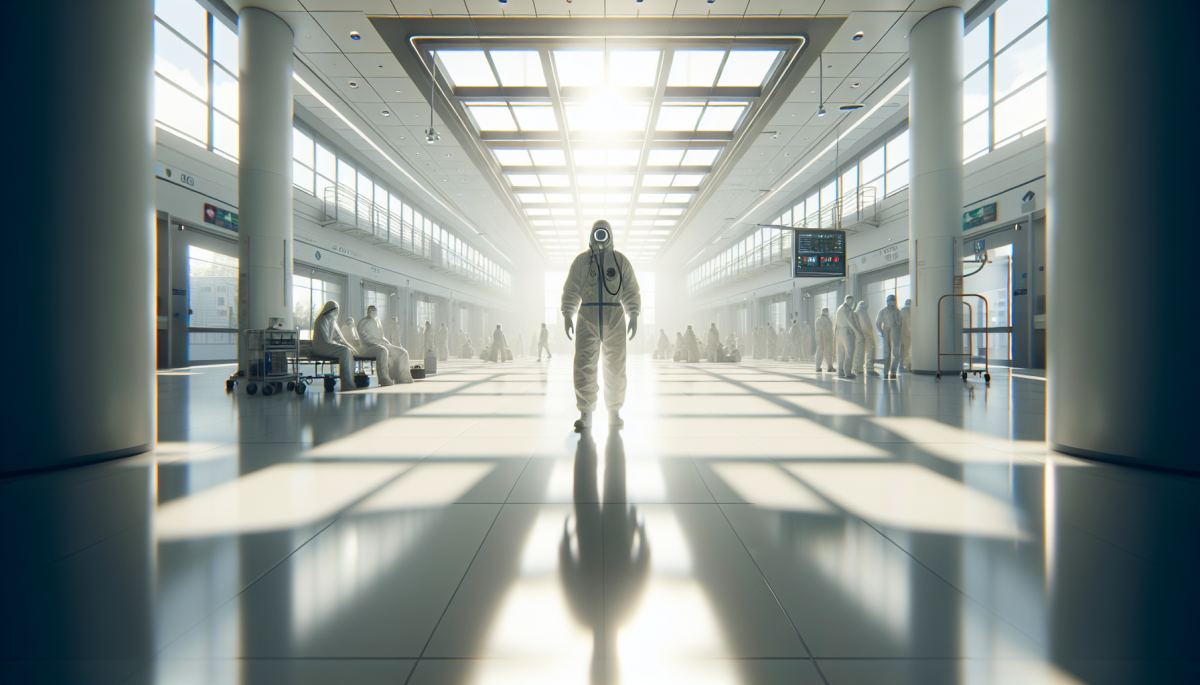
When a fictional bacterium began spreading across the world in a simulation room last week, 600 health emergency experts from 26 countries had to make decisions in real time. No one died. No hospitals collapsed. But the lessons from Exercise Polaris II, the World Health Organization's two-day high-level simulation that concluded on April 23, may matter enormously when the next real pathogen arrives.

The exercise, which brought together over 25 international partners alongside national health officials, was built around a scenario most people would recognize from the COVID-19 years: a novel pathogen, unknown transmission dynamics, and governments scrambling to coordinate across borders while their own emergency systems strain under pressure. The fictional bacterium at the center of Polaris II was designed precisely to stress-test the gaps that real outbreaks exploit, the lag between detection and declaration, the friction between national sovereignty and international coordination, and the chronic underinvestment in emergency workforce structures that only becomes visible when those structures are needed most.
The WHO has been running simulation exercises like this for years, but Polaris II carries particular weight given the political moment. The world is still digesting the failures and near-misses of the COVID-19 pandemic, and negotiations over a global pandemic treaty have been grinding forward with considerable difficulty. Simulations like this one serve a dual purpose: they are genuine stress tests of operational readiness, but they are also political instruments, designed to build the institutional muscle memory and diplomatic trust that formal treaties alone cannot create.
What makes a simulation like Polaris II genuinely useful, rather than a bureaucratic theater exercise, is whether it surfaces real friction. The most valuable outcome of any war game is not a smooth run-through but the discovery of where systems break. Emergency workforce activation, one of the explicit focus areas of this exercise, is a particularly revealing stress point. Many countries maintain emergency health rosters on paper that, in practice, cannot be mobilized quickly because of legal, logistical, or funding barriers that only become apparent under pressure.
The involvement of 26 countries and territories also matters for a less obvious reason. Global health emergency response is not simply a technical problem of having enough doctors or enough vaccines. It is a coordination problem of extraordinary complexity, where the speed of information sharing between governments, the willingness to declare emergencies before political costs become clear, and the interoperability of national systems all determine outcomes. The WHO's ability to convene that many national delegations in a shared scenario is itself a form of infrastructure, one that takes years to build and can erode quickly if trust between member states and the organization weakens.
That trust is not guaranteed. The WHO has faced sustained criticism over its handling of early COVID-19 notifications, and the United States under the current administration has signaled renewed skepticism toward multilateral health institutions. When key funders and powerful member states pull back from these frameworks, the simulation exercises become less representative of actual response capacity, because the countries that opt out are often the ones whose cooperation matters most during a real crisis.
There is a systems-level consequence to exercises like Polaris II that rarely gets discussed in the press releases. Simulation exercises can create a false sense of preparedness if their findings are not translated into durable institutional change. The history of pandemic preparedness is littered with post-exercise reports that identified critical gaps, only for those gaps to remain unfilled when the next outbreak arrived. The 2019 Global Health Security Index, published just months before COVID-19 emerged, ranked many high-income countries as highly prepared. The pandemic exposed how misleading that assessment was.
The real test of Polaris II will not be visible in April 2025. It will be visible in whether the 26 participating countries actually update their emergency workforce protocols, whether the partner organizations integrate the lessons into their operational planning, and whether the WHO can use the exercise findings to strengthen the pandemic agreement negotiations that remain unresolved. Simulation without institutional follow-through is rehearsal without a performance.
What the exercise does accomplish, even in the best-case scenario, is something harder to measure: it builds a shared mental model among the people who will actually be making decisions during the next emergency. The relationships formed in a simulation room, the shared experience of navigating a fictional crisis together, create the kind of informal coordination capacity that no treaty can fully replicate. Whether that proves sufficient when a real pathogen arrives, one that does not follow the script, remains the question that Exercise Polaris II cannot answer.
References
- WHO (2025) — Exercise Polaris II: WHO simulation exercise on pandemic preparedness
- GHS Index (2019) — Global Health Security Index 2019
- Gostin et al. (2024) — The WHO Pandemic Agreement: An Analysis of the Negotiating Text
- Moon et al. (2015) — Will Ebola change the game? Ten essential reforms before the next pandemic



Discussion (0)
Be the first to comment.
Leave a comment