For years, rapamycin has occupied a peculiar and exciting corner of longevity science. Originally developed as an immunosuppressant for organ transplant patients, the drug has since become one of the most closely watched compounds in aging research, largely because it reliably extends lifespan in mice. Now, a new human study is complicating that picture in ways that matter enormously for how we think about healthy aging.
The study found that rapamycin appears to blunt the physiological benefits of exercise in older human subjects. That is not a minor footnote. Exercise is arguably the single most evidence-backed intervention for extending healthspan in humans, reducing risk of cardiovascular disease, preserving muscle mass, improving insulin sensitivity, and slowing cognitive decline. If a drug intended to slow aging simultaneously undermines the body's response to physical activity, the net effect on human health becomes genuinely difficult to calculate.
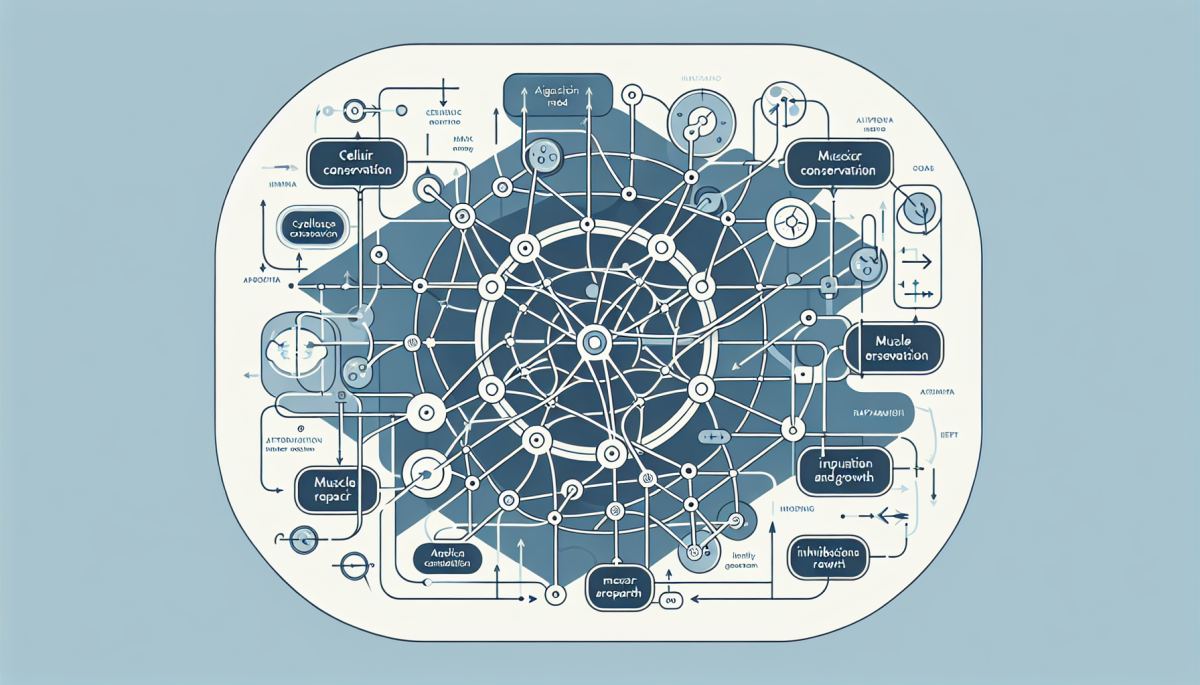
Rapamycin works by inhibiting a protein complex called mTORC1, which functions as a central nutrient and growth sensor inside cells. When mTORC1 is suppressed, cells shift into a kind of conservation mode, ramping up autophagy, the process by which cells clear out damaged components. This is widely believed to be one of the core mechanisms behind rapamycin's lifespan-extending effects in animal models. The problem is that mTORC1 is also a critical signal in the pathway that drives muscle protein synthesis after exercise. When you lift weights or go for a run, your muscles send distress signals that activate mTORC1, which then orchestrates the repair and growth that makes you stronger and more resilient over time. Rapamycin, by design, interrupts that process.
This tension has been visible in the scientific literature for some time. Studies in rodents have shown that rapamycin can impair muscle adaptation to resistance training, and researchers have long suspected the same dynamic might apply in humans. What makes the new findings significant is that they move this concern from animal models into older human subjects, the very population most likely to be prescribed or self-administering rapamycin for longevity purposes.
It is worth noting, as the researchers themselves acknowledge, that the result may be protocol-specific. The timing, dosage, and frequency of rapamycin administration relative to exercise sessions could matter a great deal. Some researchers have speculated that intermittent dosing, rather than continuous suppression of mTORC1, might preserve more of the exercise response while still delivering longevity benefits. That hypothesis remains largely untested in rigorous human trials.
There is a systems-level consequence here that deserves more attention than it typically receives. Rapamycin is already being used off-label by a growing number of people, many of them middle-aged or older, who are following longevity protocols promoted by physicians and influencers in the biohacking space. Figures like Peter Attia have discussed rapamycin use publicly, and online communities dedicated to life extension have normalized the drug's use well ahead of any formal clinical guidance.
If those same individuals are also following exercise regimens, which most longevity-focused people are, they may be inadvertently undermining one of the most powerful tools they have. Worse, because the blunting effect on muscle adaptation is not immediately felt the way a side effect like fatigue or nausea would be, people could continue both practices for years without realizing they are working against each other. The feedback loop is invisible until it shows up as accelerated muscle loss or reduced cardiovascular fitness in later years, outcomes that are difficult to attribute to any single cause.
This is a classic problem in complex biological systems: interventions that look additive or synergistic on paper can interact in ways that are subtractive or even antagonistic in practice. The longevity field has a tendency to treat promising interventions as modular, as if stacking caloric restriction, exercise, metformin, and rapamycin simply adds up their individual benefits. The biology is rarely that cooperative.
What the field actually needs now is not more mouse data but well-designed human trials that test rapamycin and exercise together across different dosing schedules and age groups. Until that evidence exists, anyone taking rapamycin while also relying on exercise for their long-term health is essentially running an uncontrolled experiment on themselves. The results of that experiment will take decades to fully arrive.
References
- Harrison et al. (2009) — Rapamycin fed late in life extends lifespan in genetically heterogeneous mice
- Bitto et al. (2016) — Transient rapamycin treatment can increase lifespan and healthspan in middle-aged mice
- Raue et al. (2012) — Proteolysis before and after longterm resistance training in older adults
- Fang et al. (2020) — Rapamycin and aging: When, for how long, and how much?

Discussion (0)
Be the first to comment.
Leave a comment