There is a quiet war being waged inside the aging body, and it has two fronts. On one side sits inflammaging, the low-grade, chronic inflammation that accumulates with age like sediment in a pipe. On the other sits epigenetic aging, the gradual drift of chemical marks on DNA that alter how genes are expressed without changing the underlying sequence. For years, researchers treated these as parallel phenomena, related but distinct. A new paper published in Cell Genomics suggests the relationship is far more entangled than that, and the implications reach well beyond the biology lab.
The study draws a direct mechanistic link between systemic age-related inflammation and the pace of epigenetic aging as measured by four established biological clocks. These clocks, including the Horvath clock, the PhenoAge clock, and others, estimate biological age by reading patterns of DNA methylation, the chemical tagging of specific genomic sites that shifts predictably over a lifetime. What the researchers found is that inflammaging does not merely accompany faster epigenetic aging. It appears to drive it, or at minimum, the two processes are locked in a feedback relationship that amplifies each other.
This matters because epigenetic clocks have become among the most reliable proxies researchers have for biological aging. They correlate with disease risk, cognitive decline, and mortality in ways that chronological age alone cannot capture. If chronic inflammation is accelerating the hands of those clocks, then the sources of inflammaging, from visceral fat to gut dysbiosis to persistent viral infections like cytomegalovirus, become not just health nuisances but active accelerants of the aging process itself.
The systems-level concern here is the feedback architecture. Inflammation promotes epigenetic changes that can, in turn, dysregulate immune signaling, producing more inflammation. This is not a linear chain of cause and effect but a reinforcing loop, the kind that tends to be stable and self-sustaining once established. In complex systems terms, it resembles what engineers call a positive feedback loop, not positive in the sense of beneficial, but in the sense that the output feeds back to amplify the input.
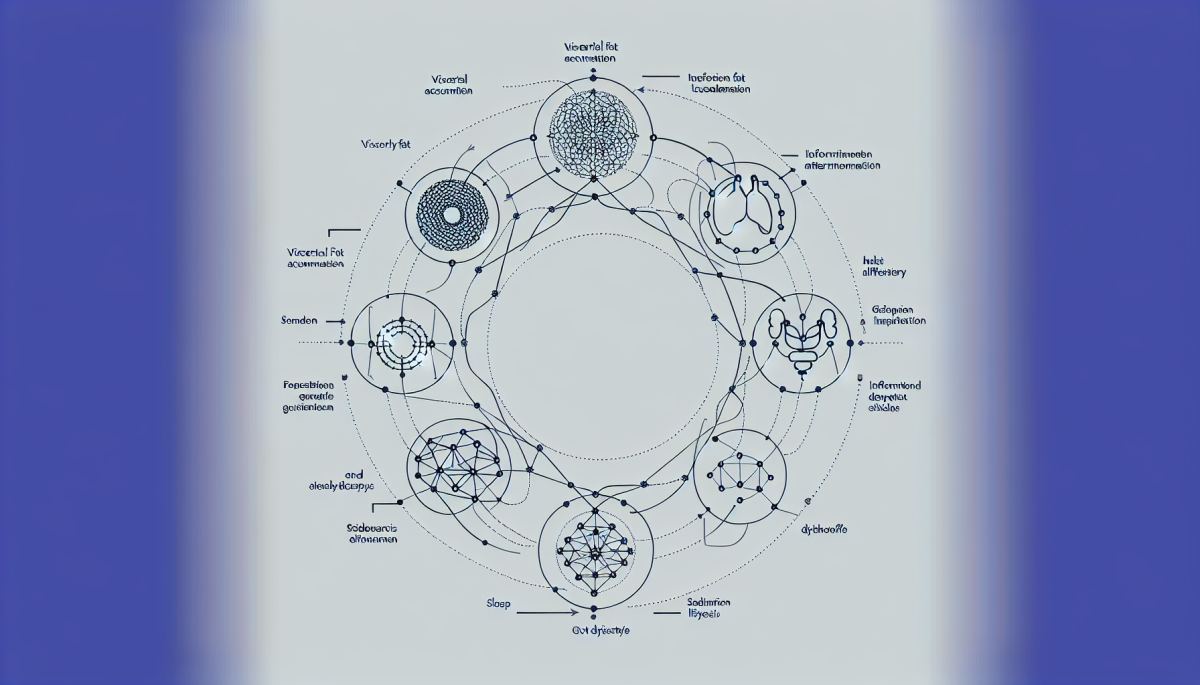
What makes this loop particularly difficult to interrupt is that its inputs are numerous and distributed. Obesity, sedentary behavior, poor sleep, environmental pollutants, and even social isolation have all been independently linked to elevated inflammatory markers like interleukin-6 and C-reactive protein. Each of these is also associated, through various pathways, with accelerated epigenetic aging. The Cell Genomics findings suggest these are not separate stories. They may all be feeding the same loop.
This has a second-order consequence that is easy to miss. If inflammaging and epigenetic drift are mutually reinforcing, then interventions that reduce inflammation even modestly could have outsized effects on biological aging trajectories, not because they fix the clock directly, but because they weaken the feedback signal that keeps the loop running hot. Conversely, populations with structural exposure to chronic stressors, whether through food environments, economic precarity, or neighborhood-level pollution, may be aging biologically faster not just because of any single factor but because those factors collectively sustain the inflammatory state that drives epigenetic acceleration.
It is worth pausing on what epigenetic clocks actually capture, because the term "biological age" can obscure more than it reveals. These clocks were trained on large datasets to predict chronological age from methylation patterns, but the most informative versions, like GrimAge and PhenoAge, were calibrated against health outcomes rather than birth years. They are, in effect, measuring something closer to physiological wear. When those clocks run fast, they are registering accumulated damage to the regulatory machinery of the genome.
Tying inflammaging to that machinery is significant because it shifts the conversation from aging as an inevitable countdown to aging as a process with modifiable inputs. That reframing has real clinical stakes. Anti-inflammatory interventions, whether pharmacological like low-dose metformin or lifestyle-based like time-restricted eating and aerobic exercise, are already being studied in the context of longevity. The Cell Genomics findings give those trials a more precise mechanistic rationale.
The deeper question the research raises is whether inflammaging is a cause of epigenetic aging, a consequence of it, or so thoroughly co-constitutive that the distinction stops being useful. That ambiguity is not a weakness of the science. It is a sign that the biology of aging is finally being studied as the complex, recursive system it actually is. The next generation of interventions will likely need to be designed with that complexity in mind, targeting loops rather than single nodes, and measuring success not in years added but in the quieting of the signals that age us from within.
References
- Horvath, S. (2013) — DNA methylation age of human tissues and cell types
- Levine, M.E. et al. (2018) — An epigenetic biomarker of aging for lifespan and healthspan
- Franceschi, C. et al. (2000) — Inflamm-aging: An evolutionary perspective on immunosenescence
- Lu, A.T. et al. (2019) — DNA methylation GrimAge strongly predicts lifespan and healthspan
- Ferrucci, L. & Fabbri, E. (2018) — Inflammageing: chronic inflammation in ageing, cardiovascular disease, and frailty

Discussion (0)
Be the first to comment.
Leave a comment