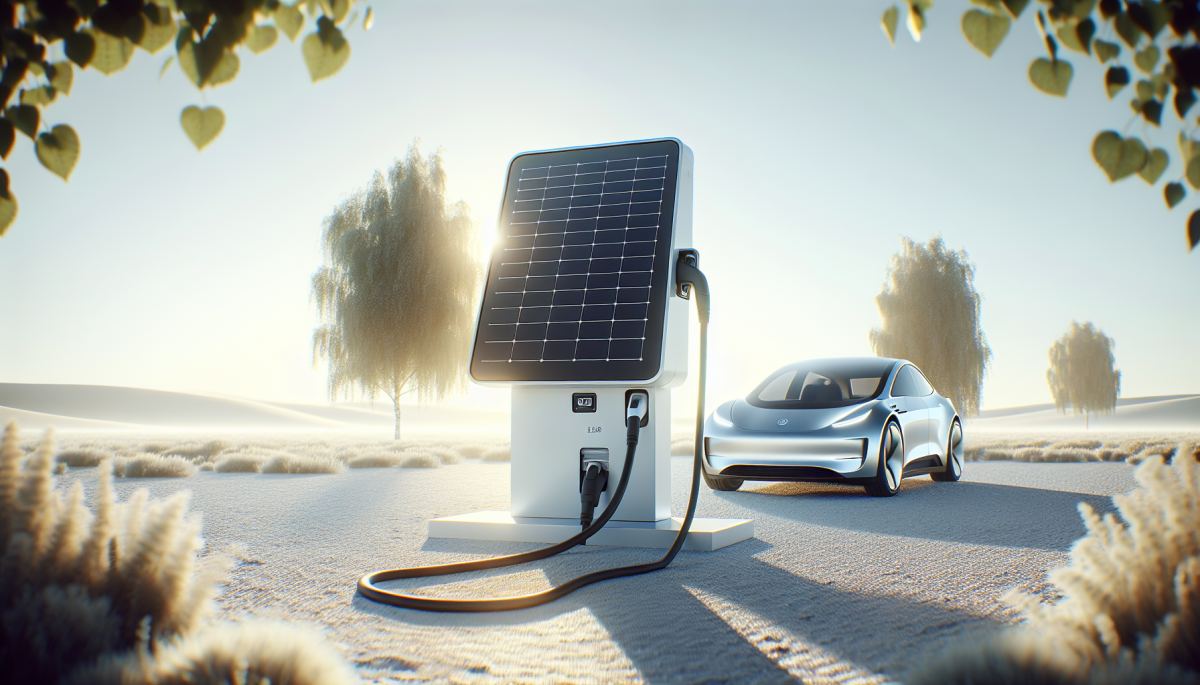
A charging station in California is doing something that would have seemed implausible just a few years ago: delivering fast, free electricity to electric vehicles without drawing a single watt from the utility grid. Powered entirely by a large solar array and backed by a 3.4 megawatt-hour battery storage system, the station operates as its own self-contained energy island. It is a small installation in geographic terms, but what it represents in systems terms is considerably larger.
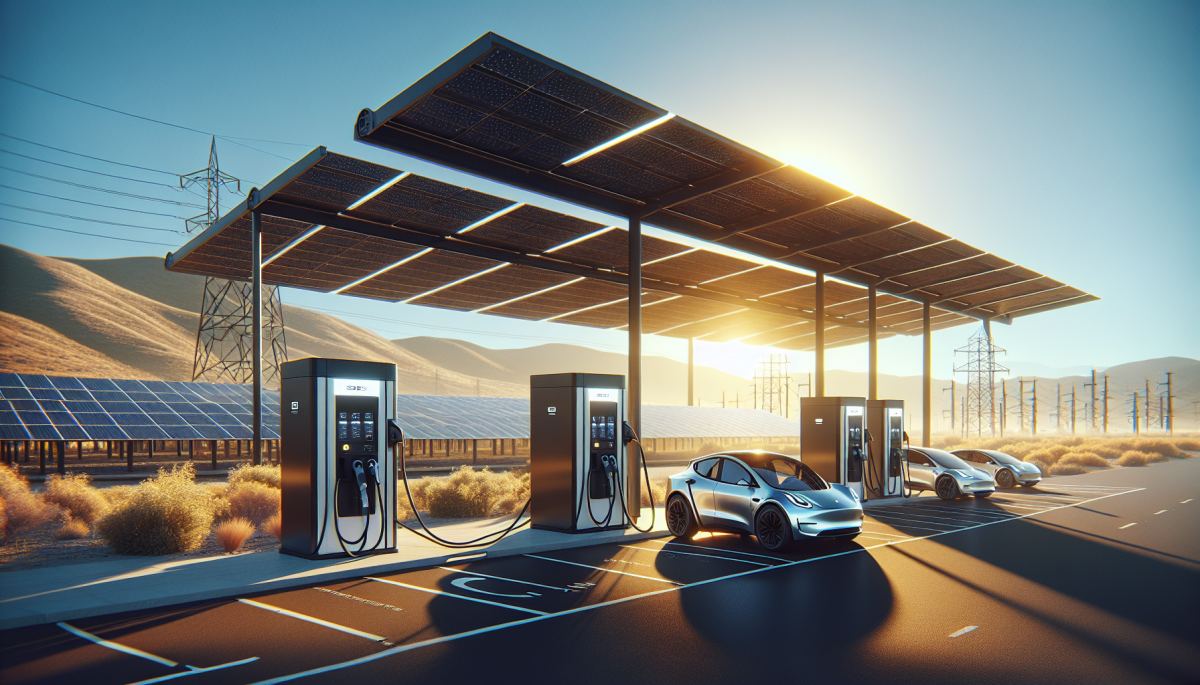
The project sits at an interesting intersection of three converging pressures: the accelerating adoption of EVs across California, the chronic difficulty of getting utility companies to extend or upgrade grid infrastructure fast enough to meet new demand, and the plummeting cost of both solar panels and battery storage. Grid interconnection delays in the United States have become a serious bottleneck. According to Lawrence Berkeley National Laboratory, the average wait time for a new project to connect to the grid has stretched to roughly five years, up from less than two years in the early 2010s. For EV charging developers who need to move quickly to capture a market, that timeline is essentially a dealbreaker. Off-grid solar-plus-storage configurations sidestep that bottleneck entirely.
The 3.4 MWh battery at the heart of this station is not a trivial piece of hardware. For context, a typical American home consumes around 10,000 kilowatt-hours per year, meaning this single battery could power roughly 120 average homes for a day. Paired with a solar array large enough to recharge it consistently, the system can theoretically sustain continuous fast-charging operations without ever asking the grid for help. The "free" pricing model is the part that raises eyebrows, and rightly so. Someone is paying for the hardware, the land, and the maintenance. Whether that cost is absorbed through grants, carbon credits, advertising revenue, or some other mechanism matters enormously for whether this model can scale.
There is a deep irony embedded in this story. EVs were supposed to be one of the primary tools for modernizing and loading up the electrical grid, giving utilities a reason to invest in cleaner generation and smarter distribution infrastructure. Instead, the grid's own sluggishness is pushing EV infrastructure developers off the grid entirely. If that trend accelerates, utilities could find themselves in a feedback loop where the customers they most need to serve, the ones driving electrification, are the ones most motivated to defect.
This is not a hypothetical concern. Across California and other high-adoption states, commercial and industrial customers are increasingly pairing solar with storage specifically to reduce or eliminate their dependence on utility power and demand charges. Each defection marginally weakens the utility's revenue base, which can slow infrastructure investment, which makes the grid less attractive to the next potential customer. Regulators have been aware of this dynamic for years, but policy responses have been slow and uneven.
The free charging element adds another wrinkle. If off-grid stations can genuinely offer no-cost charging by monetizing the system through other means, they create a competitive pressure on paid charging networks that could reshape the economics of the entire sector. Companies like Electrify America and EVgo have invested billions in grid-connected infrastructure. A proliferation of free, off-grid competitors would force a rethink of those business models, potentially faster than anyone in the industry is currently planning for.
The second-order consequence worth watching here is what happens to rural and underserved charging deserts if this model proves financially viable. Grid extension to remote areas is expensive and slow. A solar-plus-storage charging station, by contrast, can in principle be deployed almost anywhere the sun shines reliably, which in California and the broader American Southwest is most places. That opens a genuine pathway to charging equity that grid-dependent infrastructure simply cannot match on the same timeline or budget.
The technology is ready. The economics are moving in the right direction. The remaining question is whether the financing and policy scaffolding can catch up quickly enough to turn a compelling California demonstration project into a replicable national model. If it can, the utility industry may look back at this moment as the point where EV charging quietly began its own version of the cellular revolution, trading copper wires for sunlight and never looking back.
References
- Rand et al. (2024) — Queued Up: Characteristics of Power Plants Seeking Transmission Interconnection
- U.S. Energy Information Administration (2023) — How much electricity does an American home use?
- Walton (2023) — Interconnection backlogs are slowing the clean energy transition
- Trabish (2023) — The utility death spiral, revisited

Discussion (0)
Be the first to comment.
Leave a comment