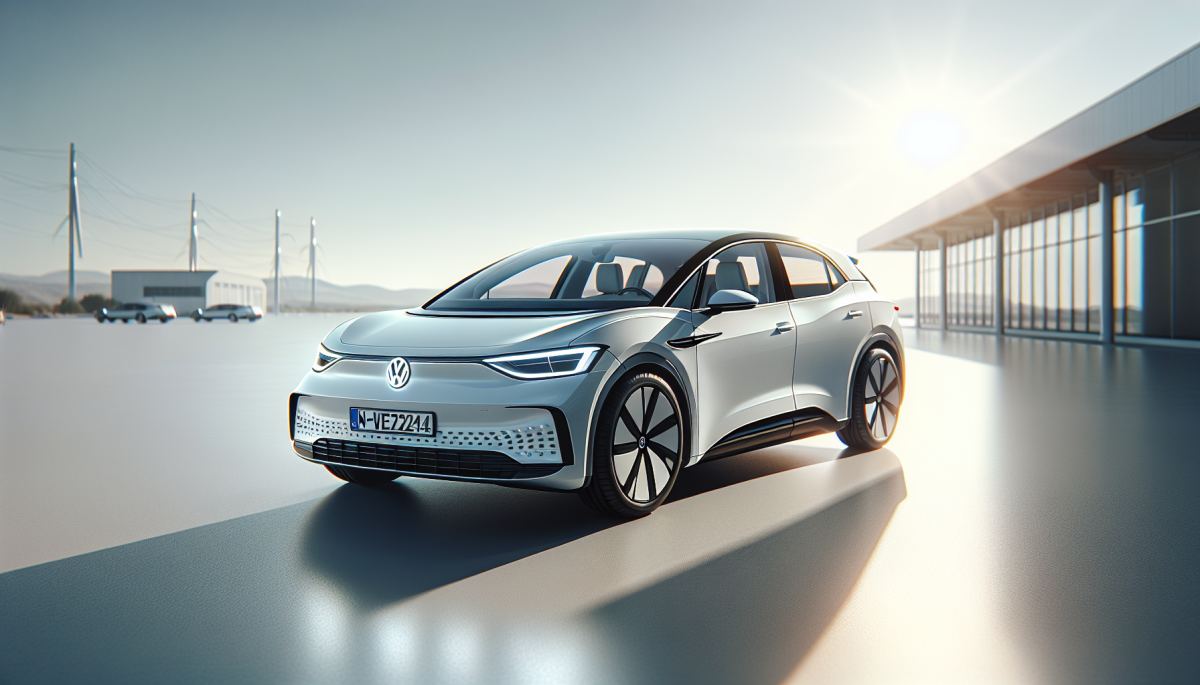
Volkswagen built its American comeback story around the ID.4. The electric crossover was supposed to be the bridge between the company's diesel-scandal past and a cleaner, more profitable future in the United States. Assembled at the Chattanooga, Tennessee plant, the ID.4 carried enormous symbolic weight. Now, that story is being quietly shelved. VW is winding down ID.4 production for the North American market and pivoting toward a new high-volume vehicle, widely speculated to be a pickup truck, a segment that has long dominated American roads and profit margins alike.
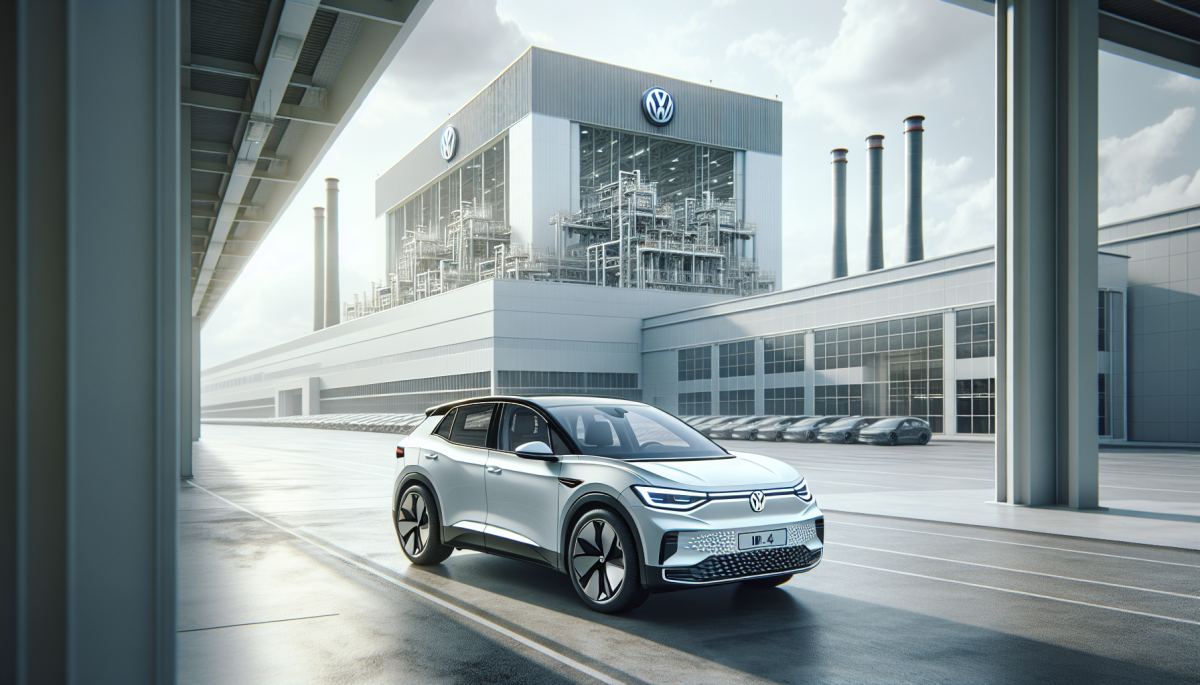
The timing is not accidental. The broader U.S. EV market has lost the momentum that once made automakers feel like they were racing against history. Demand has softened considerably from the frenzied peaks of 2022 and early 2023. Inventory has piled up at dealerships. Ford slashed the price of its F-150 Lightning multiple times. General Motors delayed its electric truck rollouts. And consumers, particularly outside the coastal metropolitan corridors, have shown persistent hesitation around charging infrastructure, range anxiety, and sticker prices that still sit well above comparable gas-powered alternatives. For a European automaker trying to crack a market it has historically struggled in, the ID.4 was always fighting uphill.
The ID.4 itself was not a failure in the conventional sense. It won awards, earned solid reviews, and moved meaningful volume. But "meaningful" in the context of the American auto market is a relative term. The crossover segment is brutally competitive, and VW was asking buyers to choose an unfamiliar electric brand over deeply entrenched names like Toyota, Honda, and Ford. The math was never comfortable.
What comes next is where things get genuinely interesting. Reports suggest VW is exploring a pickup truck for the North American market, potentially built on a platform shared with other Volkswagen Group vehicles. If true, this would represent one of the most audacious strategic pivots in recent automotive history. Pickup trucks are the single most profitable vehicle category in the United States. The Ford F-Series alone has been the best-selling vehicle in America for over four decades. GM's Silverado and the Ram 1500 are not far behind. These are not just vehicles; they are cultural artifacts with ferociously loyal customer bases.
The question is whether VW can compete in that arena, and whether it should try to do so with an electric powertrain, a gas-powered one, or a hybrid. An electric pickup from VW would enter a market already crowded with the Rivian R1T, the Ford F-150 Lightning, the Chevy Silverado EV, and the Tesla Cybertruck, all of which have struggled to fully convert traditional truck buyers. A gas or hybrid option might find more traction commercially, but it would sit awkwardly against VW's stated electrification goals and invite scrutiny from European regulators and investors watching the company's emissions trajectory.
There is a systems-level dynamic here worth paying attention to. When a major automaker retreats from an EV model in a key market, it does not happen in isolation. It sends a signal to suppliers, infrastructure investors, and policymakers. Charging network operators calibrate their expansion plans partly on projected EV adoption curves. If those curves flatten because automakers are pulling back or repositioning, the infrastructure buildout slows, which in turn makes EVs less convenient for the next wave of potential buyers, which further dampens demand. It is a feedback loop with real consequences for the pace of decarbonization in the transportation sector.
For Volkswagen specifically, the Chattanooga plant represents a significant labor and capital commitment. The company invested heavily in retooling that facility for EV production. What happens to that workforce and those production lines as the ID.4 winds down will be closely watched by the United Auto Workers union and by Tennessee's political leadership. The ripple effects of a production shift are rarely contained to the factory floor.
VW's American chapter is far from over, but it is being rewritten in real time. Whether a pickup truck can do what the ID.4 could not, which is to genuinely embed Volkswagen into the fabric of American driving culture, remains one of the more fascinating open questions in the global auto industry. The company that once cheated on emissions tests to appear cleaner than it was now faces the harder challenge of building something Americans actually want to buy. That is a different kind of test, and there are no shortcuts.
References
- Boudette, N. (2024) — E.V. Sales Are Growing, but More Slowly — The New York Times
- Volkswagen AG (2023) — Annual Report 2023
- U.S. Department of Energy (2024) — Alternative Fuels Station Locator and EV Infrastructure Data
- Colias, M. (2023) — Ford Cuts F-150 Lightning Price Again — The Wall Street Journal
Discussion (0)
Be the first to comment.
Leave a comment