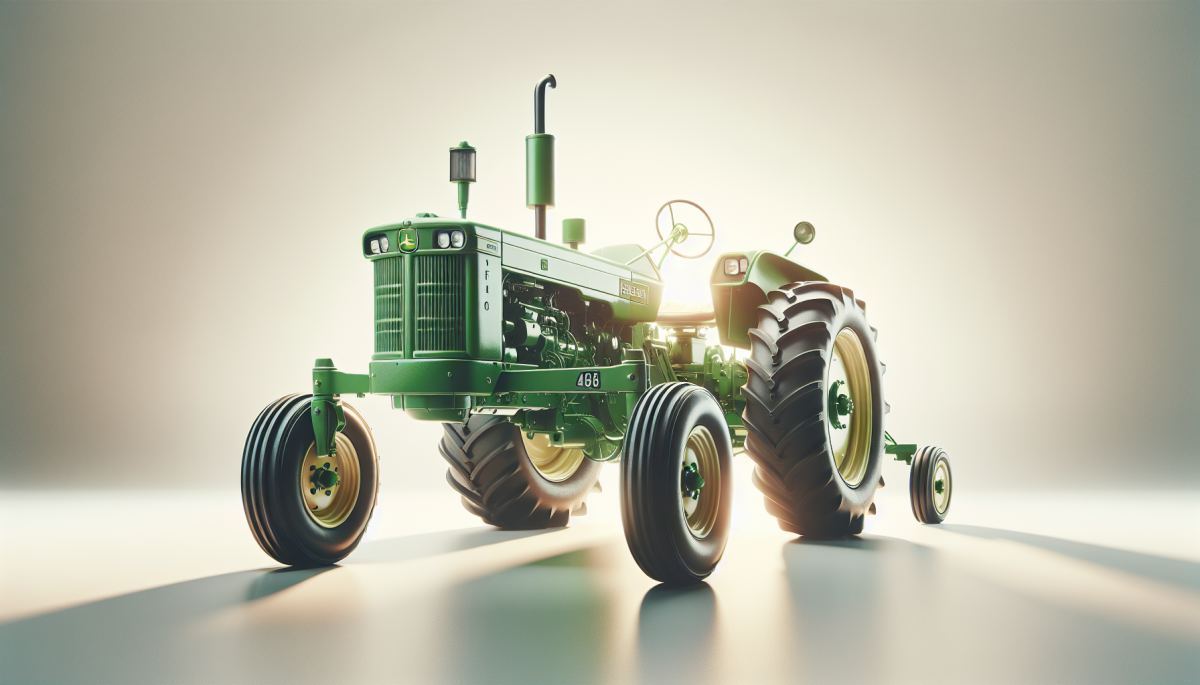
John Deere has agreed to a $99 million settlement to resolve a long-running class-action lawsuit alleging that the company systematically overcharged farmers by restricting access to repair tools, software, and parts. The settlement, which does not include an admission of wrongdoing, establishes a compensation fund for affected customers and, perhaps more significantly, commits Deere to supplying third-party repair providers with the equipment and diagnostic tools they need to service its machines.
On the surface, this looks like a legal dispute about tractors. Dig a little deeper and it becomes something far more consequential: a stress fracture in the business model that has quietly reshaped American agriculture over the past two decades.
John Deere didn't invent the idea of proprietary repair ecosystems, but it perfected it. As the company embedded increasingly sophisticated software into its equipment, it used digital locks and licensing agreements to ensure that only authorized dealers could perform diagnostics and repairs. A farmer whose $400,000 combine broke down during harvest couldn't simply call a local mechanic. They had to wait for a certified Deere technician, often at premium rates and on the company's timeline. The financial and operational pressure this placed on farmers, particularly during narrow harvest windows where a single day of downtime can mean significant crop loss, was not incidental. It was structural.

The lawsuit, which drew together farmers from across the country, argued that this system amounted to anticompetitive overcharging. Deere's position was that proprietary software protections were necessary for safety, emissions compliance, and product integrity. That argument has some technical merit, but critics noted that it conveniently also protected a highly lucrative aftermarket parts and service business. According to financial analysts, Deere's parts and service division has historically operated at margins far exceeding those of its equipment sales, making repair lock-in not just a policy preference but a profit center.
The $99 million fund will compensate farmers who were overcharged, though the per-claimant amounts will depend on the number of valid claims filed. More structurally interesting is the commitment to supply independent repair shops with diagnostic tools and equipment. If enforced meaningfully, this could begin to rebuild the ecosystem of independent agricultural mechanics that has steadily eroded over the past two decades as Deere's proprietary systems made their skills obsolete.
But settlements are not legislation, and the history of right-to-repair battles in the United States suggests that corporate compliance tends to be narrow and grudging. Apple, for instance, launched a self-repair program in 2022 under similar pressure, but critics quickly noted that the parts pricing and process complexity made it impractical for most users. Deere could follow a similar path, technically fulfilling its obligations while preserving enough friction to protect dealer revenue.
The second-order effect worth watching here is what this does to the independent repair market itself. If third-party shops genuinely gain access to Deere's diagnostic systems, there is a real possibility of a small-business revival in rural agricultural communities, towns that lost their independent mechanics precisely because they couldn't compete with authorized dealers holding the software keys. That kind of economic reactivation, if it materializes, would ripple outward in ways a settlement document cannot fully anticipate.
There is also a legislative dimension accelerating in parallel. Several states have passed or are actively considering right-to-repair laws that would go beyond what any private settlement can mandate. Colorado passed an agricultural right-to-repair law in 2023, and federal legislators have periodically introduced broader bills. The Deere settlement may actually complicate that momentum, giving the company a talking point that it has already addressed the problem voluntarily, potentially softening the urgency lawmakers feel to act.
The deeper systems question is whether this settlement represents a genuine rebalancing of power between a dominant equipment manufacturer and the farmers who depend on it, or whether it is a pressure-release valve that preserves the underlying architecture of dependency. Farmers are not just customers in this equation. They are nodes in a food supply chain that feeds hundreds of millions of people, and the resilience of that chain depends in part on whether the people operating it can fix their own tools.
If the next generation of agricultural equipment becomes even more software-defined, as autonomous and AI-assisted machinery promises, the stakes of repair access will only grow. A $99 million settlement, however welcome, is a small answer to a very large question that is still being written.


Discussion (0)
Be the first to comment.
Leave a comment