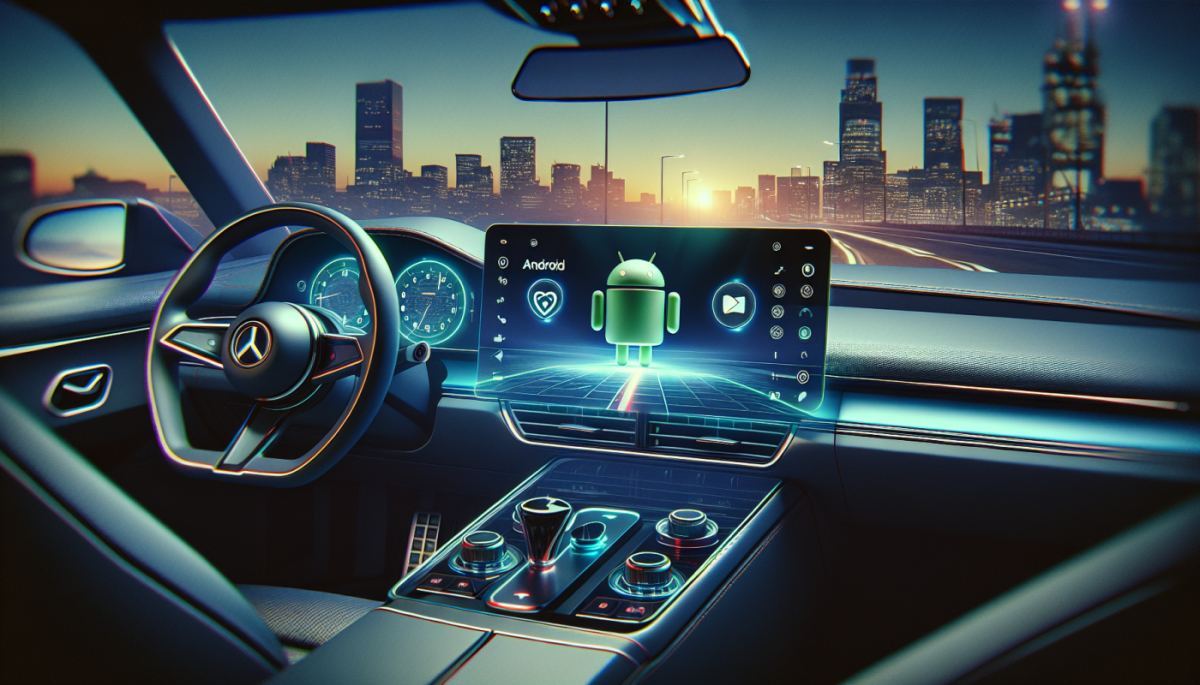
For years, Android Auto meant a familiar interface projected onto a dashboard screen, a convenience layer sitting politely on top of whatever proprietary software the automaker had already built. That arrangement is ending. Google's Android Automotive OS is now being positioned not just as the face of the car's infotainment system, but as the operating nervous system beneath it — capable of controlling seat motors, HVAC systems, lighting, and other physical vehicle functions that were previously the exclusive domain of the automaker's own embedded software.
This is not a minor software update. It represents a fundamental shift in where the intelligence of a vehicle actually lives, and more importantly, who owns it.
Automakers have spent decades building proprietary software stacks for their vehicles. These systems are expensive, deeply customized, and notoriously difficult to update. The rise of software-defined vehicles (SDVs) — cars where hardware functions are increasingly governed by software layers rather than fixed mechanical logic — was supposed to give manufacturers more flexibility and control. The irony is that by embracing the SDV model, automakers have also opened a door that Google is now walking through with considerable confidence.
Android Automotive OS, which is distinct from Android Auto (the phone-mirroring system), is already embedded in vehicles from Volvo, Polestar, Renault, and General Motors, among others. But the new capabilities targeting software-defined vehicles go further. When an operating system can command a seat motor or adjust climate control, it is no longer just running apps — it is running the car. The distinction matters enormously for questions of liability, data ownership, and long-term platform dependency.

Google's incentive here is not subtle. Android Automotive gives the company persistent, always-on access to one of the most data-rich environments a person inhabits. A car that knows your preferred seat position, your typical cabin temperature, your daily routes, and your music habits is not just a vehicle — it is a behavioral profile on wheels. That data, aggregated across millions of vehicles, has obvious value for advertising, insurance partnerships, and the broader ambient intelligence infrastructure Google has been building for years.
The second-order consequence that deserves more attention is what happens to automaker leverage over time. When a manufacturer integrates Android Automotive deeply enough that it controls physical vehicle subsystems, they are effectively ceding a portion of their engineering identity to a third-party platform. Software updates, feature additions, and system behaviors become partially dependent on Google's roadmap rather than the manufacturer's own.
This dynamic has a historical parallel in the smartphone industry. When handset makers adopted Android in the late 2000s and early 2010s, many believed they were simply licensing a useful operating system while retaining their own differentiation. What followed, for most of them, was a gradual commoditization. Samsung survived by scale; most others did not. The automotive industry is larger and more capital-intensive, which provides some buffer, but the structural logic is similar.
There are automakers who have clearly read this history. Tesla built its own software stack from the ground up and treats it as a core competitive asset. Volkswagen's CARIAD division, despite well-documented struggles, represents a deliberate attempt to retain software sovereignty. Toyota has been cautious about deep Android integration. These are not accidents — they reflect a strategic calculation that whoever controls the software layer in a software-defined vehicle controls the customer relationship, the data, and ultimately the margin.
For automakers who have already committed to Android Automotive at the system level, the question is less whether Google will have influence and more how much they can negotiate to retain. The answer, historically, has not favored the hardware partner.
What makes this moment particularly consequential is timing. The automotive industry is simultaneously navigating the transition to electric vehicles, absorbing massive capital costs, and trying to build recurring software revenue streams to replace the one-time margin of combustion engine sales. Partnering with Google accelerates the software capability timeline, but it may also be quietly mortgaging the very revenue model automakers are counting on to survive the transition.
The car of the near future may run beautifully on Android. The question worth watching is whether the company whose name is on the hood will still be the one setting the terms.

Discussion (0)
Be the first to comment.
Leave a comment