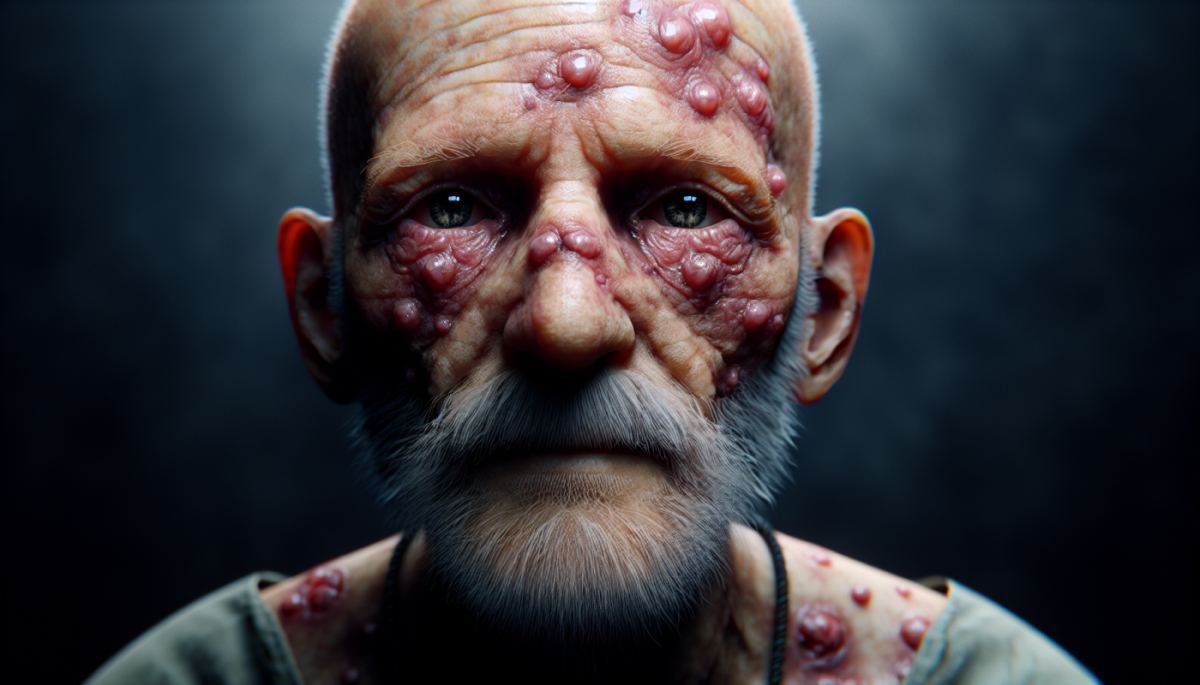
Leprosy is among the oldest diseases in recorded human history, appearing in ancient texts from India, China, and Egypt. It has outlasted empires, survived the invention of antibiotics, and persisted well into an era of mRNA vaccines and gene-sequencing diagnostics. Yet on the eve of World Leprosy Day, observed each year on January 25, the World Health Organization is still issuing calls for renewed commitment to a disease that much of the global health establishment has quietly filed under "nearly solved." That assumption is costing lives.
The WHO's latest statement reaffirms what epidemiologists working in endemic regions have long argued: access to treatment is not a footnote to elimination strategy, it is the strategy. Leprosy, caused by the slow-moving bacterium Mycobacterium leprae, primarily attacks the skin and peripheral nerves. When caught early, it is entirely curable with multidrug therapy, a combination regimen that has been available since the 1980s and is provided free of charge through WHO-supported programs. When missed, it causes progressive nerve damage, disfigurement, and disabilities that are permanent. The cruelty of the disease is not just biological. The stigma attached to leprosy, rooted in centuries of social exclusion and religious mythology, means that many patients delay seeking care until the damage is already done.
Around 200,000 new cases are detected globally each year, with the highest burdens concentrated in India, Brazil, and Indonesia. Those three countries alone account for roughly 80 percent of global case notifications. But detection rates are widely understood to be an undercount. Leprosy has an incubation period that can stretch anywhere from two to twelve years, meaning infected individuals circulate undetected in communities long before symptoms appear. In regions where health infrastructure is thin and stigma is thick, many cases are simply never reported at all.
What makes leprosy uniquely resistant to elimination is not its biology but its sociology. Unlike diseases that kill quickly and visibly, leprosy operates on a slow timeline that allows social shame to accumulate alongside physical damage. Patients who develop visible symptoms, particularly facial lesions or clawed hands, often face rejection from families, loss of employment, and exclusion from community spaces. In some countries, laws that once permitted the forced isolation of leprosy patients in dedicated colonies were only repealed within the last few decades. India, for instance, still has dozens of leprosy colonies where affected individuals and their descendants live in conditions of enforced marginality, even though the legal basis for their segregation has largely dissolved.

This stigma creates a feedback loop that is genuinely difficult to break. Fear of social consequences drives people to hide symptoms. Hidden symptoms delay diagnosis. Delayed diagnosis allows nerve damage to progress. Visible disability then reinforces the very stereotypes that generated the stigma in the first place. Public health campaigns that focus purely on treatment availability without addressing the social architecture of shame tend to underperform, because the barrier to care is not pharmaceutical, it is psychological and cultural.
The WHO's renewed commitment, framed around partnership and progress, gestures toward this complexity without fully confronting it. Partnership language in global health often signals a shift of responsibility toward national governments and civil society organizations, which can be a genuine empowerment strategy or a polite way of managing a shrinking envelope of international attention and funding.
The global target, embedded in WHO's road map for neglected tropical diseases through 2030, calls for zero disabilities among new child leprosy patients and zero countries with legislation allowing discrimination on the basis of leprosy. Both are meaningful benchmarks. Neither is currently on track.
The second-order consequence worth watching here is what happens to leprosy surveillance infrastructure if the disease continues to be treated as nearly eliminated rather than actively endemic. When donor attention and funding drift toward diseases with higher political visibility, the community health workers, dermatology training programs, and contact-tracing networks that make early detection possible tend to atrophy. Once that infrastructure erodes, case detection drops, which produces data suggesting the disease is retreating, which further reduces the urgency of investment. It is a statistical illusion that can persist for years before the underlying transmission reality reasserts itself, usually in the form of a cluster of advanced disability cases that should have been caught much earlier.
Leprosy has been declared eliminated as a public health problem at the national level in most countries, a threshold defined as fewer than one case per 10,000 people. But elimination as a public health problem is not the same as elimination as a human reality. For the roughly 200,000 people diagnosed each year, and the unknown number who are not, the distinction is not semantic.
The most honest thing the global health community could say about leprosy in 2025 is that the tools to end it exist, the will to deploy them consistently does not, and the gap between those two facts is measured in permanent disability.
References
- World Health Organization (2023) — Leprosy Key Facts
- WHO (2021) — Ending the Neglect to Attain the Sustainable Development Goals: A Road Map for Neglected Tropical Diseases 2021–2030
- Richardus et al. (2015) — Leprosy Incidence: Falling but Not Gone
- Deps, P. & Lockwood, D. (2017) — Leprosy Presenting as a Systemic Illness
- The Lancet (2020) — Neglected Tropical Diseases: Time to Act



Discussion (0)
Be the first to comment.
Leave a comment