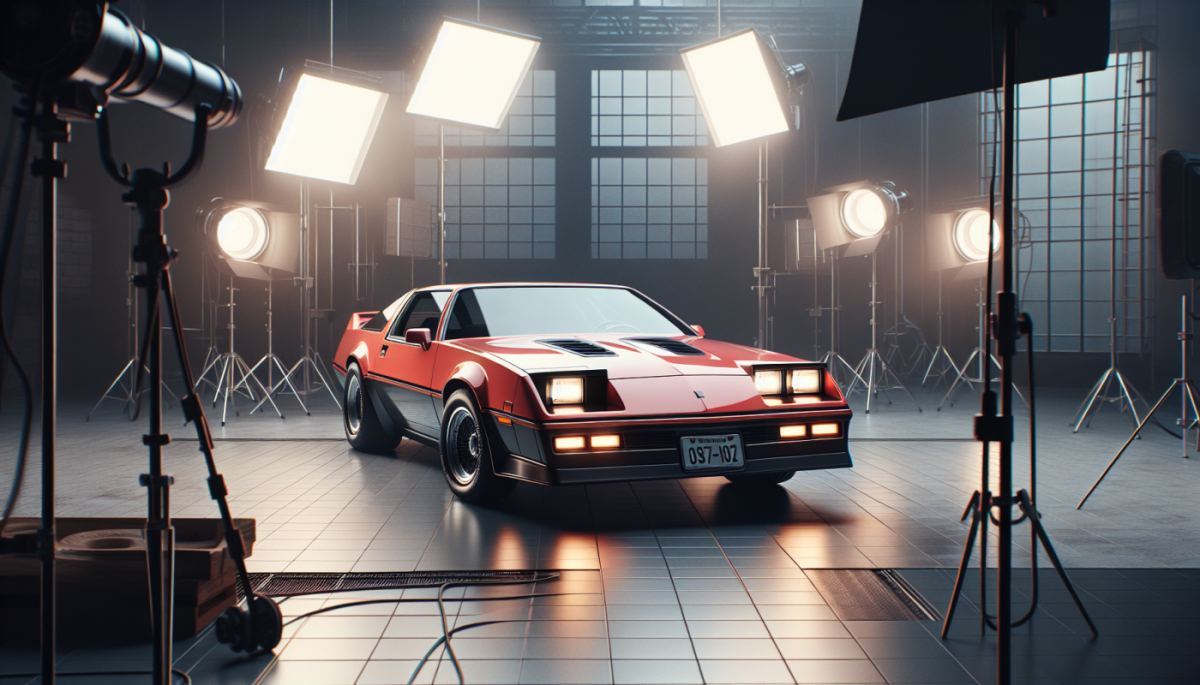
```json { "headline": "The 1980s Talking Car That Predicted Our AI-Saturated Dashboard Moment", "body": "Long before ChatGPT started narrating driving directions and before Tesla's voice interface became a cultural shorthand for the future, a generation of American drivers was already being lectured by their dashboards. In the early 1980s, several automakers rolled out voice alert systems that would verbally warn drivers about low fuel, open doors, and unbuckled seatbelts. Nissan's \"Talking" models, GM's early voice synthesis experiments, and most famously the systems fitted to certain Chrysler and Ford vehicles of the era would announce, in a flat, slightly unnerving synthetic tone, that a door was ajar or that the fuel level required attention. At the time, it felt like science fiction made slightly irritating. Today, it feels like a rough draft of everything we are living through.\n\nThe feature did not survive the decade in any meaningful commercial form. Drivers found the voices grating, the warnings repetitive, and the novelty wore off fast. By the late 1980s and into the 1990s, automakers quietly retired the talking dashboard in favor of chimes, lights, and the dignified silence of analog gauges. The technology had arrived before the culture, or perhaps before the engineering, was ready to support it. Voice synthesis in that era was computationally expensive, phonetically crude, and incapable of anything resembling a conversation. It could tell you the door was ajar. It could not tell you why that mattered, or what to do about it, or whether you had asked it to stop telling you three times already.\n\n[SECTION: The Loop That Closed]\n\nWhat makes this piece of automotive history worth revisiting now is not nostalgia but pattern recognition. The 1980s talking car represents one of the clearest early examples of a feedback loop between human behavior and machine communication that engineers did not yet know how to tune. The system had no model of the driver's context, no ability to learn that a particular warning had already been acknowledged, and no mechanism for adjusting its urgency based on actual risk. It was a one-way broadcast dressed up as a dialogue. The driver's only recourse was to fix the problem or endure the voice.\n\nModern AI voice systems in vehicles, from GM's new hands-free driving assistant to the increasingly conversational interfaces being built into Ford, BMW, and Rivian platforms, are attempting to solve exactly that problem. They are trying to build systems that understand context, remember preferences, and modulate their communication based on what the driver actually needs in a given moment. The underlying ambition is identical to what Nissan was reaching for in 1983. The difference is roughly four decades of machine learning, natural language processing, and a great deal of hard-won understanding about how humans respond to machines that talk at them versus machines that talk with them.\n\nThe second-order consequence worth watching here is not just whether these systems get more useful. It is what happens to driver attention and decision-making autonomy as they do. The 1980s talking car failed partly because it was annoying, but also because it offered no agency. It warned; it did not assist. Contemporary AI systems are being designed to do far more than warn. They are being designed to suggest, to anticipate, and in some configurations, to act. That is a fundamentally different relationship between driver and machine, and the automotive industry is only beginning to understand its liability, psychological, and regulatory implications.\n\n[SECTION: What the Dashboard Reveals]\n\nThere is a useful systems-thinking lens to apply here. When a technology arrives too early, it does not disappear. It retreats, accumulates better infrastructure, and returns with more capability than the original version ever promised. The talking car of the 1980s was not a failed idea. It was a seed planted in soil that was not yet ready. The soil now includes large language models, always-on connectivity, sensor fusion, and a generation of drivers who have already normalized talking to their phones, their speakers, and their watches. The cultural resistance that killed the Chrysler voice alert in 1987 is considerably weaker today.\n\nWhat the 1980s experiment could not have anticipated is that the return of the talking car would arrive inside a much larger and more contested conversation about what AI should be allowed to do inside a moving vehicle, who is responsible when it gets something wrong, and how much of the driving experience should remain under direct human control. The dashboard has always been a negotiation between the driver and the machine. That negotiation is about to get a great deal more complicated, and considerably more verbal.\n\n", "excerpt": "The 1980s talking dashboard was mocked into extinction. Now AI is bringing it back, and the stakes are far higher than an annoying voice warning.", "tags": ["artificial intelligence", "automotive technology", "voice interfaces", "systems thinking", "transportation"] } ```

Discussion (0)
Be the first to comment.
Leave a comment