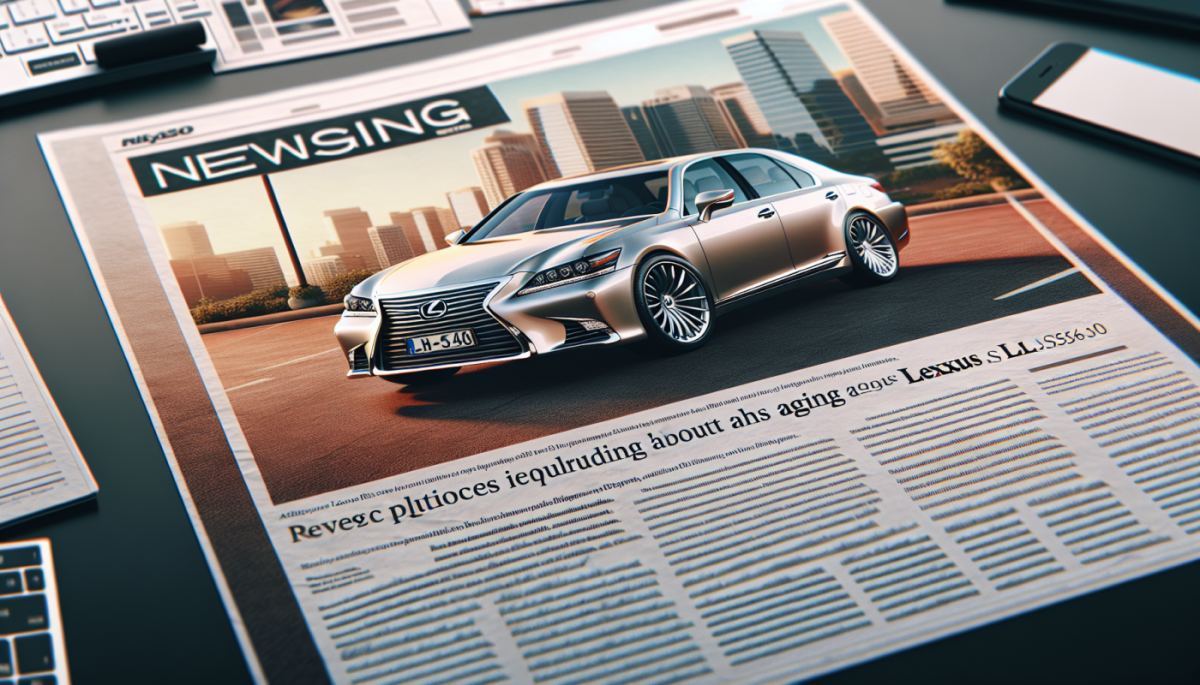
There is a particular kind of automotive value that only reveals itself with time. Not the brash depreciation play of a German sport sedan, nor the cult appreciation of a Japanese sports car, but something quieter and more deliberate: a flagship luxury sedan, engineered to last decades, finally reaching the price point where its original promise becomes accessible to almost anyone. A 2012 Lexus LS460 currently listed on Bring a Trailer is that car, and its appearance on the auction block arrives at a moment that feels more significant than a routine used-car listing might suggest.
Lexus confirmed it is discontinuing the LS nameplate, closing the book on a model that essentially forced the American luxury market to reckon with what quality actually meant. When the original LS400 landed in 1989, it didn't just undercut Mercedes-Benz and BMW on price. It embarrassed them on reliability, refinement, and fit-and-finish. The LS was never flashy. It was methodical, almost philosophical in its commitment to the idea that a luxury car should work flawlessly, every time, for a very long time. That ethos carried forward through every generation, including the fourth-generation LS460 that debuted for 2007 and ran through 2012.
The 2012 model year represents something of a sweet spot. By that point, the 4.6-liter V8 had been thoroughly sorted, producing 386 horsepower and paired with an eight-speed automatic transmission that was, at the time, among the most sophisticated in any production vehicle. The suspension tuning had matured. The interior, already a benchmark for hushed refinement, had accumulated years of incremental improvement. A lightly used example at this age carries the full weight of that engineering investment at a fraction of the original sticker price, which hovered around $70,000 to $75,000 when new.
What makes this particular listing worth examining beyond the car itself is what it reveals about the structure of the luxury used-car market. Flagship sedans depreciate steeply because the buyers who can afford them new rarely keep them long. Corporate lease cycles, status signaling, and the relentless cadence of new model introductions push low-mileage examples into the secondary market on a predictable schedule. For a brand like Lexus, whose vehicles are engineered to absorb 200,000 miles without complaint, that depreciation curve is almost paradoxical. The car loses value fastest precisely during the years when it is most reliable and most refined.
The second-order consequence of the LS being discontinued is that this dynamic will now calcify rather than refresh. Typically, a new generation of a flagship model creates a fresh wave of trade-ins, flooding the used market with recent examples and keeping prices suppressed. Without a successor, the supply of newer LS models will gradually dry up. Owners who might have traded into a new LS will either hold their cars longer or move to a competitor. The used market for existing LS460 and LS500 examples may actually firm up over the next several years rather than continue softening, which is an unusual trajectory for a depreciated luxury sedan.
There is also something worth mourning in the discontinuation itself, beyond the economics. The LS was a statement of intent. It told the market that Toyota, through Lexus, was serious about competing at the highest level of the automobile business. Dropping it signals a retreat from that ambition, or at least a redefinition of where Lexus believes the premium market is heading. SUVs and crossovers now dominate luxury sales in the United States, and Lexus is hardly alone in deprioritizing the traditional three-box sedan. But the LS was never just a product. It was an argument, and arguments matter even when the audience has moved on.
For buyers willing to engage with that argument on its own terms, a clean 2012 LS460 with reasonable mileage represents something genuinely rare: a car built to a standard that no longer exists at its current price point. The Bring a Trailer auction format, with its community of knowledgeable bidders and detailed inspection disclosures, is arguably the right venue for a transaction like this. It rewards research and punishes impulse, which suits a car that has always rewarded patience.
As the last LS models age out of warranty coverage and into the hands of enthusiast owners, the question worth watching is whether the community that forms around them will sustain the parts supply, the independent service knowledge, and the institutional memory that long-term ownership requires. German flagships have that ecosystem. The LS, quieter and less celebrated, is still building it.
Discussion (0)
Be the first to comment.
Leave a comment