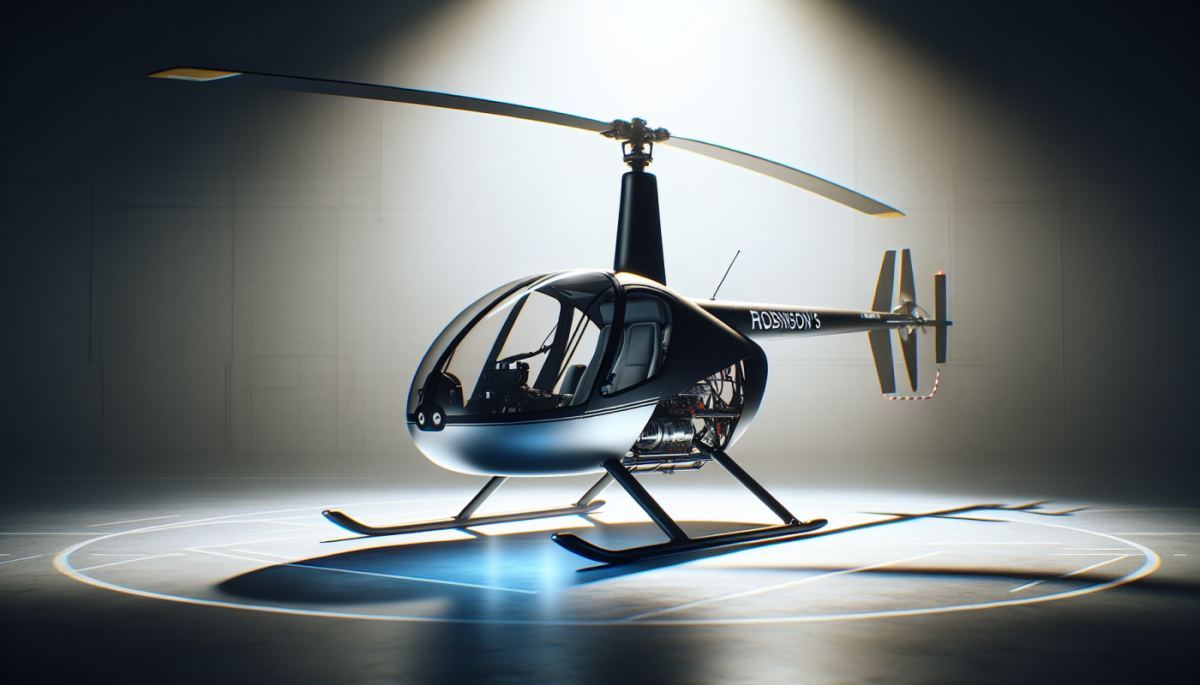
Robinson Helicopter Company, the Torrance, California manufacturer best known for putting affordable rotorcraft into the hands of private pilots and flight schools worldwide, has announced it is integrating autonomy systems across its flagship R44 and R66 models. The move marks one of the most consequential shifts in general aviation in decades, not because autonomous flight is new, but because Robinson is the company doing it.
The R44 is the world's best-selling civilian helicopter. The R66 is its turbine-powered sibling, a workhorse for charter operators, law enforcement, and offshore energy companies. Together, these two platforms represent an enormous slice of the global light helicopter fleet. When Robinson moves, the industry moves with it.
The timing is not accidental. Autonomy technology has matured rapidly over the past five years, driven largely by investment in the drone sector and the emerging electric vertical takeoff and landing market. The sensors, flight computers, and redundancy architectures that once required military budgets are now commercially available at price points that make sense for a manufacturer operating in Robinson's segment. The company has clearly been watching that cost curve flatten and decided the moment had arrived.
There is also a deeper structural pressure at work: the pilot shortage. Aviation authorities and industry groups have been sounding alarms about a global deficit of trained pilots for years, and the helicopter sector feels that pinch acutely. Training pipelines are long, attrition is high, and the economics of keeping a certificated pilot in the left seat for every mission are increasingly difficult to justify for operators running thin margins. Autonomy systems that can assist, augment, or eventually replace human pilots in certain mission profiles directly address that cost and availability problem.
For flight schools, which represent a major customer base for the R44 in particular, the calculus is different but equally compelling. An aircraft that can catch a student's mistake before it becomes a fatal one is an aircraft that reduces liability, lowers insurance costs, and potentially keeps more students alive long enough to become certificated pilots. The safety argument alone carries significant weight in a segment where the accident rate has historically been higher than fixed-wing general aviation.
The second-order effects of Robinson's announcement deserve careful attention. Certification is the first and most immediate obstacle. The Federal Aviation Administration has been developing frameworks for autonomous and highly automated aircraft, but the regulatory pathway for retrofitting or producing certified autonomous helicopters at scale remains genuinely complex. How Robinson navigates that process will set precedents that affect every other manufacturer watching from the sidelines.
Then there is the labor question. Helicopter pilots are not a monolithic group. Some fly tours over national parks. Others perform search and rescue, aerial firefighting, or emergency medical services. The autonomy systems Robinson is describing are unlikely to eliminate the human pilot in high-stakes, dynamic environments anytime soon, but they will almost certainly reduce the number of flight hours required to operate safely in routine conditions. That compression of required human input will ripple through training schools, union contracts, and the career expectations of every student currently paying for flight lessons on an R44.
Insurers will also be recalibrating. If autonomy systems demonstrably reduce accident rates, and the data from drone and fixed-wing automation strongly suggests they will, underwriters will begin pricing that risk reduction into premiums. Operators flying autonomous-capable aircraft could see meaningful cost advantages over those flying legacy platforms, which creates a market incentive that accelerates fleet turnover faster than any regulatory mandate could.
Perhaps the most underappreciated consequence is what Robinson's move does to the competitive landscape. The company has long competed on price and simplicity. By layering autonomy onto proven, widely distributed airframes rather than designing a clean-sheet autonomous aircraft from scratch, Robinson is threading a needle that well-funded startups have struggled to find. It already has the maintenance networks, the parts supply chains, the instructor community, and the regulatory relationships. That installed base is an enormous advantage that no amount of venture capital can easily replicate.
The helicopter has always occupied an awkward position in aviation, more capable than a fixed-wing aircraft in many respects, more demanding to fly, more expensive to operate, and perpetually on the edge of mainstream adoption. Autonomy may finally be the force that tips it across that threshold, and if it does, the industry will look back at Robinson's announcement as the moment the trajectory changed.
Discussion (0)
Be the first to comment.
Leave a comment